A Wednesday at the Rathsmühle
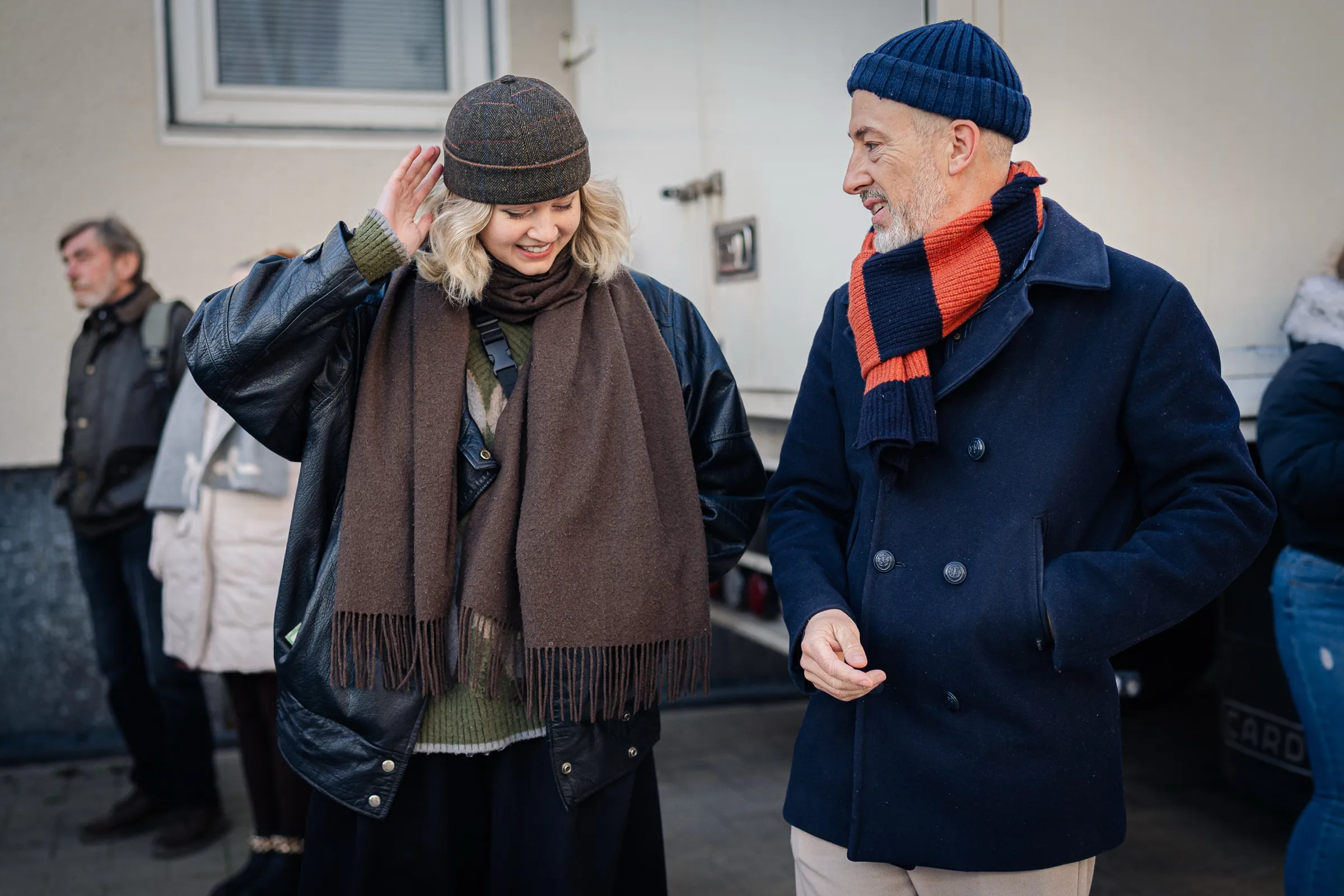
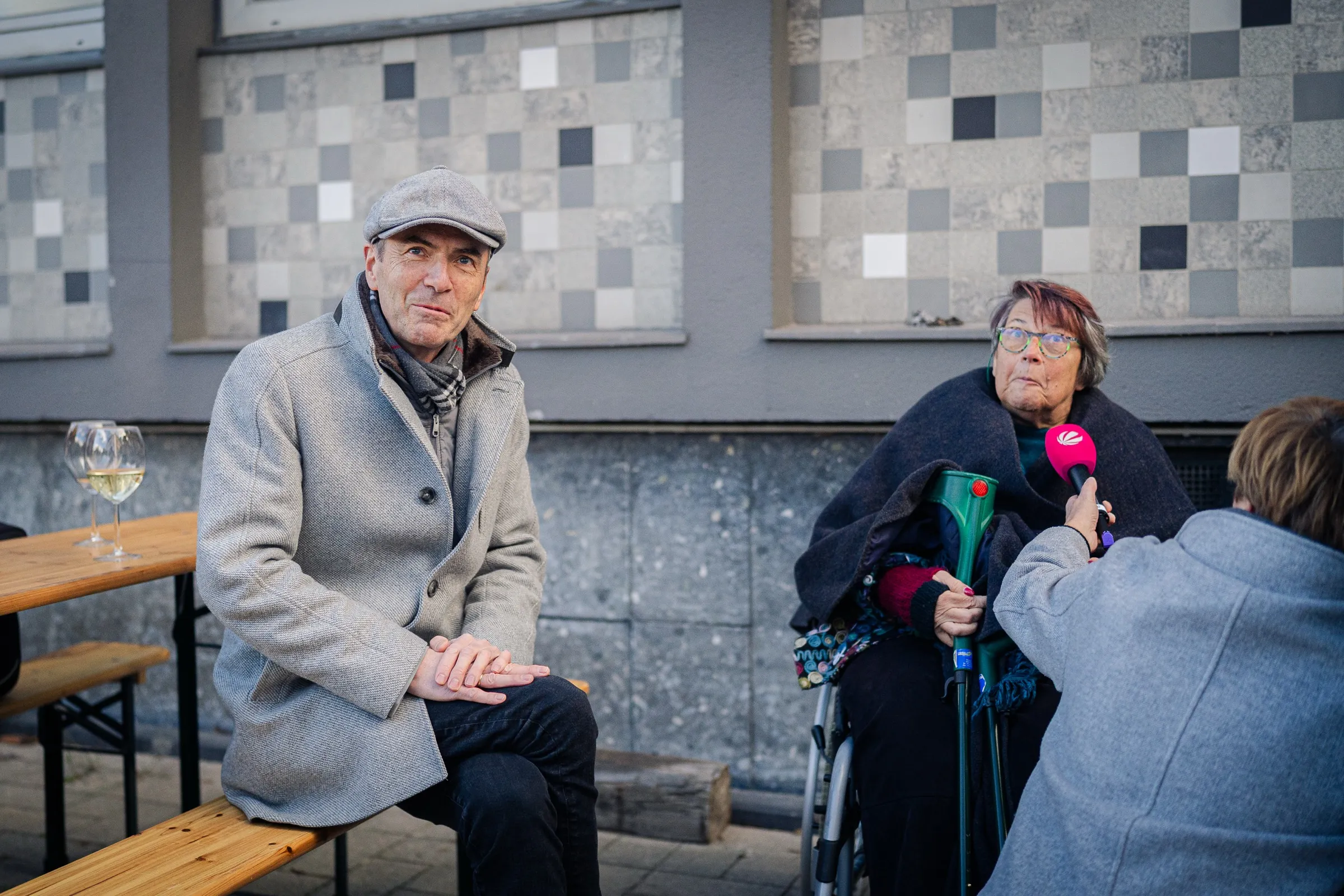
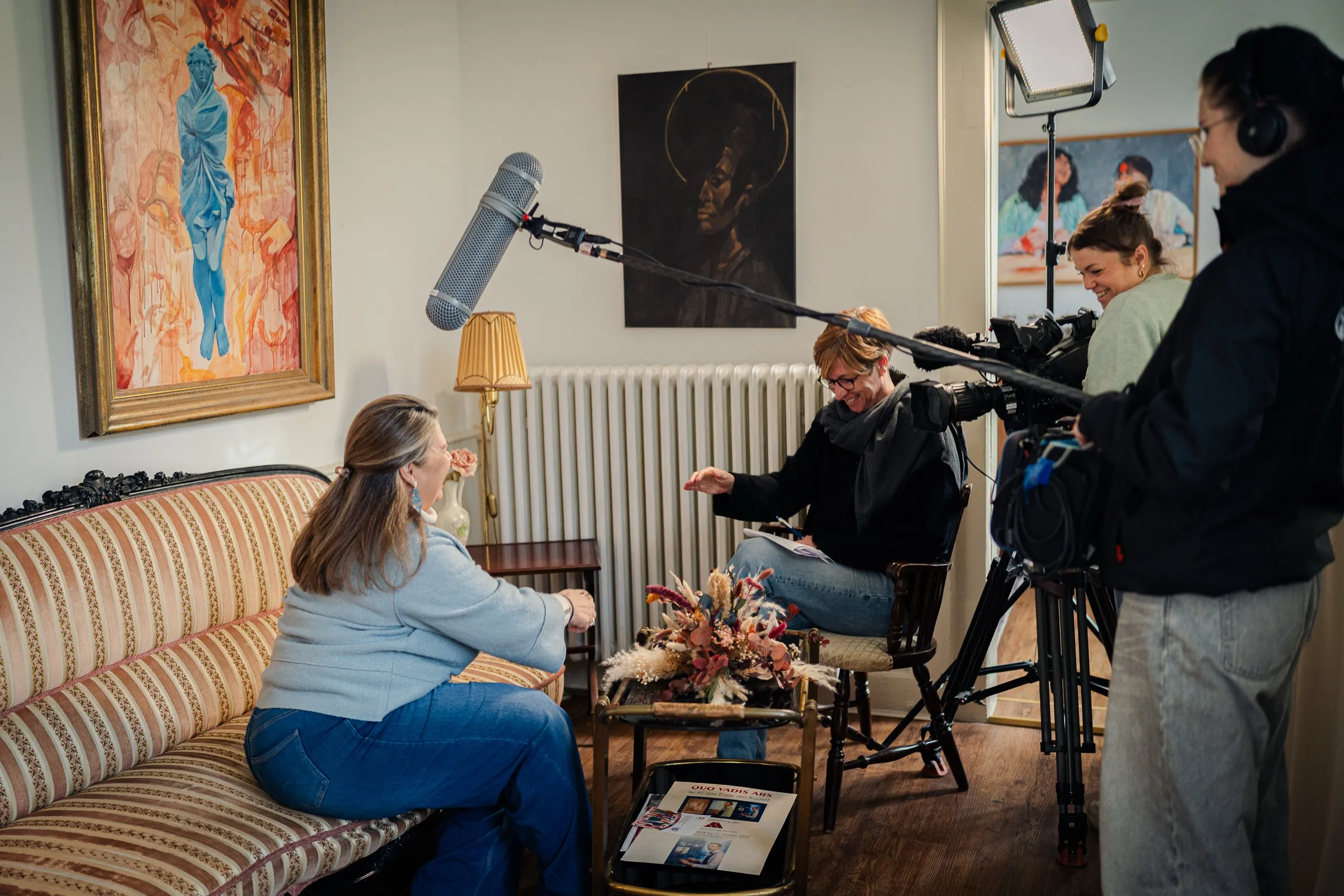
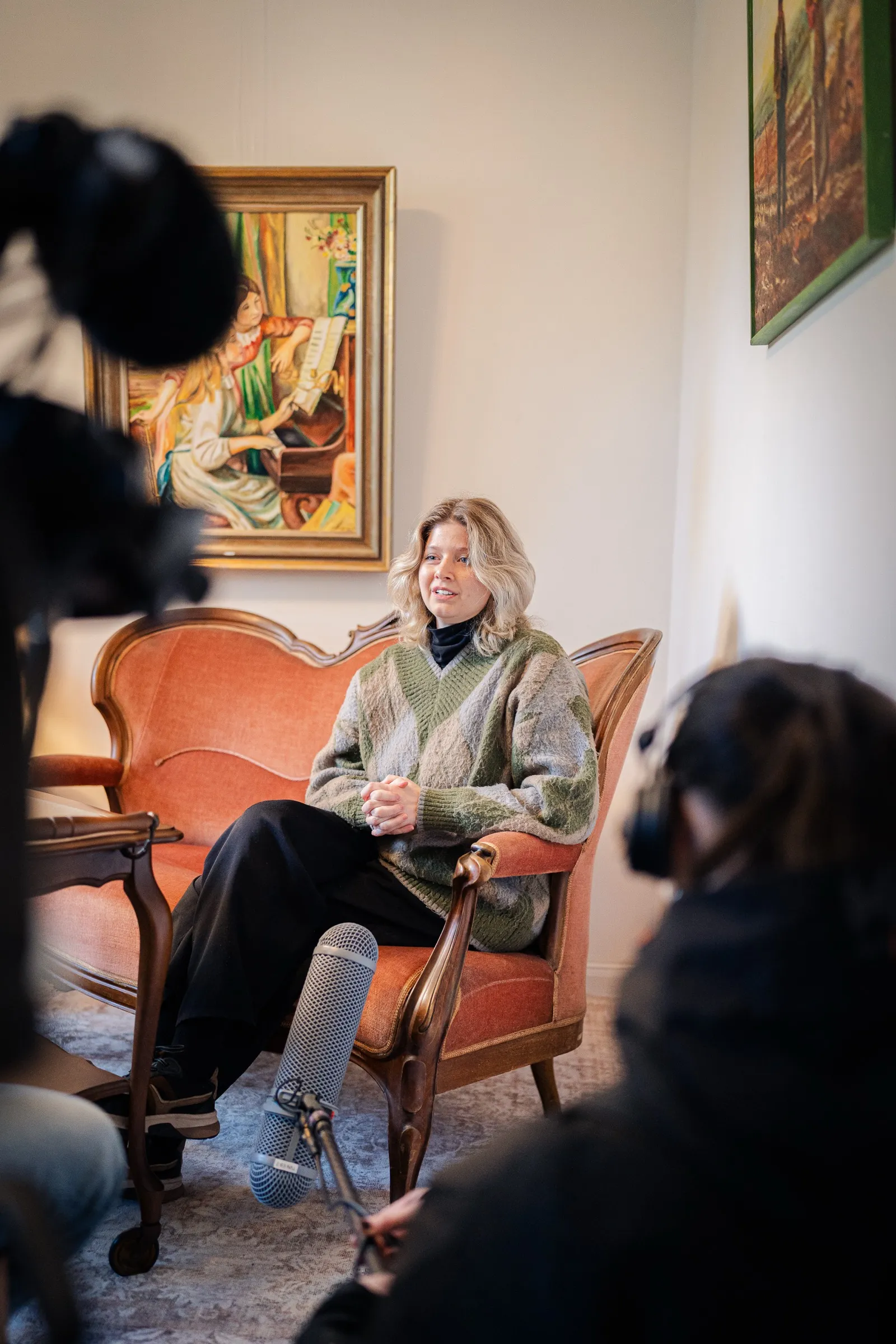
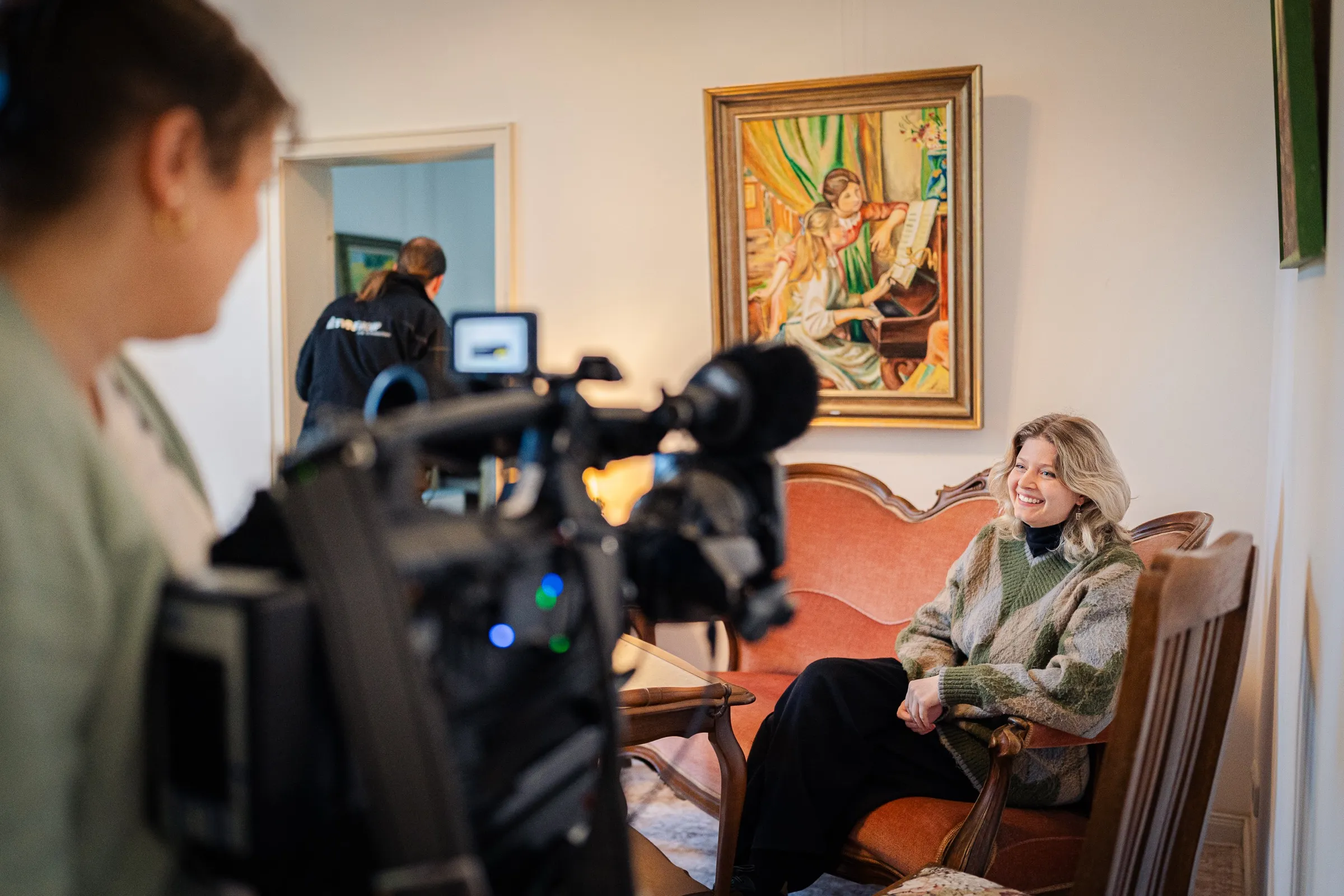
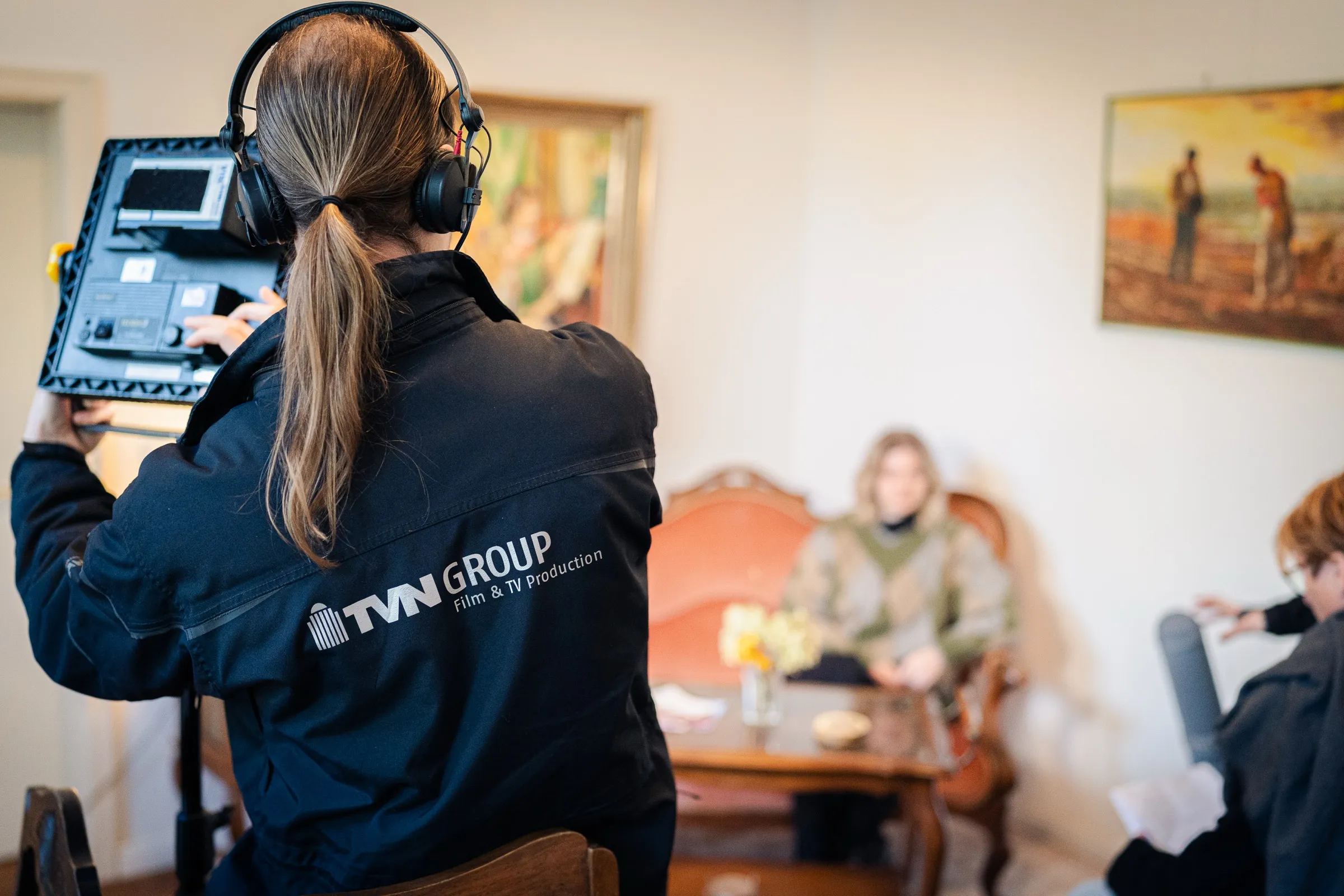
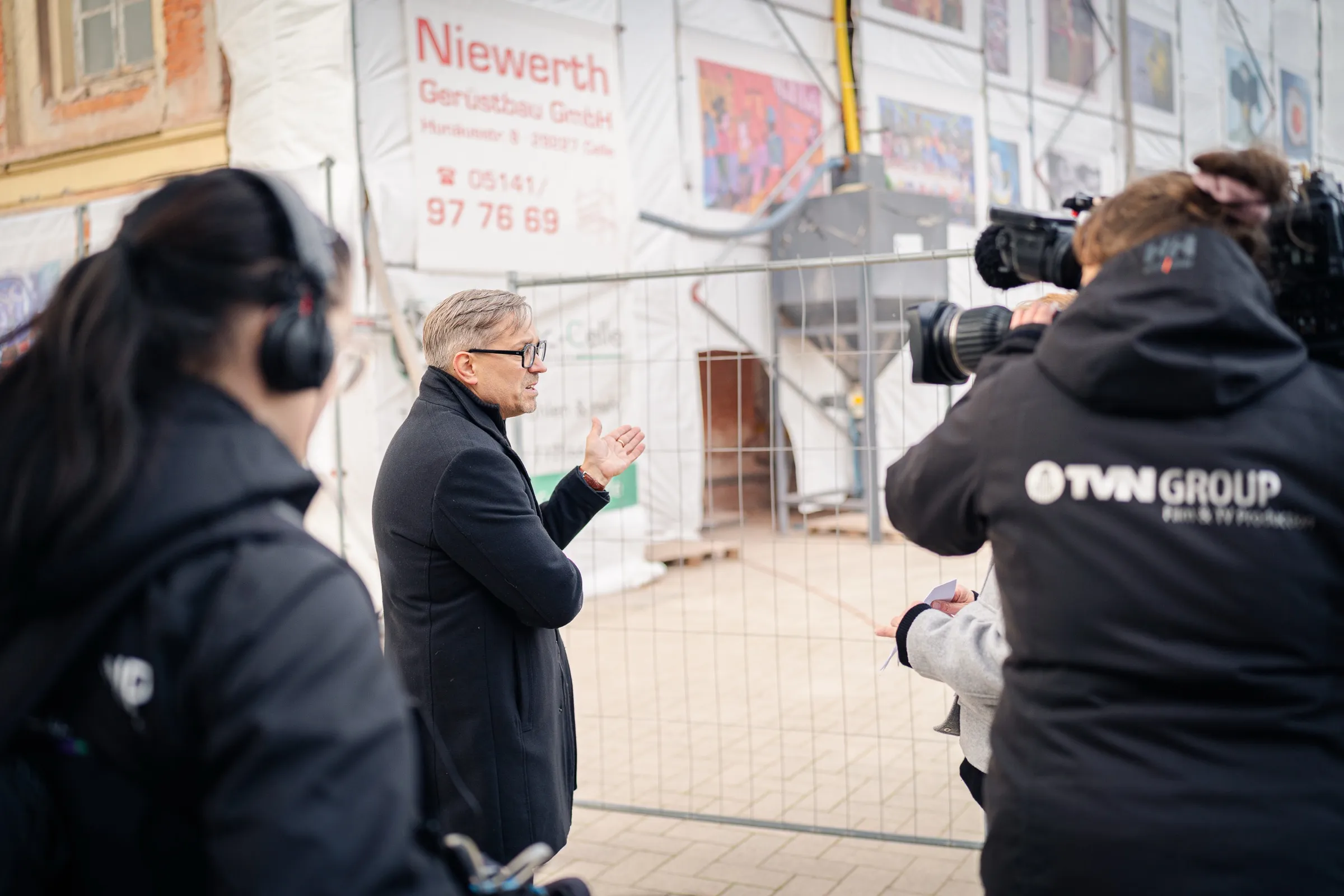
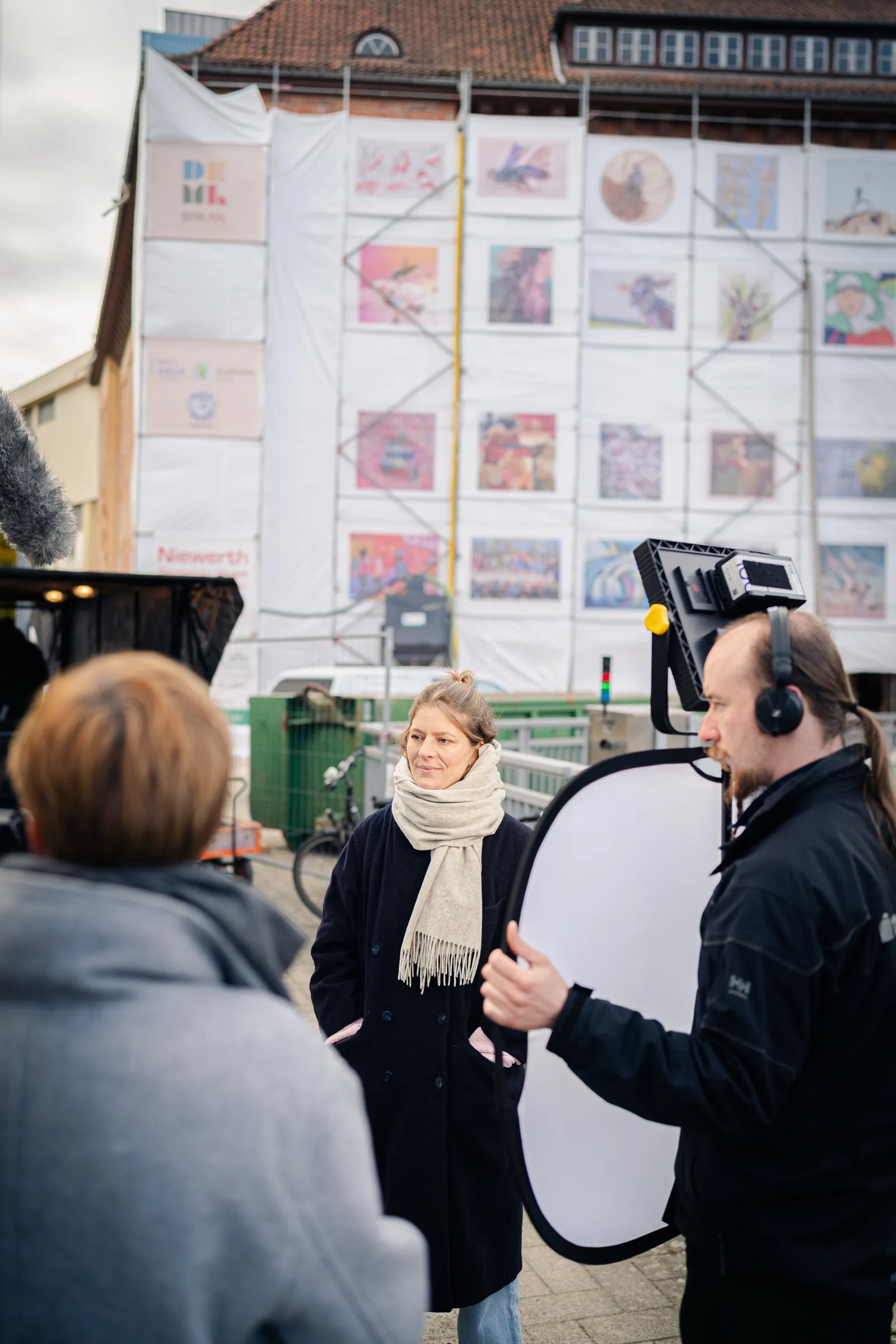
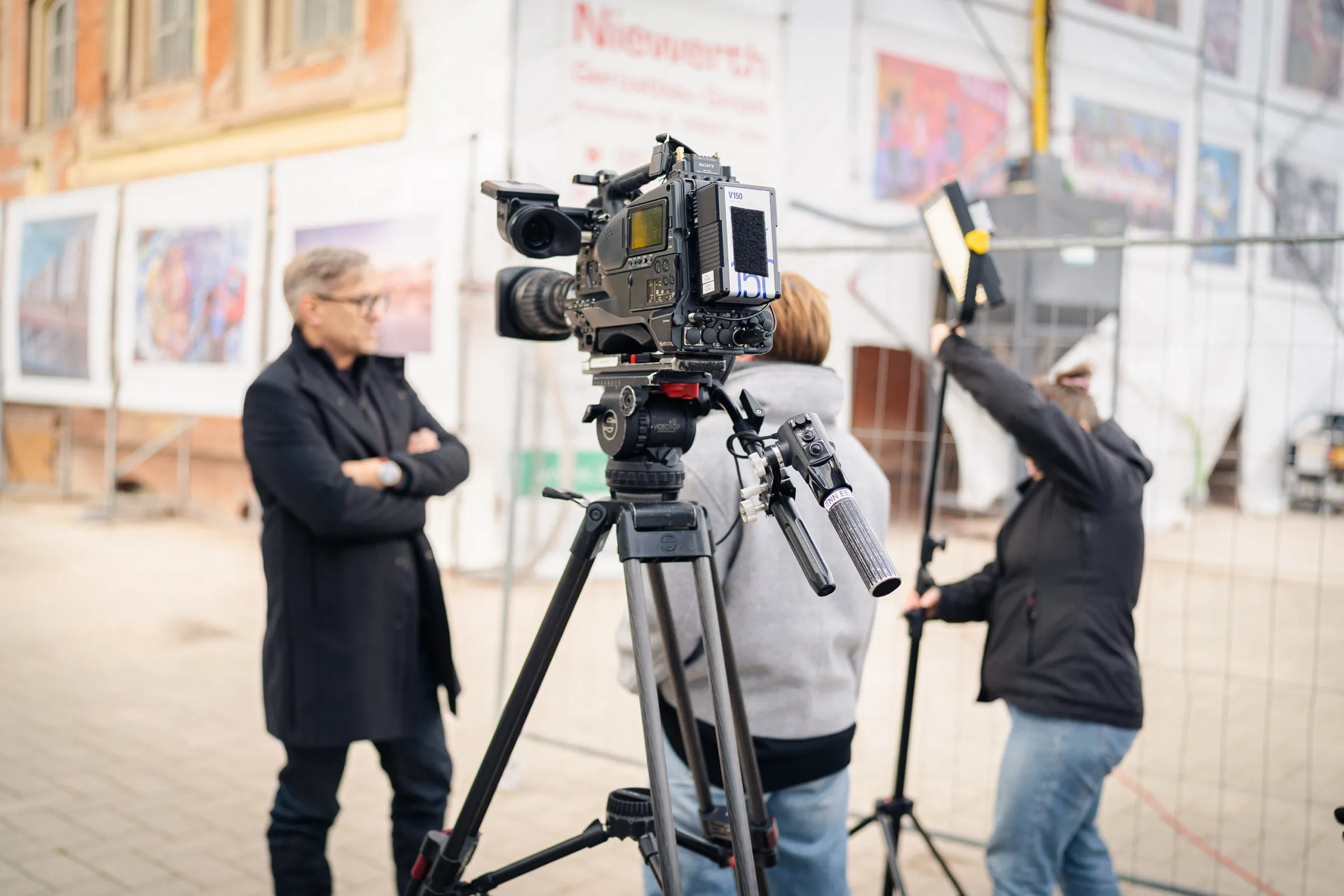
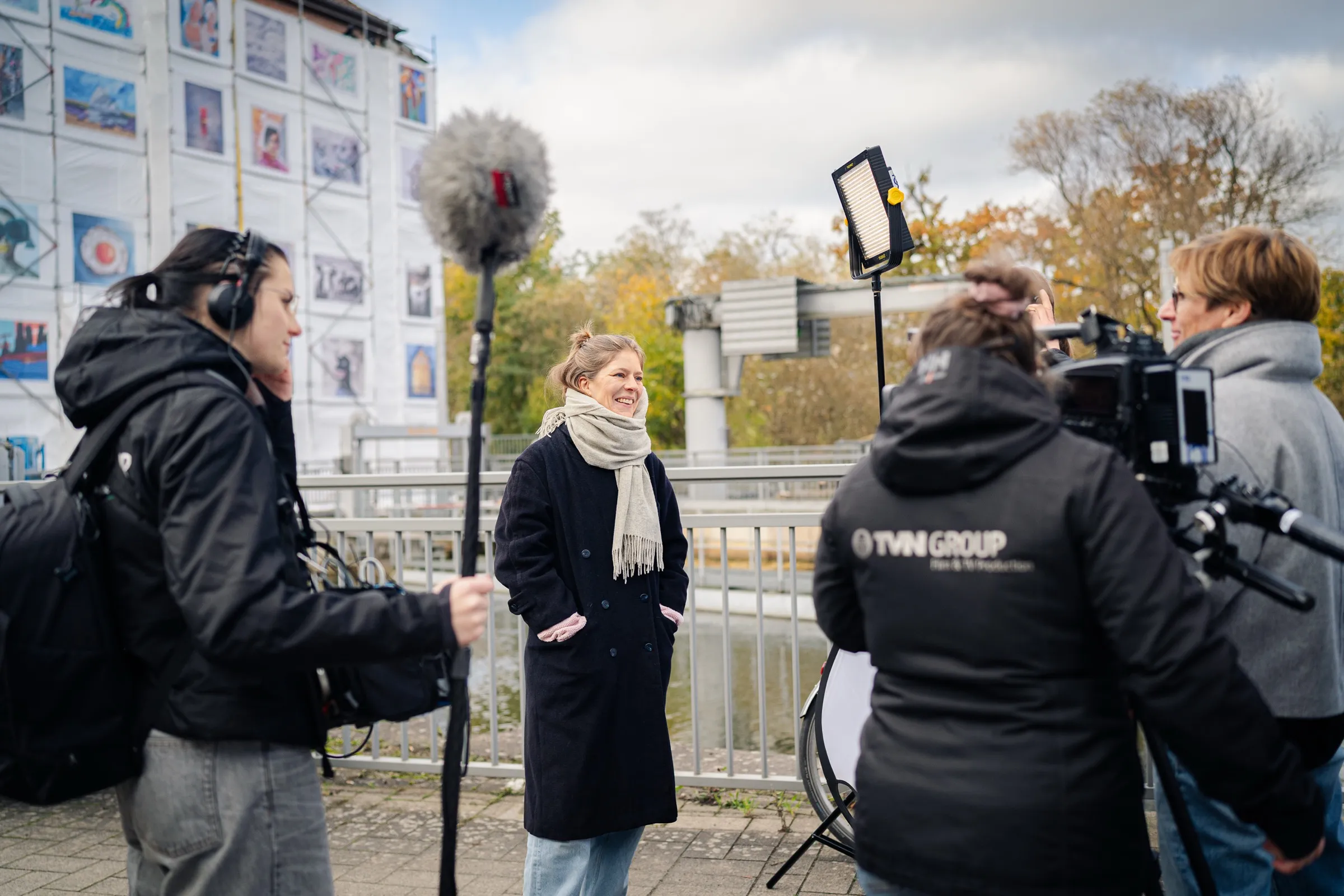
The day did not begin at the Rathsmühle but in the morning at Trift 32, in Denk.Mal's clubhouse. SAT.1 Regional came by and interviewed Katharina Gröschner and Zandra, in the parlour beneath the paintings, with a camera, a boom microphone and a light on a stand. I stood next to them with my own camera and photographed the people who were filming. Pictures of picture-making, on a day like this that belongs to it: an exhibition gets reported on before it has even opened.
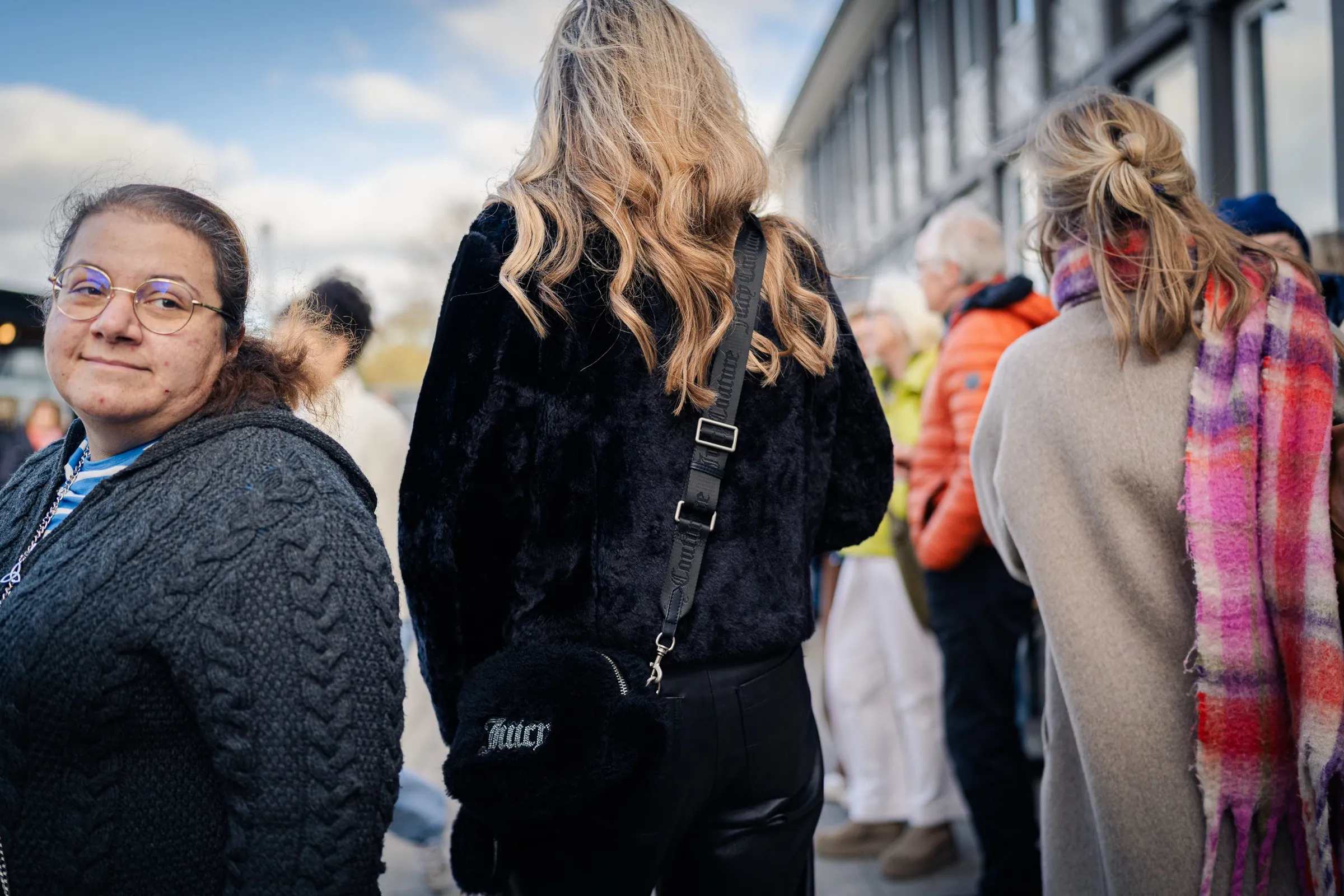
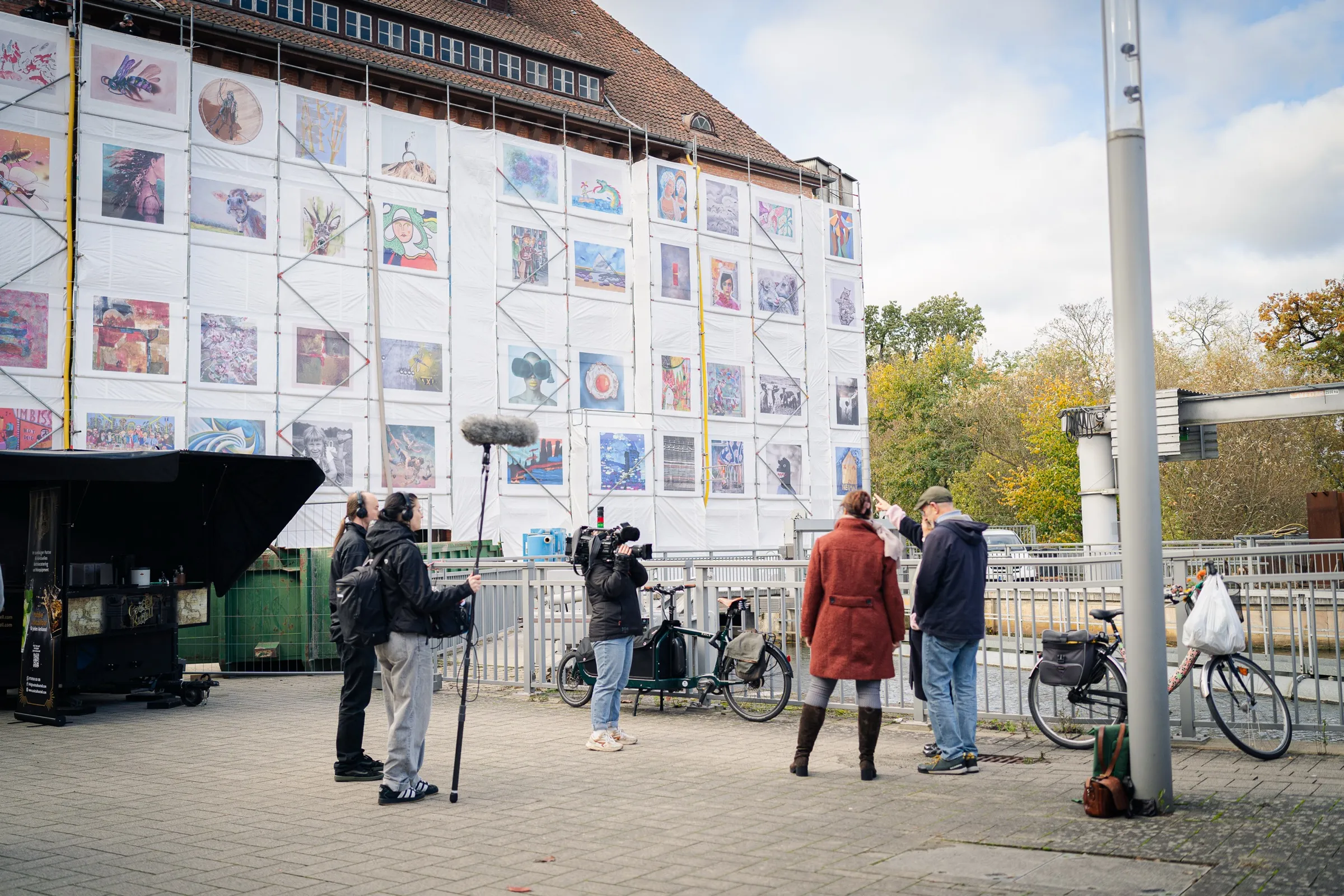
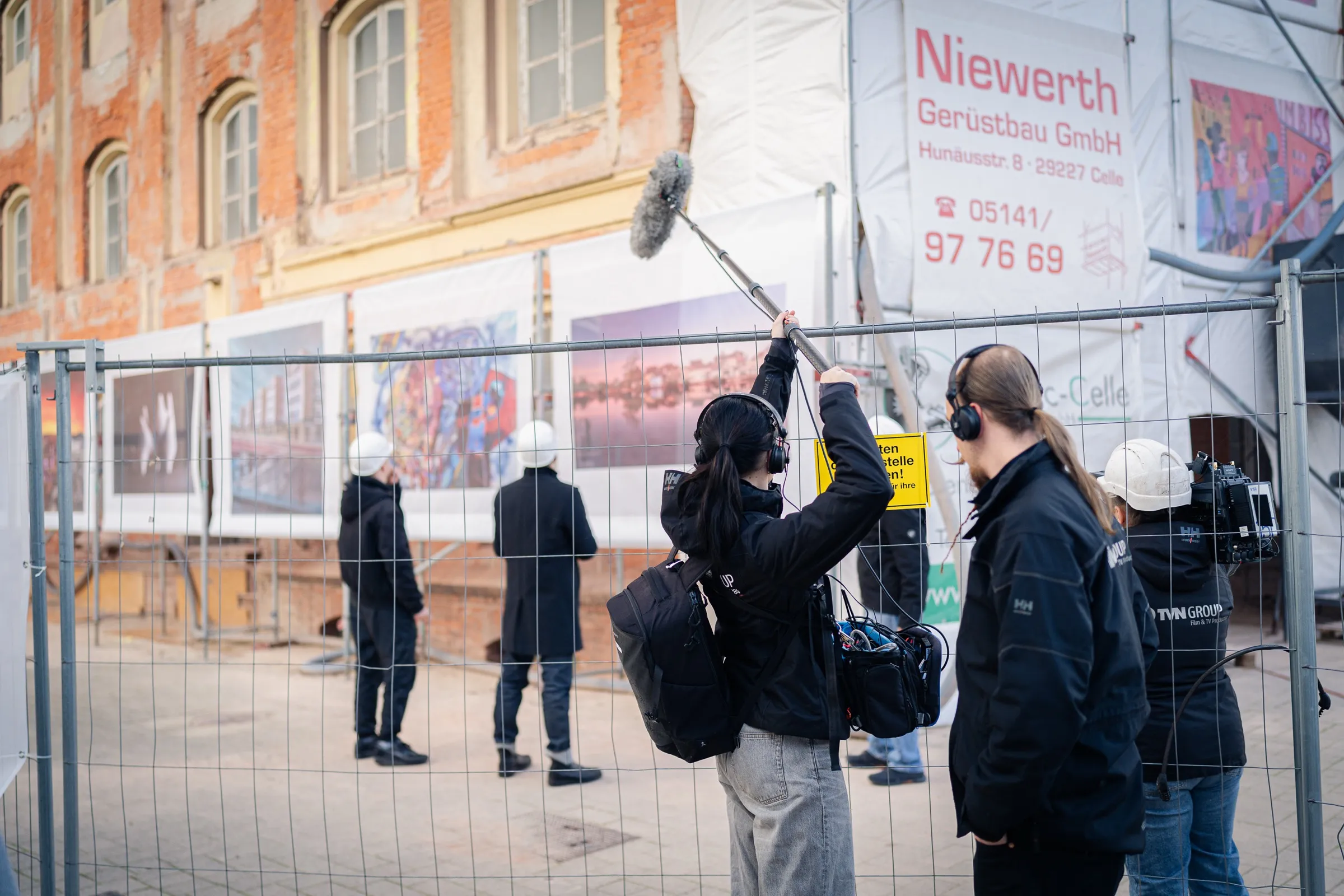
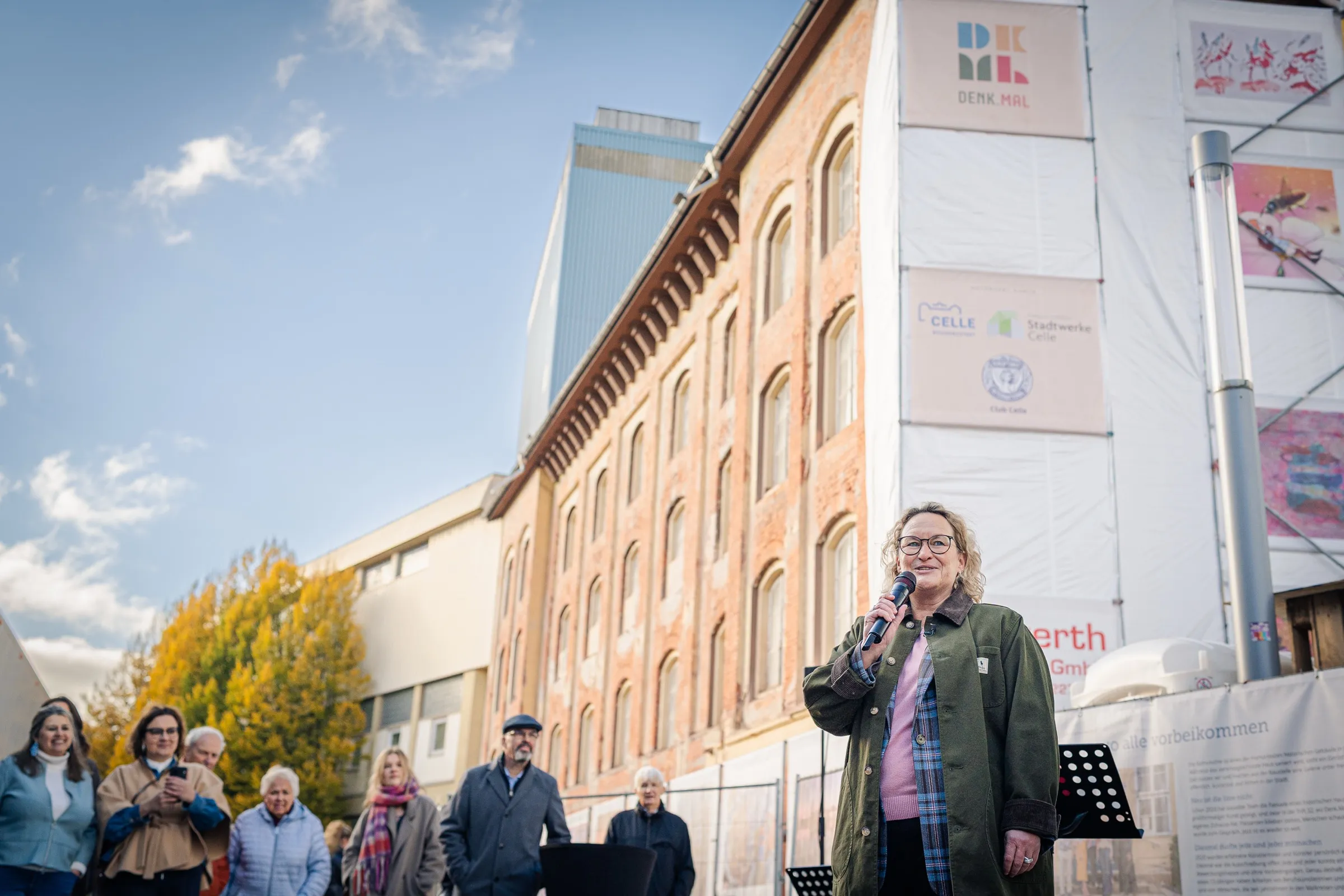
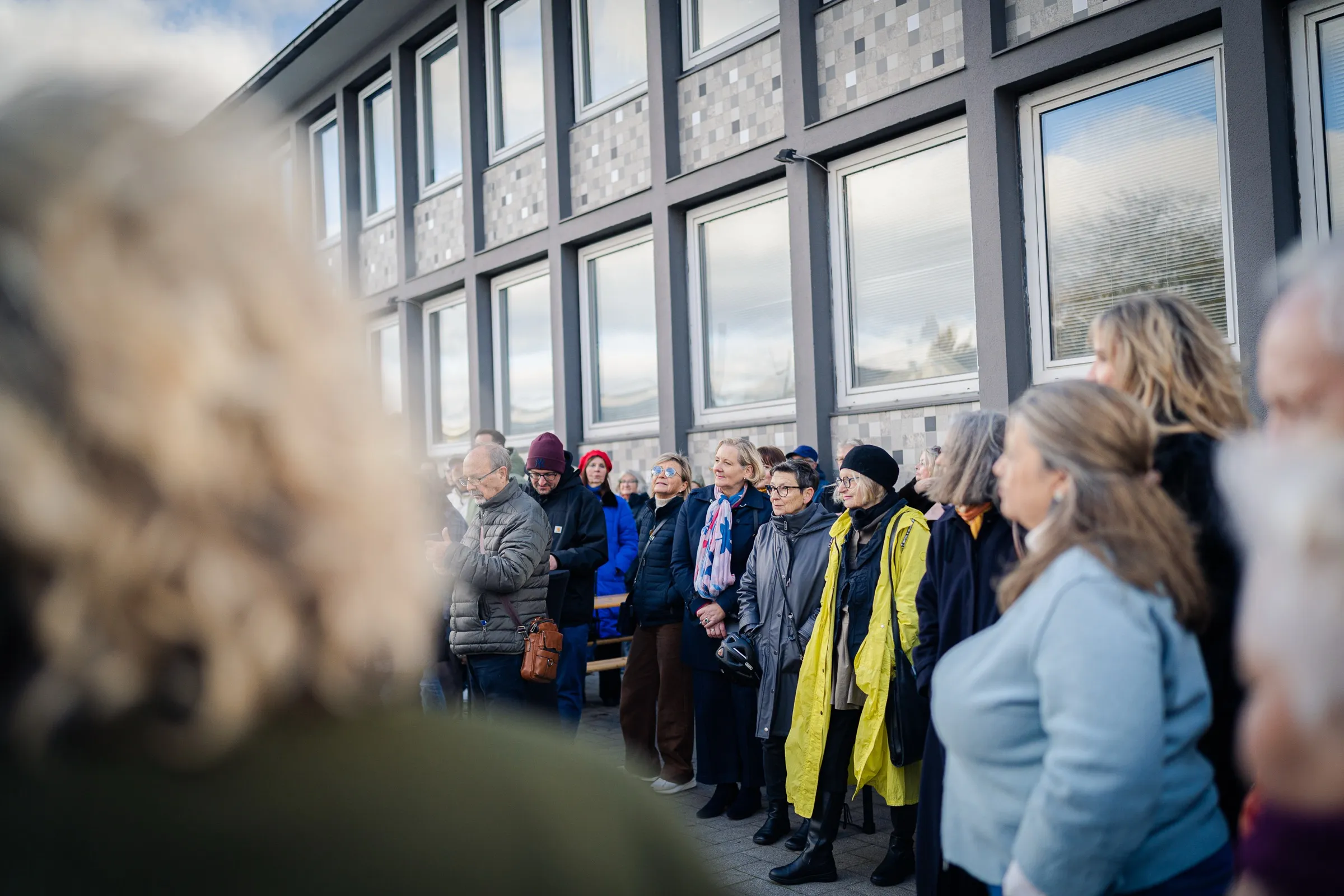
At midday I was standing in the Mühlenstraße, and around a hundred other people were standing there too. It was cold, the sun was out, and all 55 banners were hanging on the scaffolding in front of the brick façade. That it really was all of them we owe to Sebastian Niewerth of Niewerth Gerüstbau. He put up a second scaffold especially, so that the works that were only meant to follow after the turn of the year could hang for the opening as well.
Behind every banner there is a selection, and behind the selection a quantity you cannot see from the street. More than 340 works came in after our call, for 55 places. A jury of five decided, and I sat on it for Denk.Mal. We did not want a list of the best, we wanted a whole, and artists from Celle were to be given preference. 49 of the 55 now come from Celle and the surrounding area, the youngest is thirteen, the oldest probably born in 1941. When the Cellesche Zeitung asked Zandra and me what it had been like, we said what is true: honestly, we would have liked to show them all.
We hung the banners ourselves, in teams of two and with climbing gear, Alwin Gröschner and I, Simon Schwab and Daniel Wunn. You work from top to bottom, hooking in every banner one by one, while Zandra stood below, cheering us on and keeping us fed. Anyone walking past the mill today probably reads the façade in the other direction.
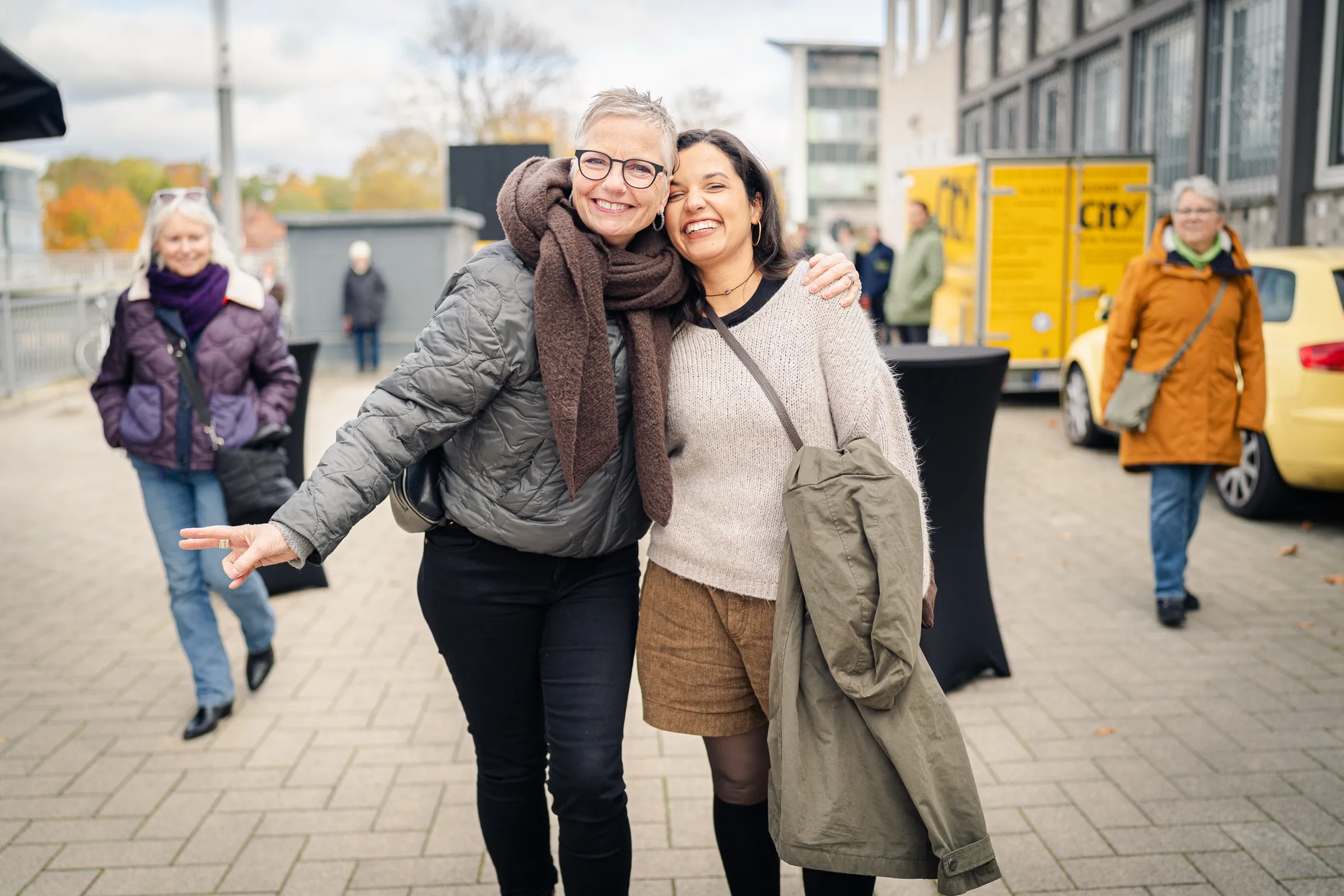
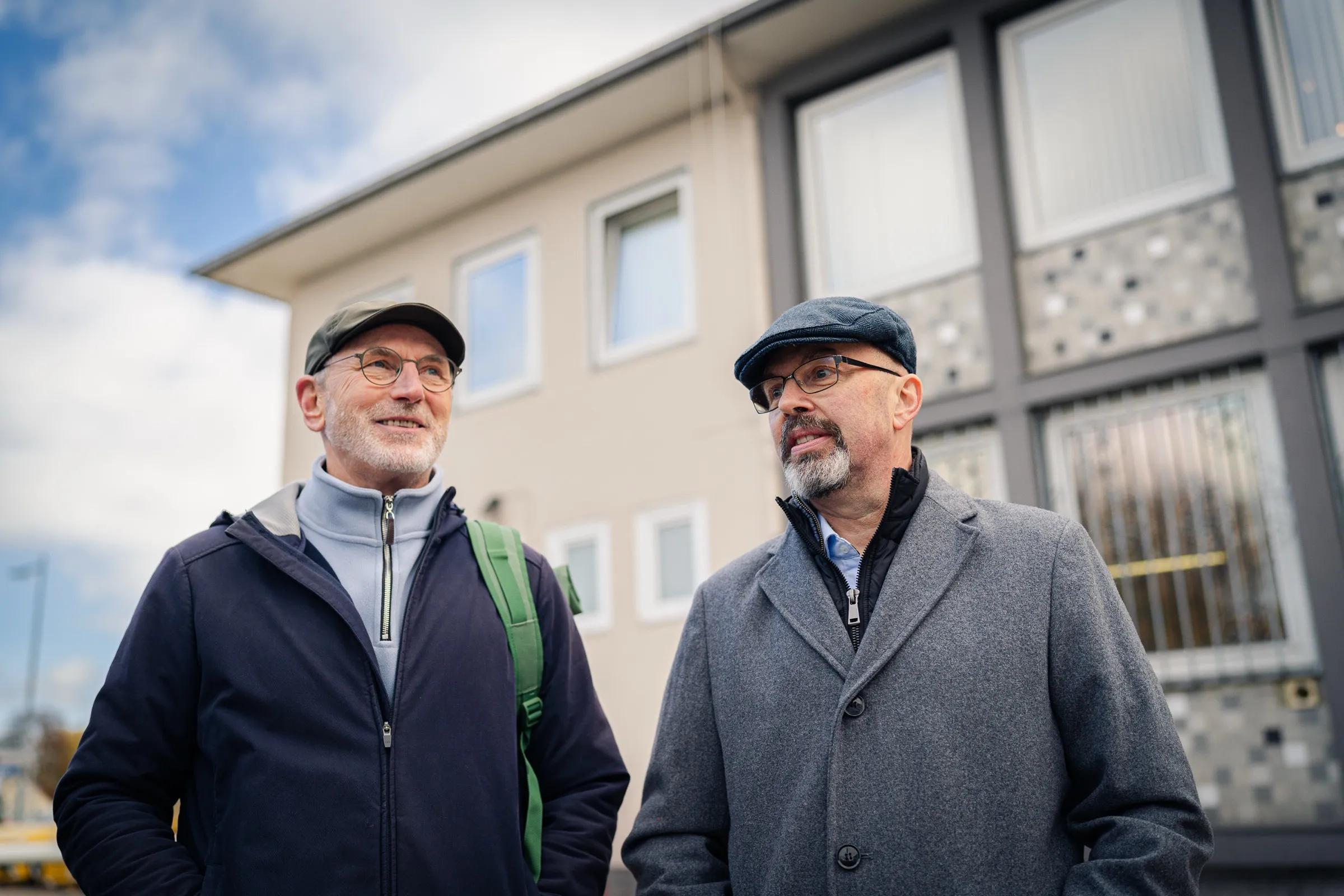
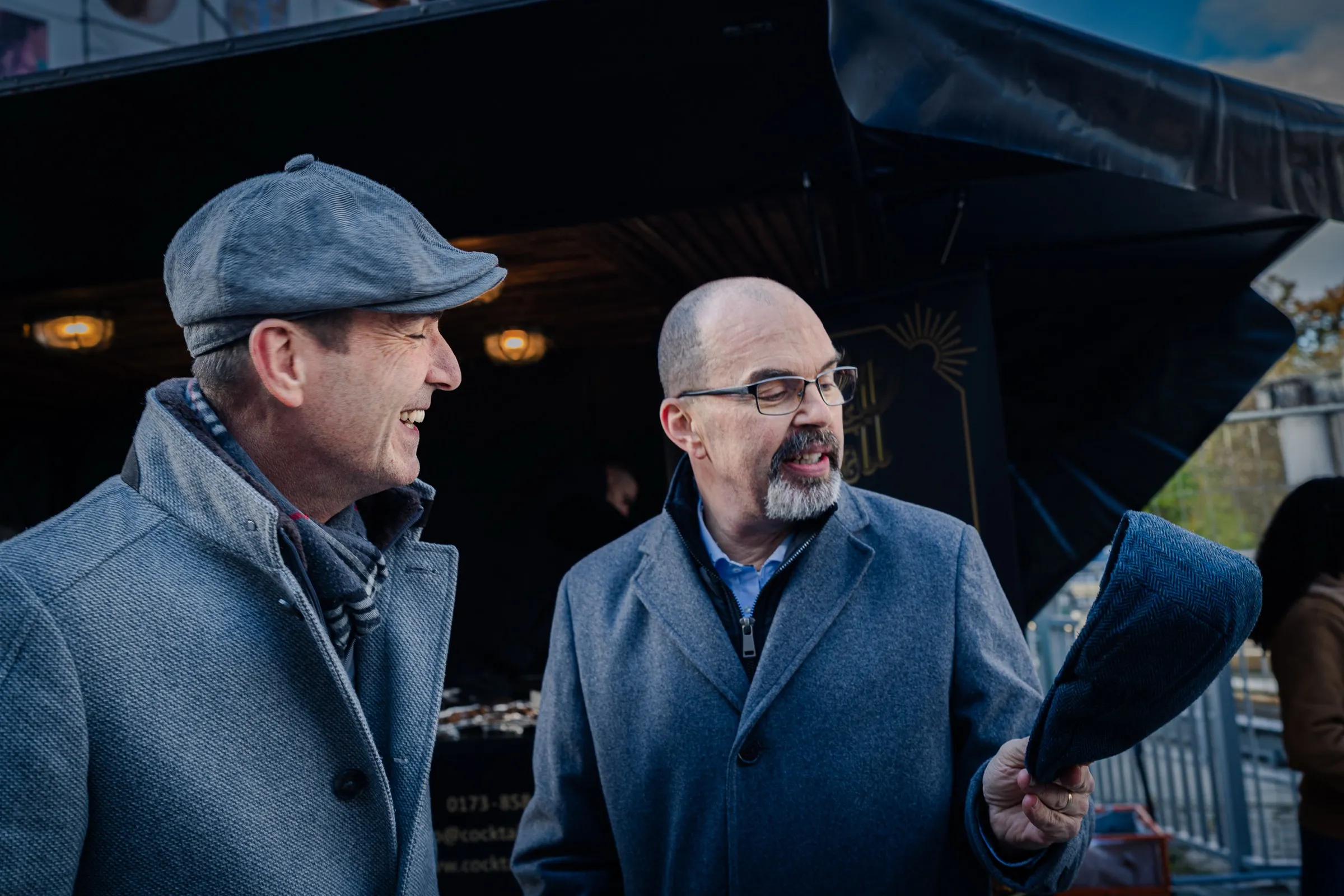
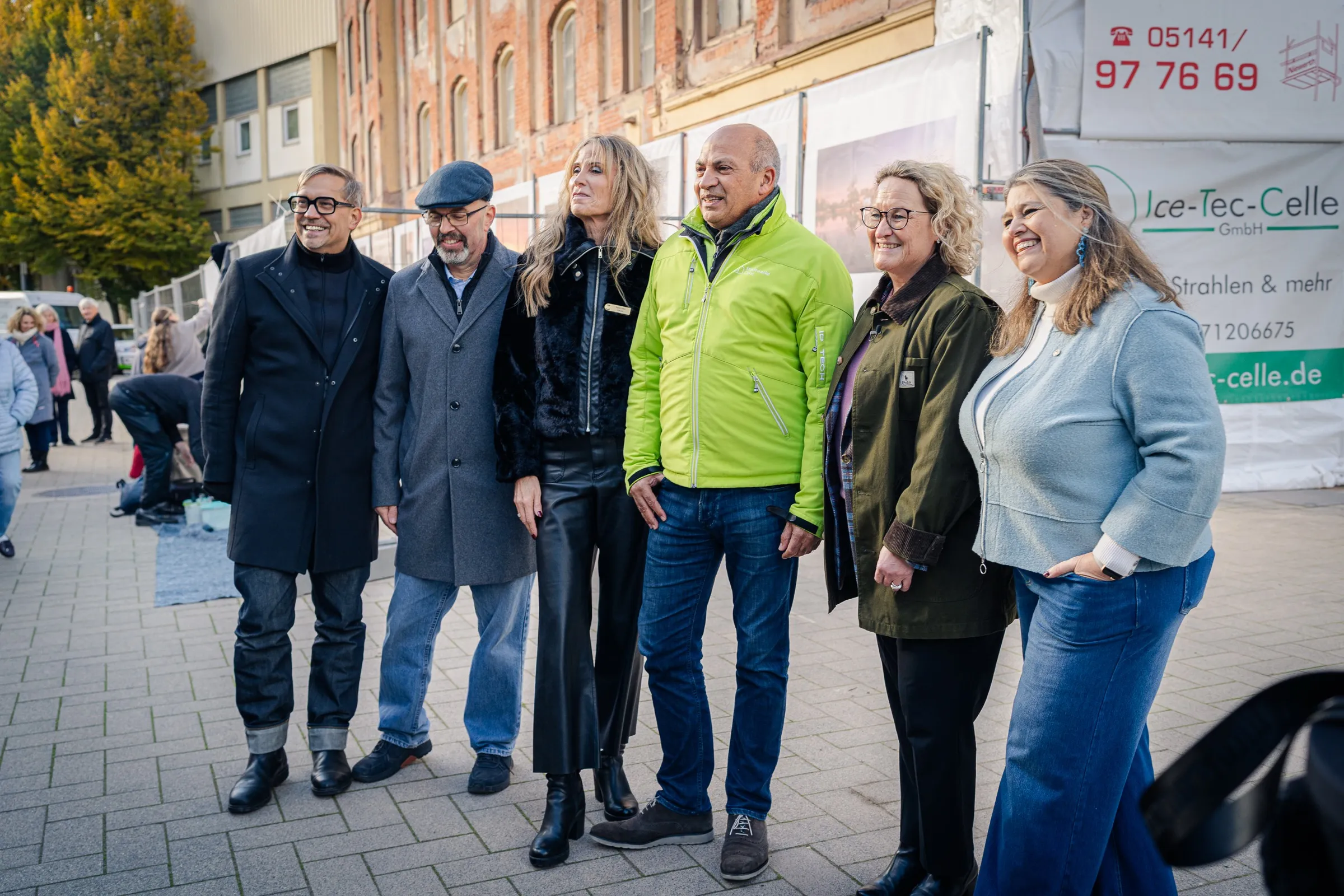
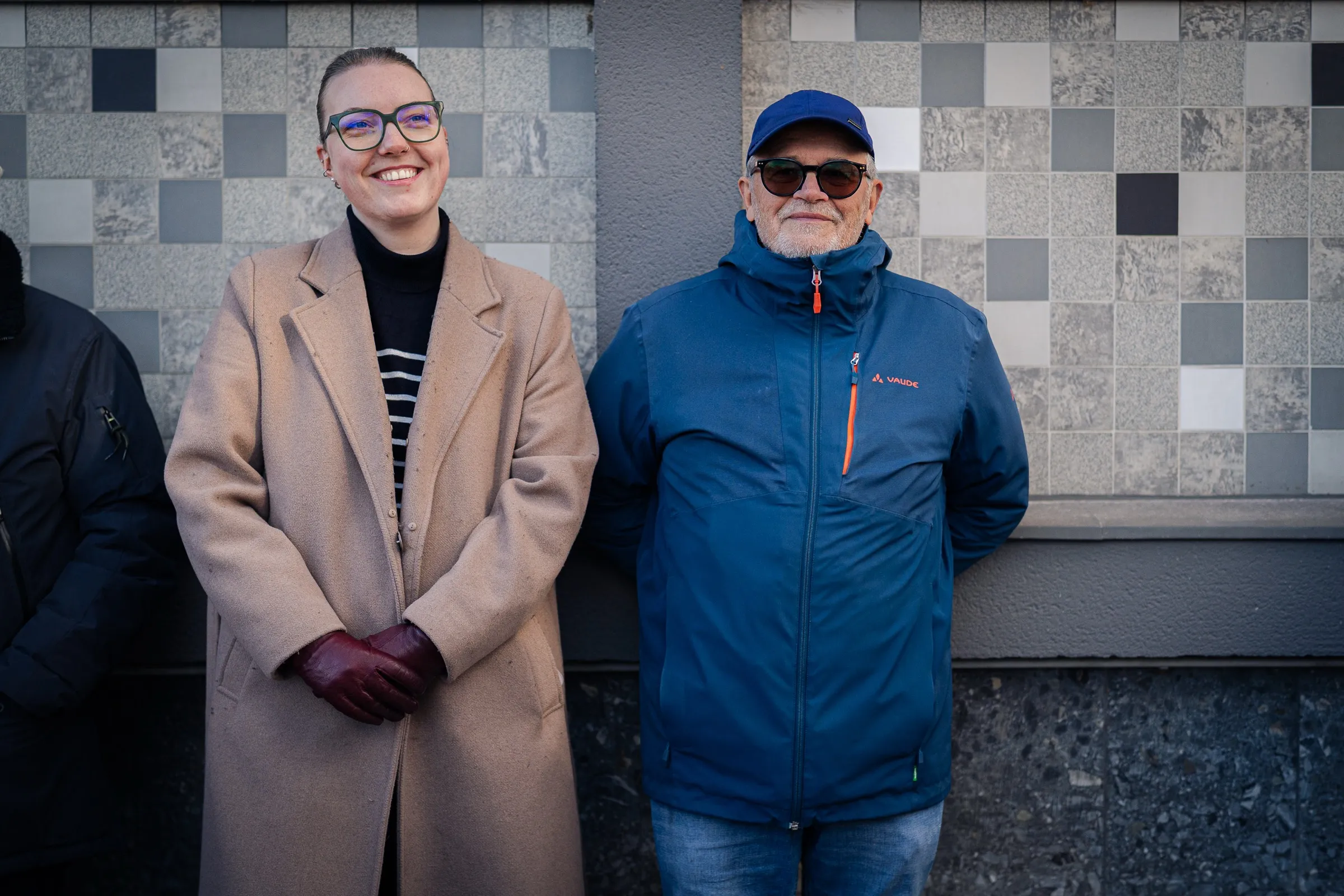
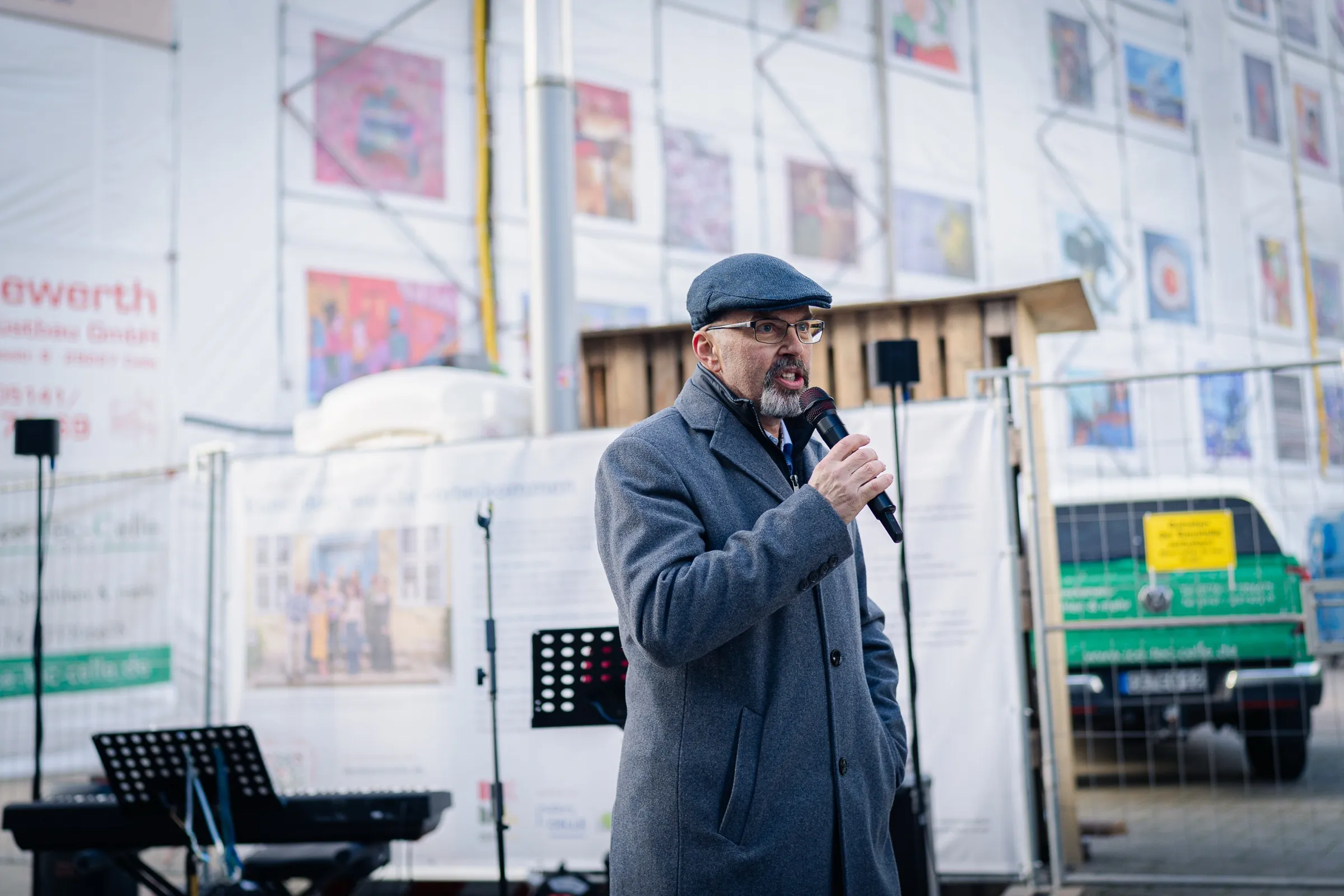
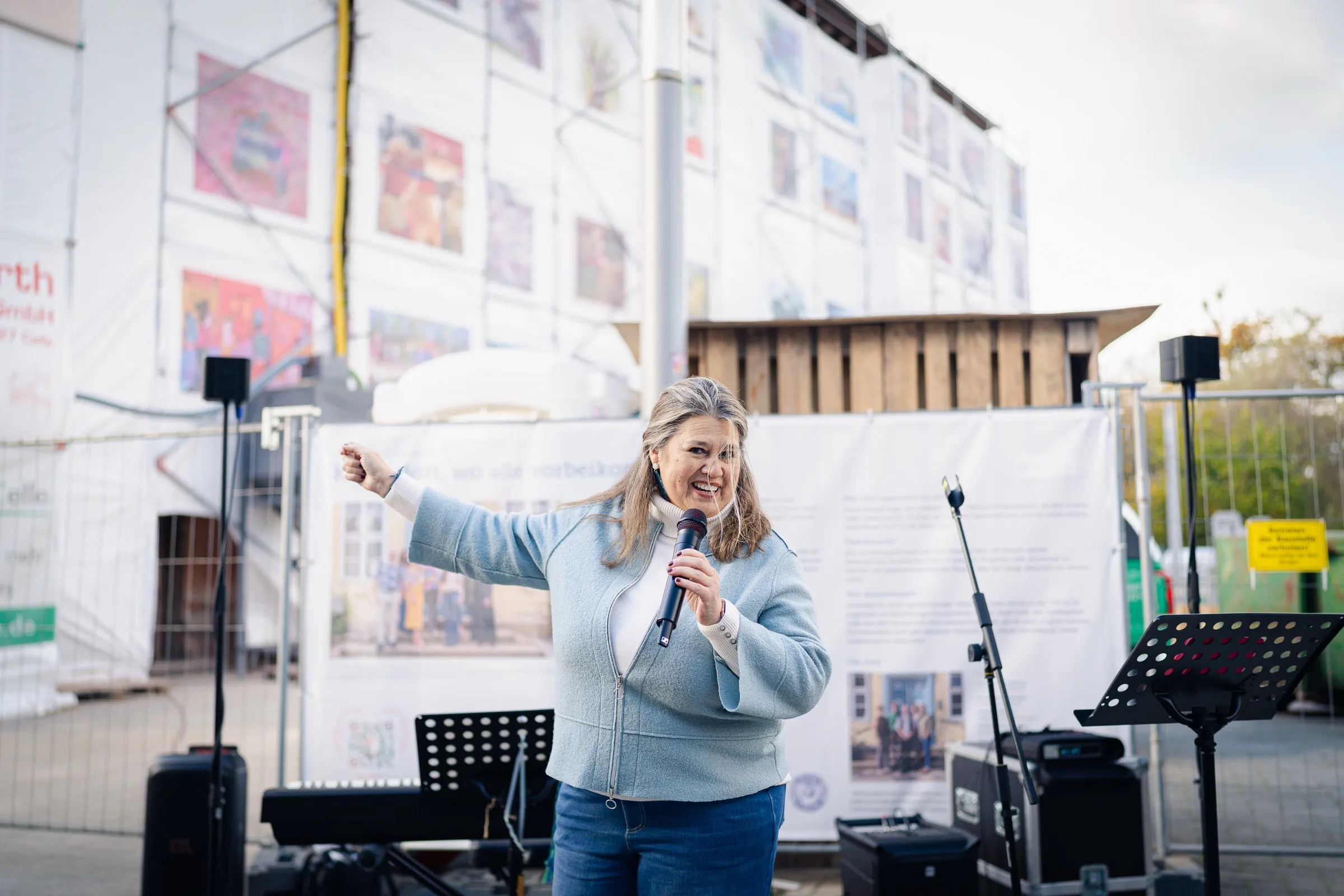
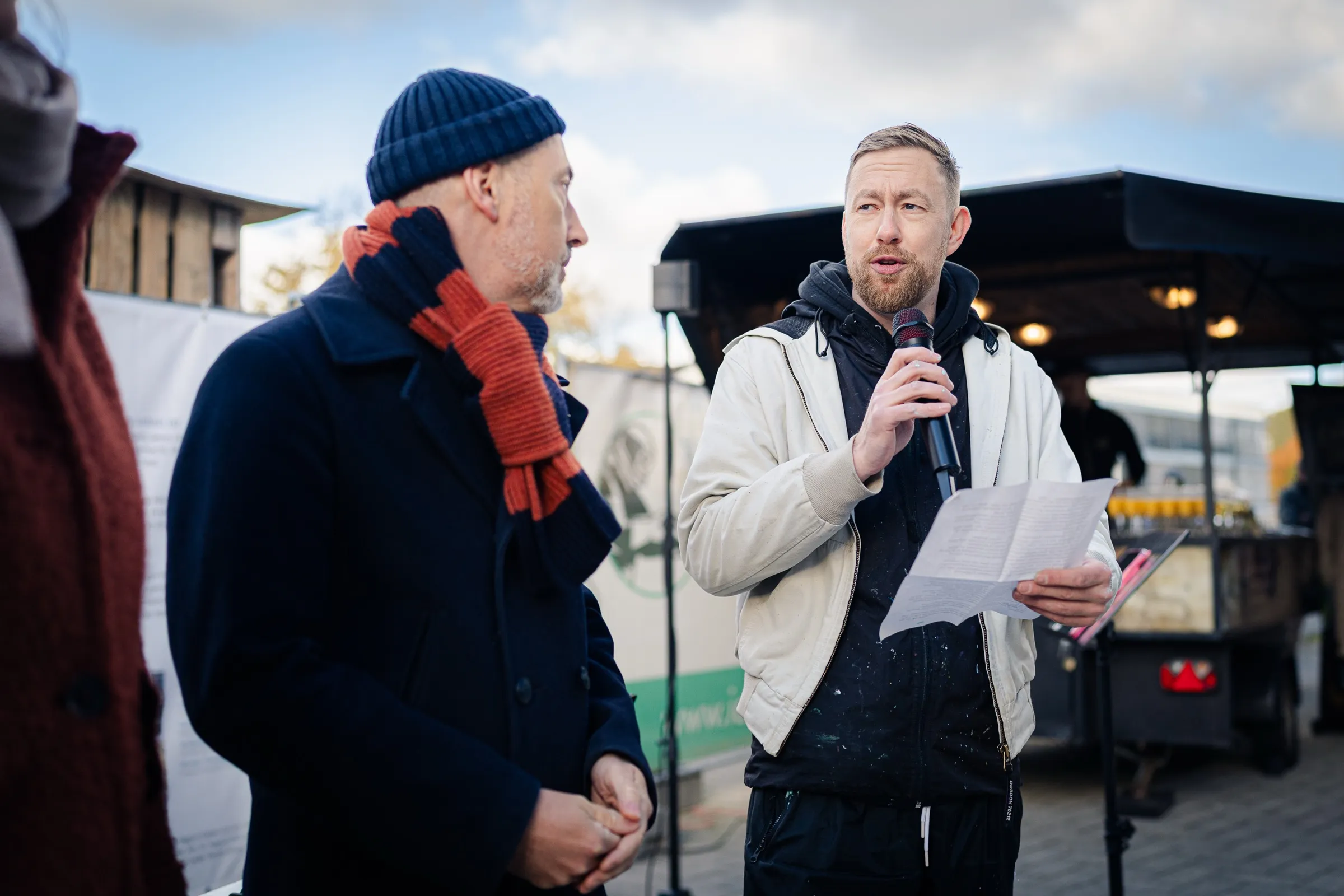
Standing in for Mayor Jörg Nigge, First City Councillor Nicole Mrotzek welcomed the guests. Daniel Wunn spoke for the jury, and the Celler Presse recorded a sentence of his that I am taking with me: “This exhibition turns culture into a true common good, one that is not reserved for a wealthy elite but belongs to all of us in Celle.” Art in public space meets us in everyday life, unasked. Alwin Gröschner, one of the initiators, said according to the Celler Presse that he would never have thought so many people interested in art would come together on a Wednesday at 12:30.
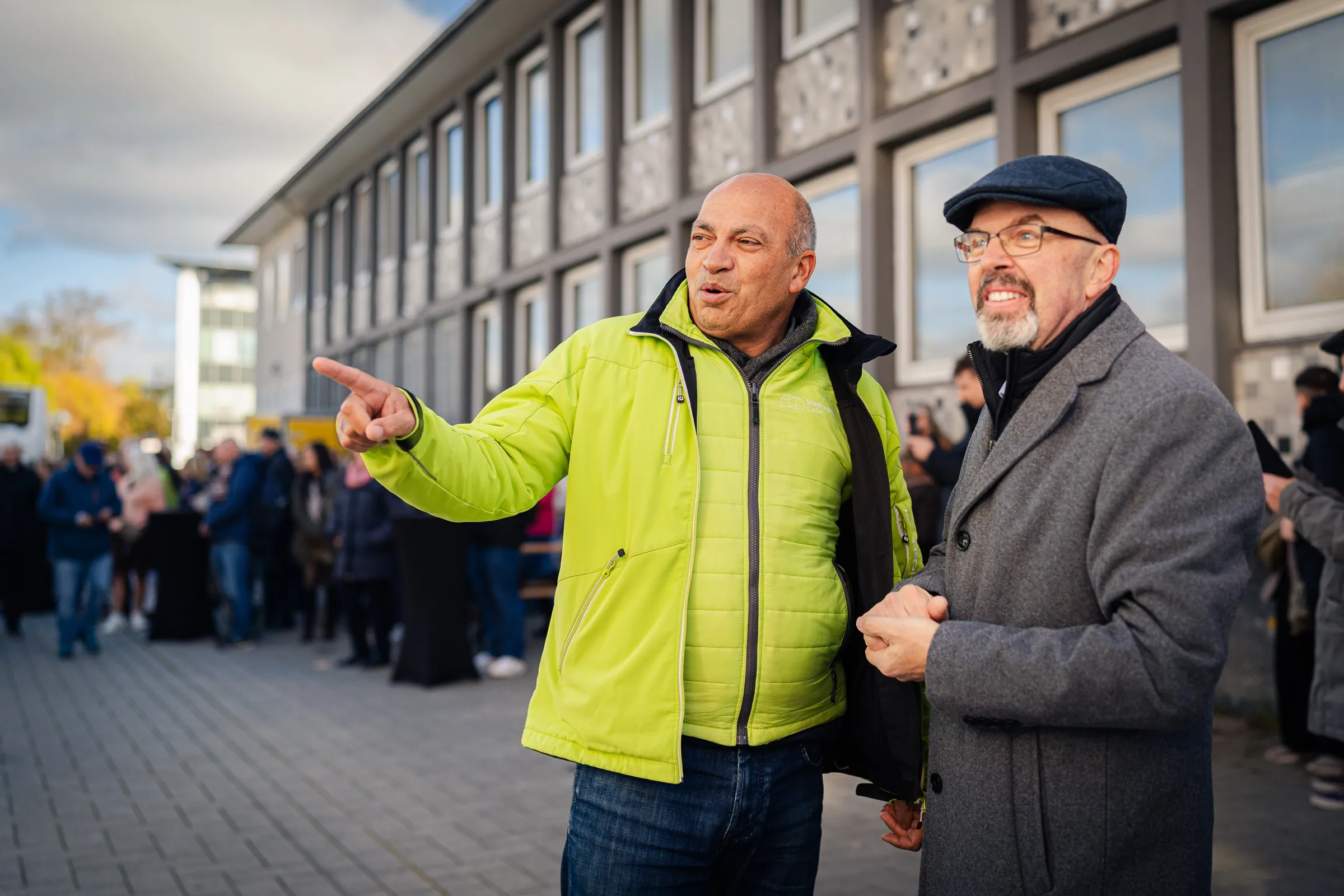
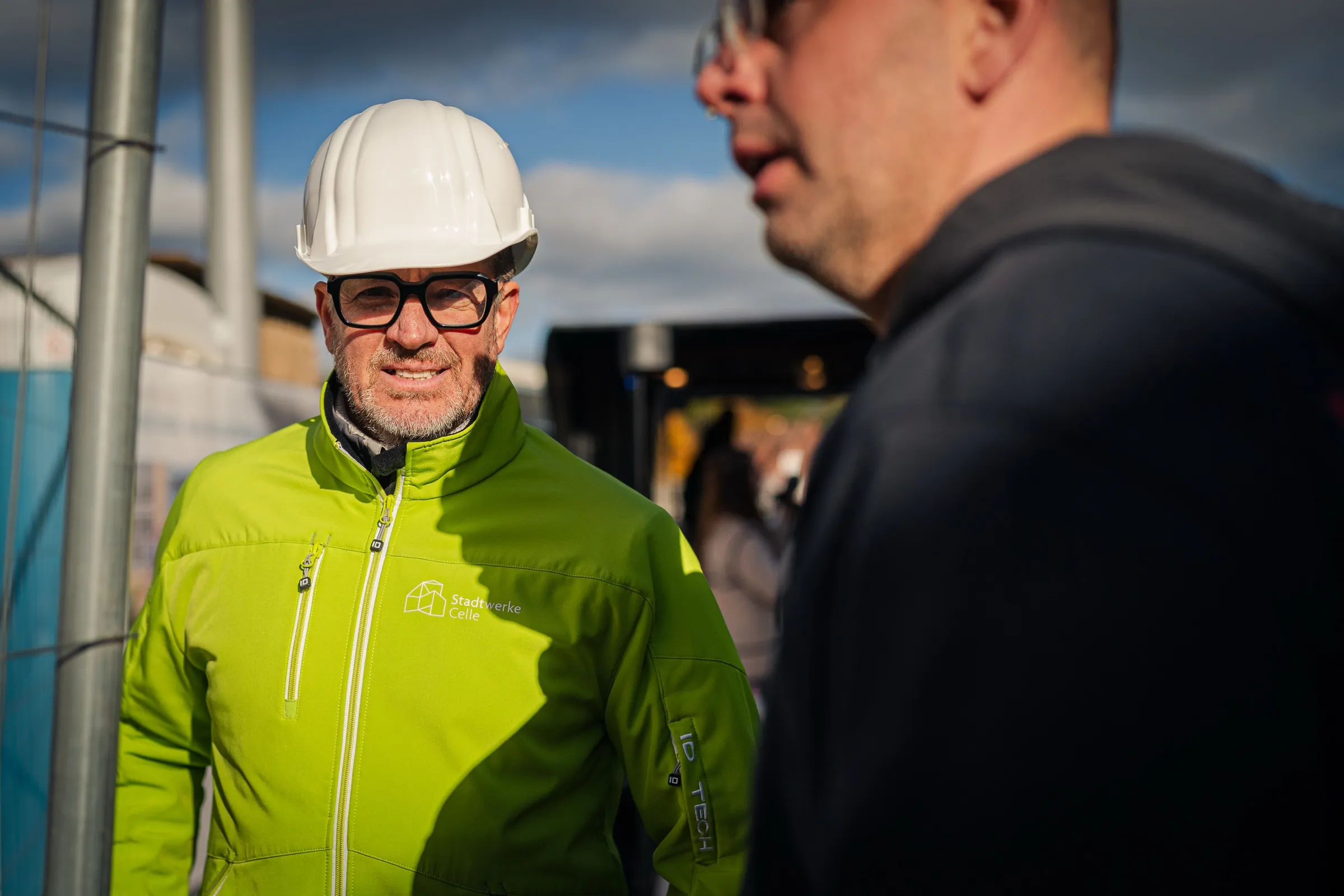
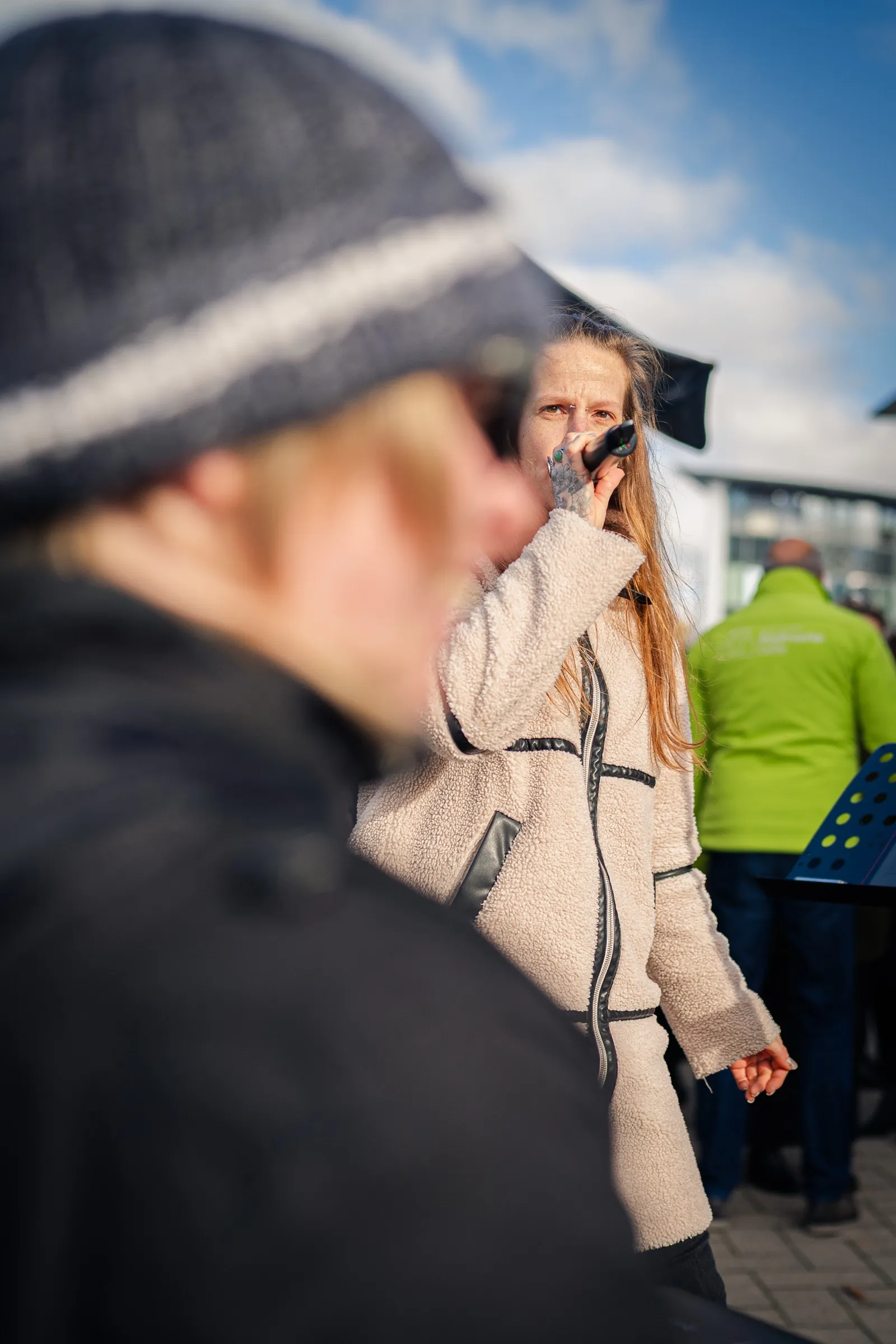
Thomas Edathy, managing director of Stadtwerke Celle, was already looking a little ahead: in about a year, when the scaffolding hopefully comes down again, the building itself will be the work of art. And Dagmar Janßen, president of the Soroptimist International Club Celle, said that projects like this one bring people together. The music came from Hanna and Chris of Lost Souls Gallery.
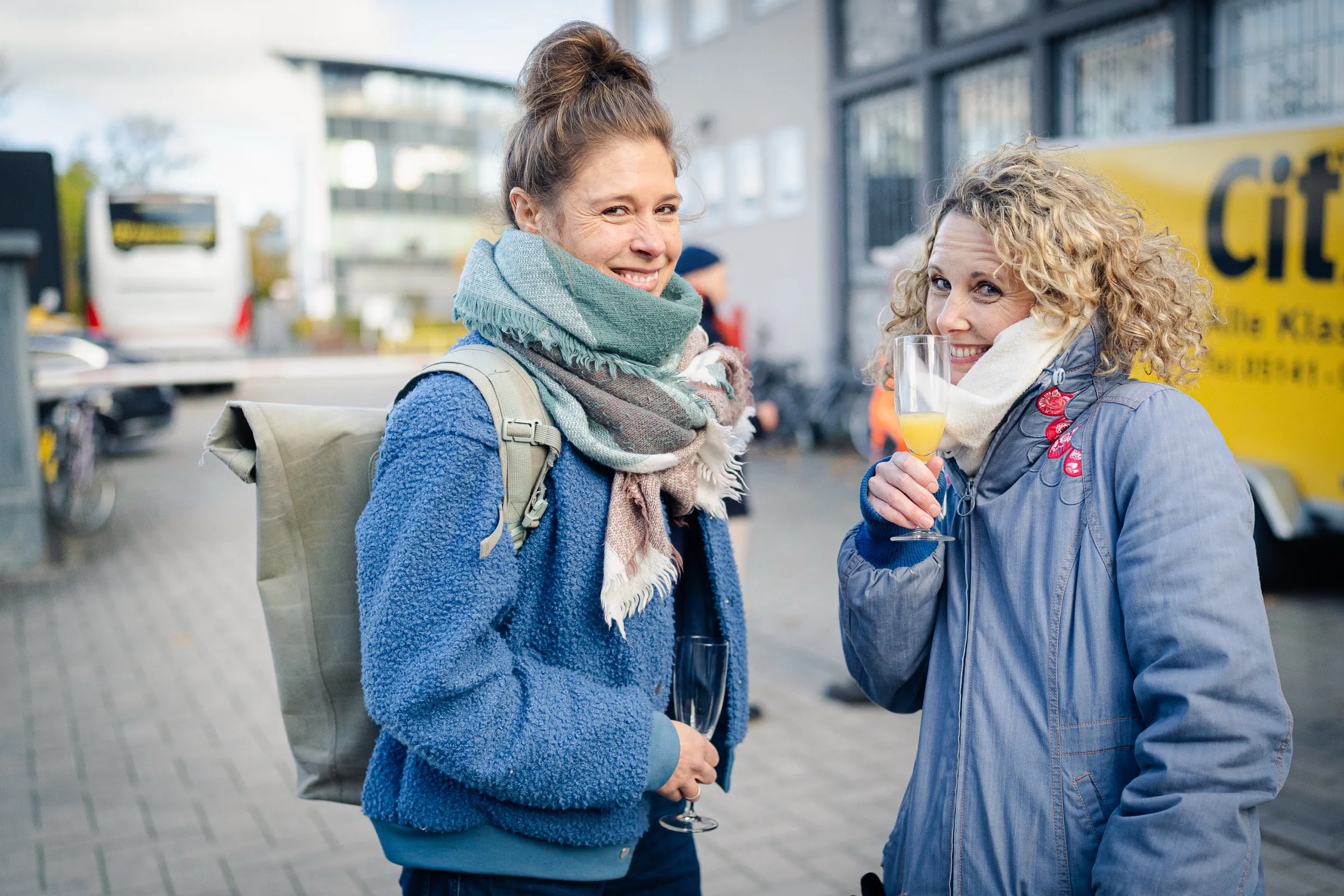
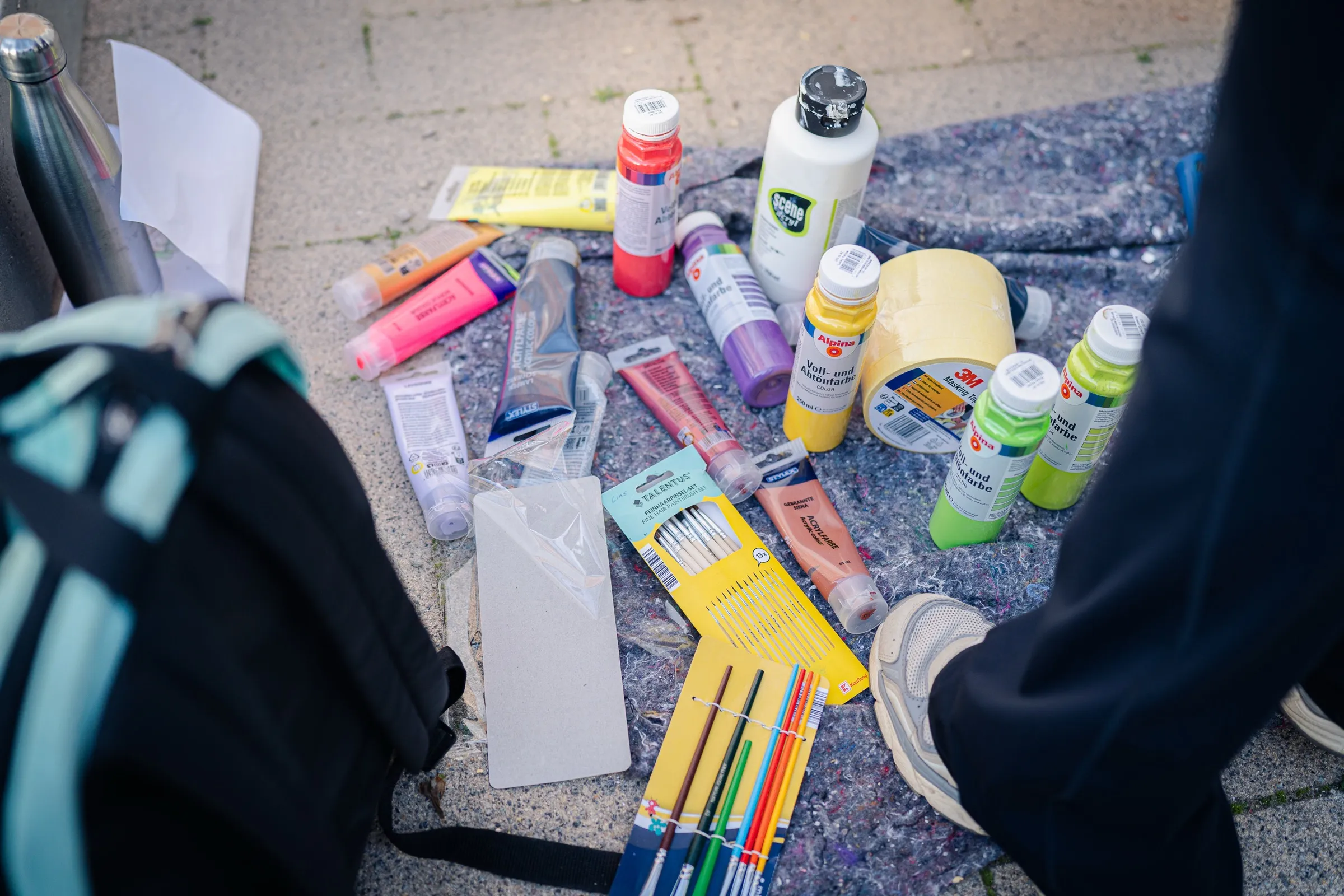
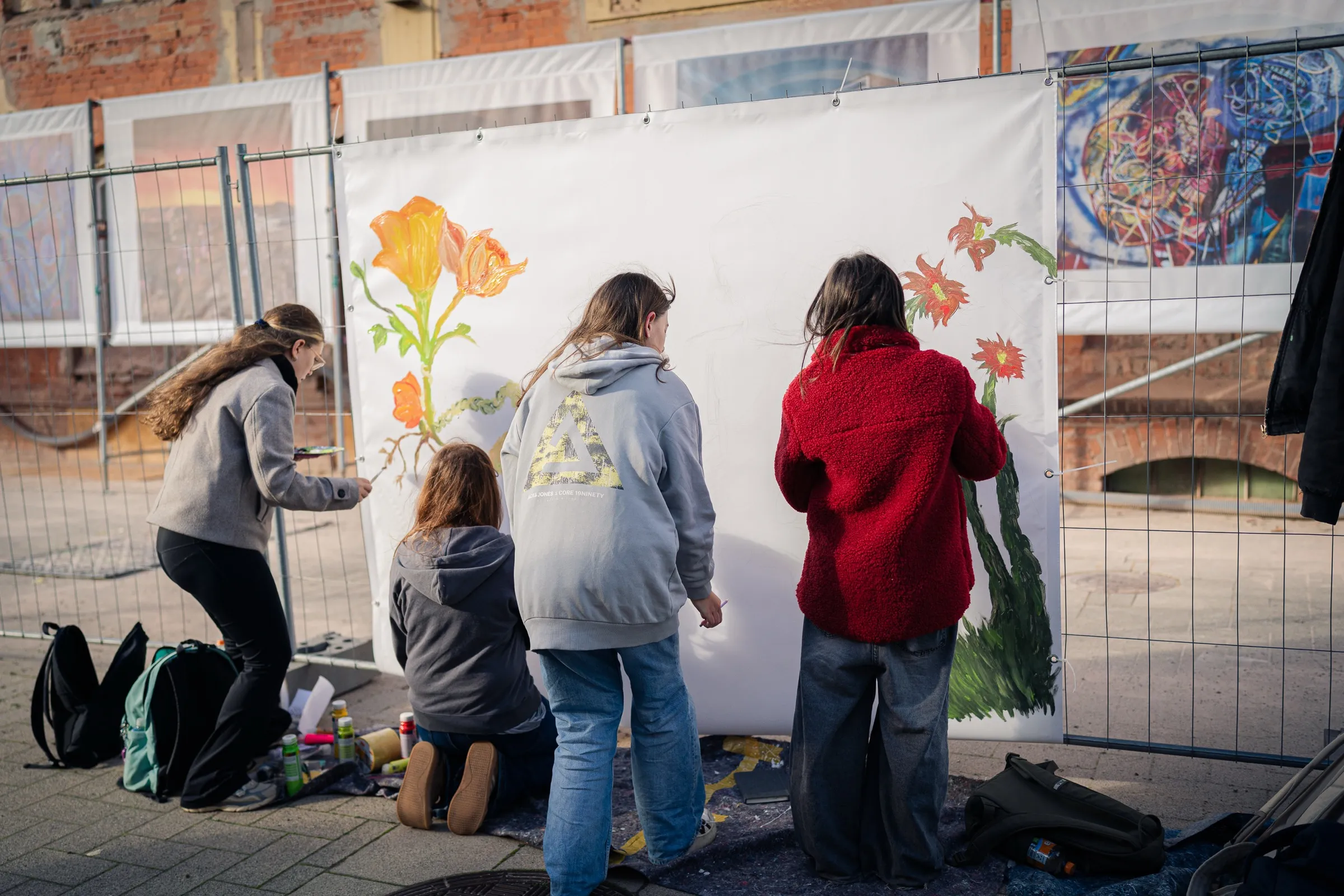
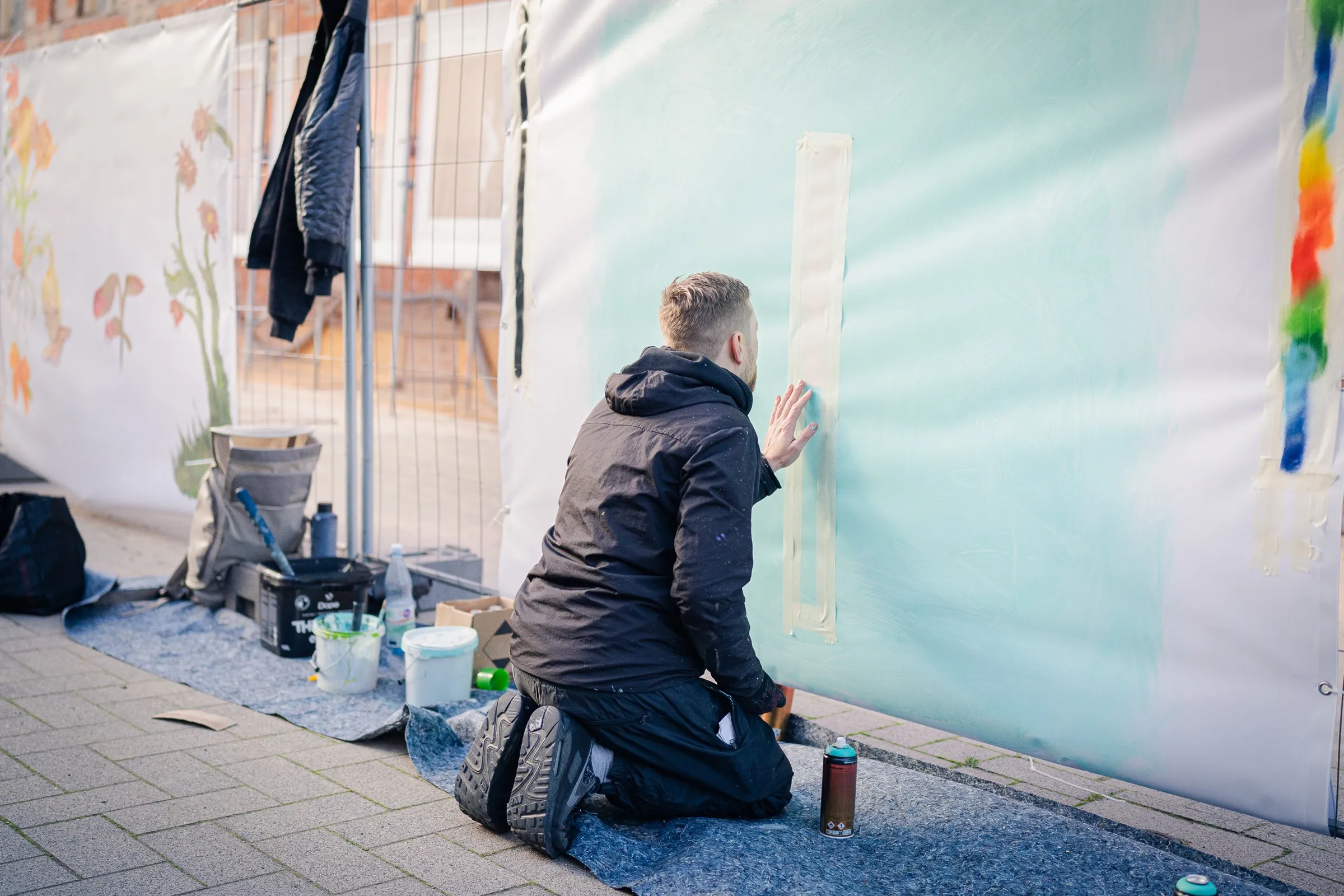
During the celebration, new art was made in two places. A group of pupils from the Oberschule Westercelle, with their teacher Alexandra Socher, painted large flowers on a white banner at the construction fence, and a few metres further on Daniel Wunn sprayed a banner. The Cocktail Kartell poured orange juice, white wine and sparkling wine, and the Gröschner family's little tortillas were almost all gone after a short while.
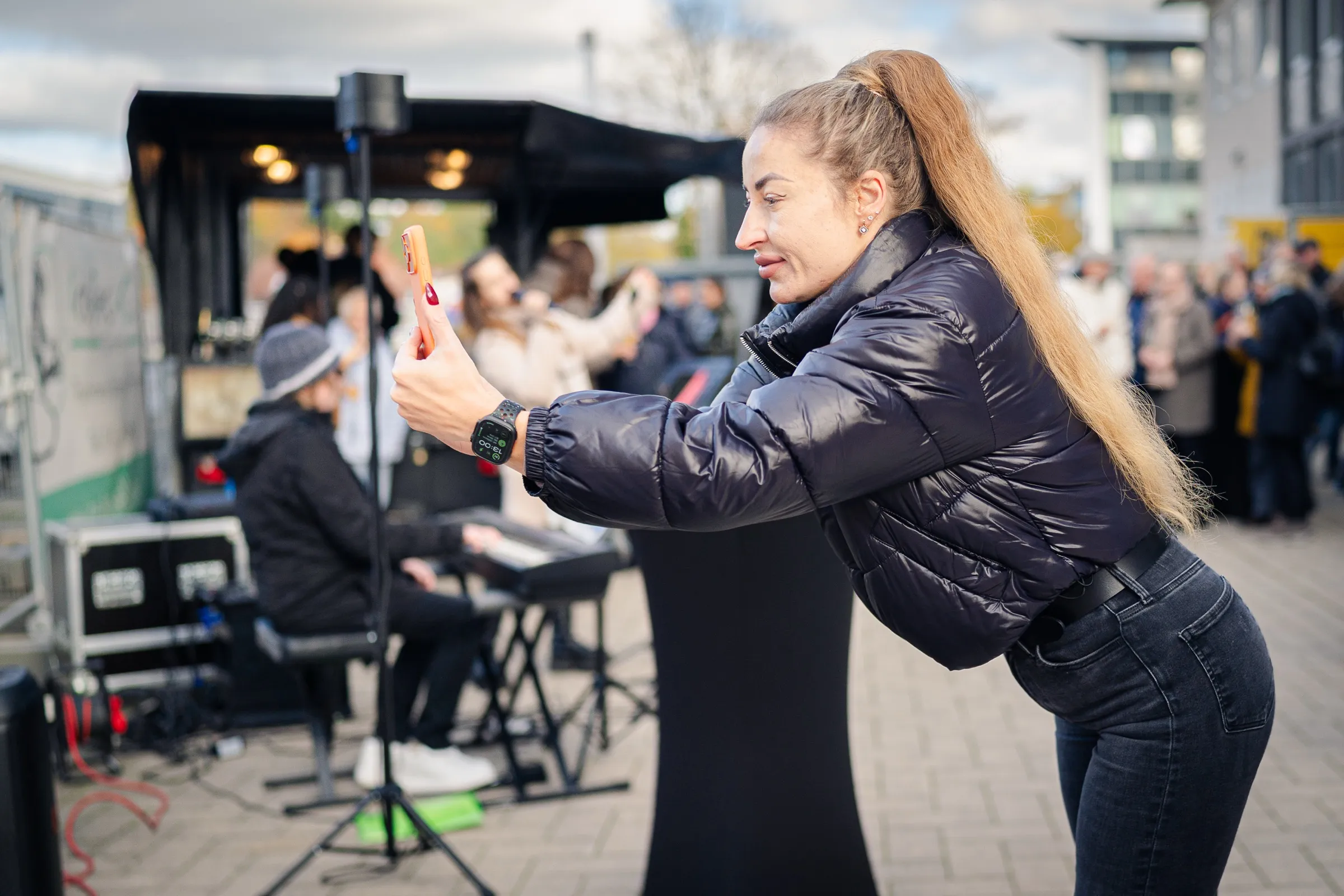
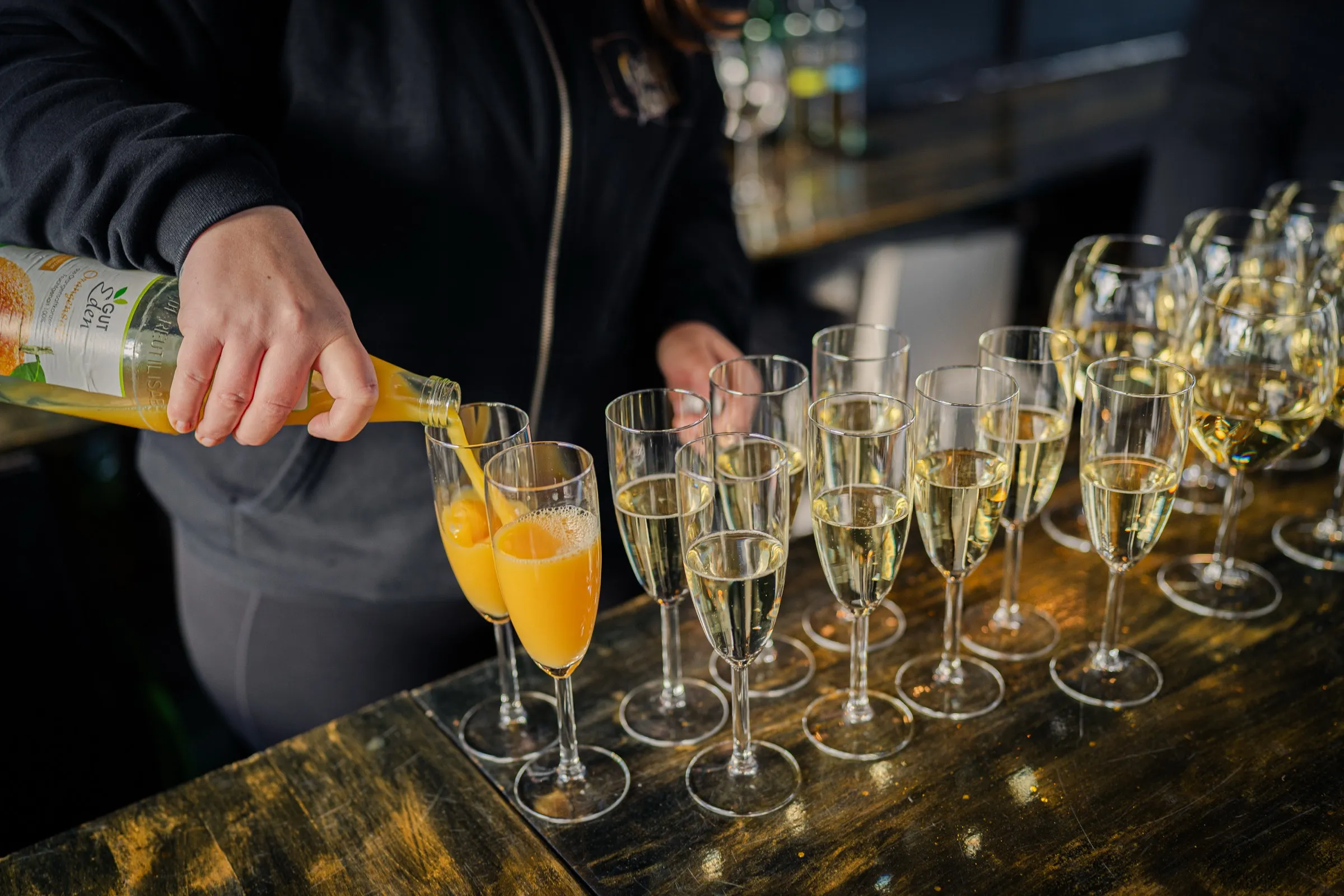
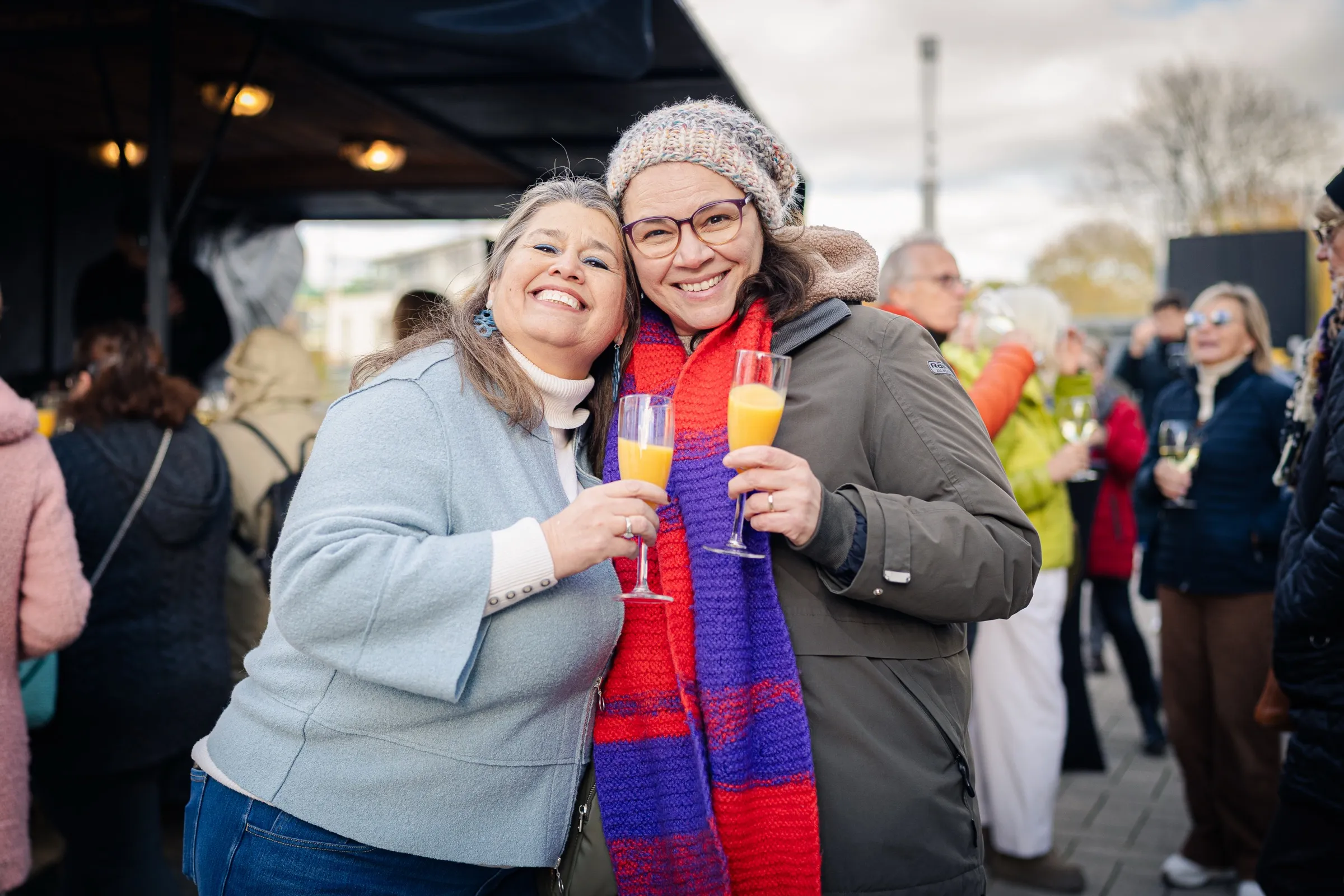
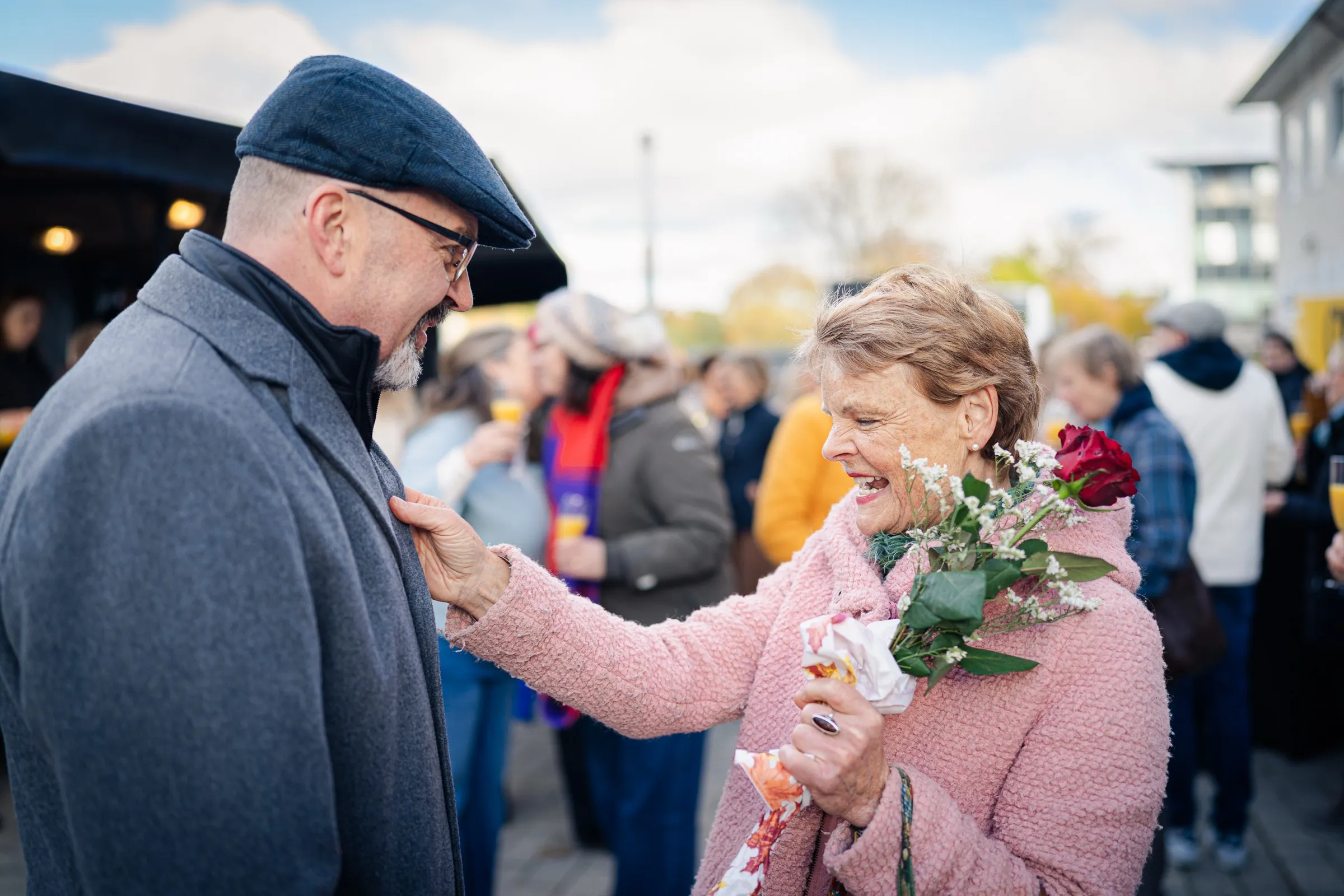
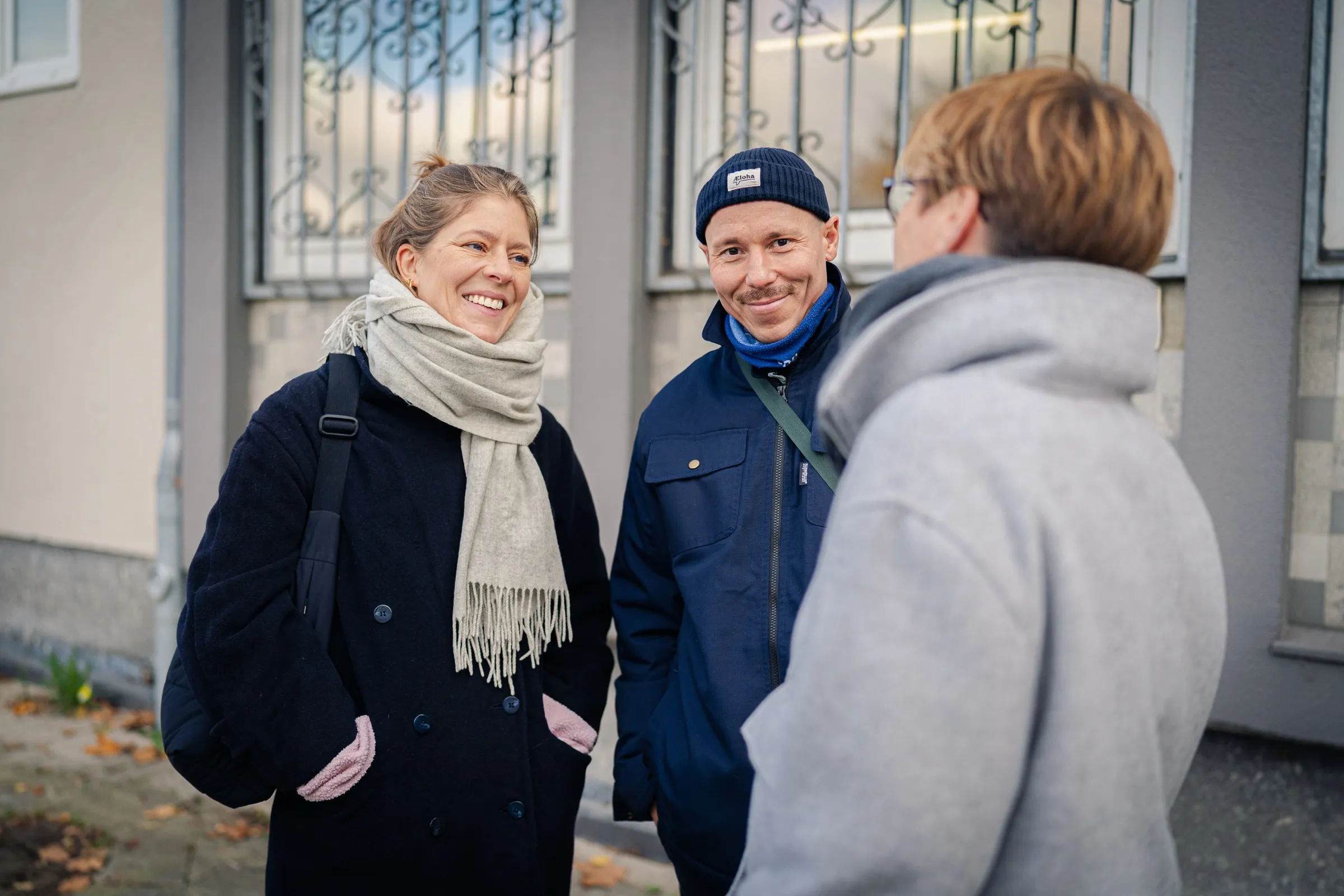
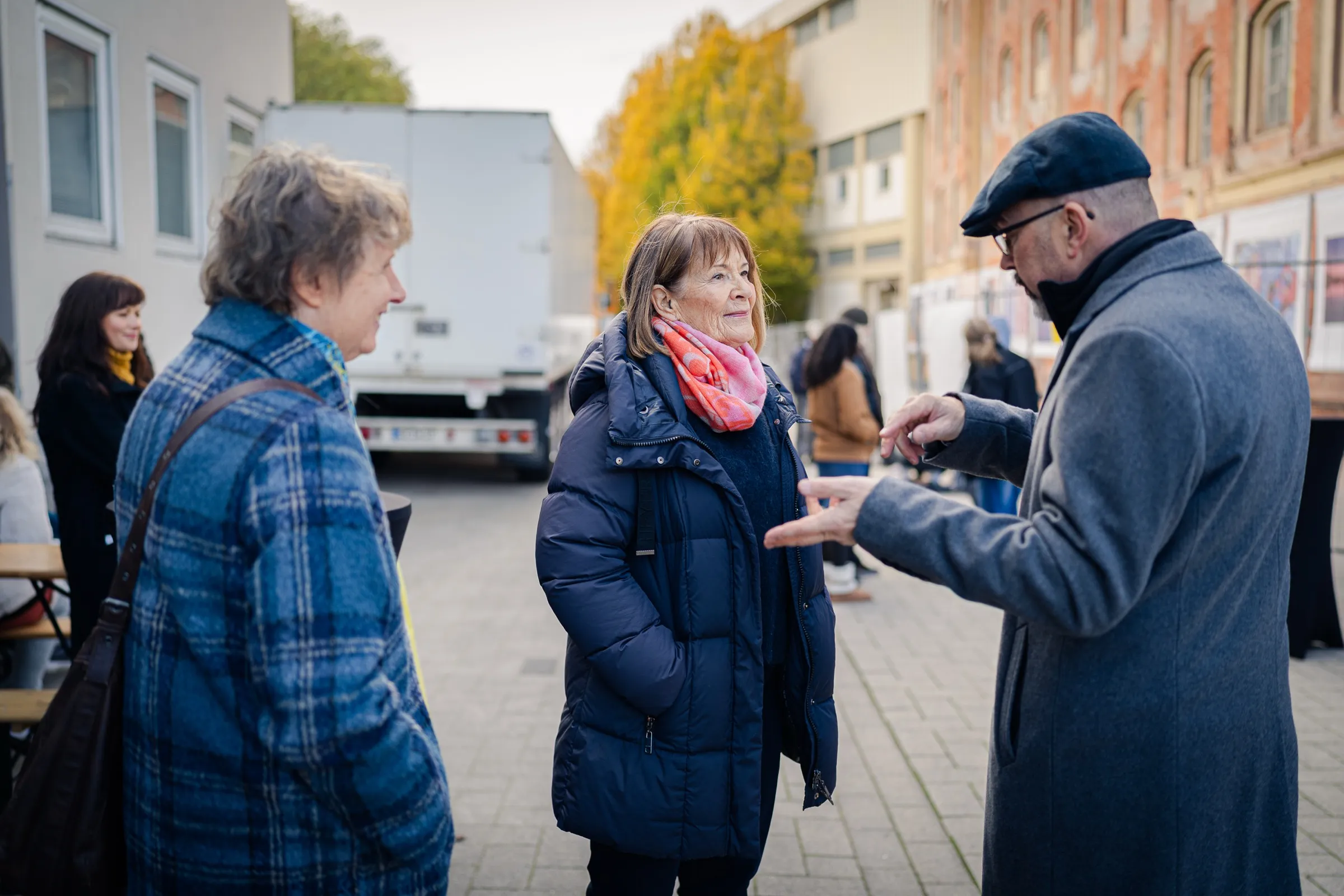
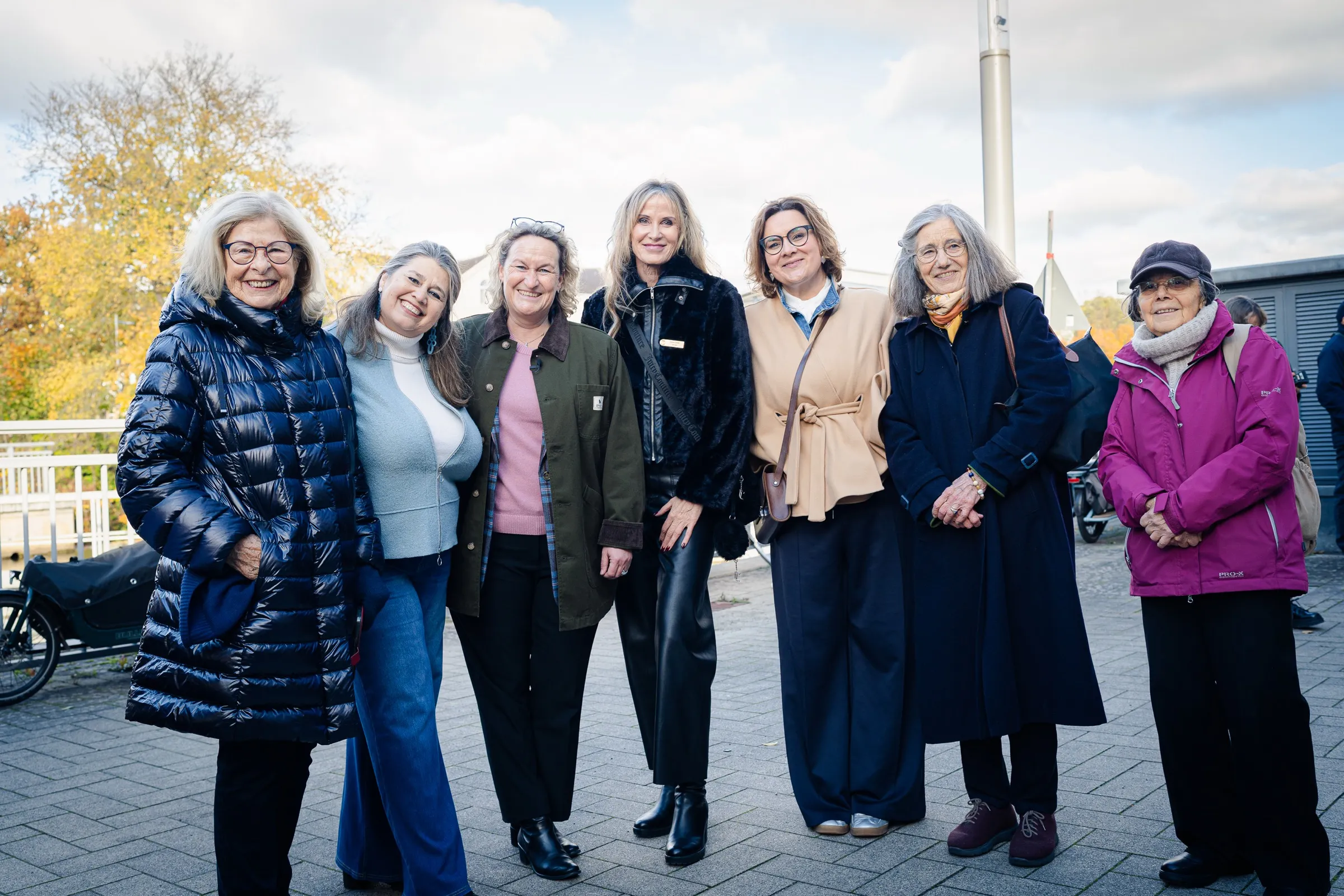
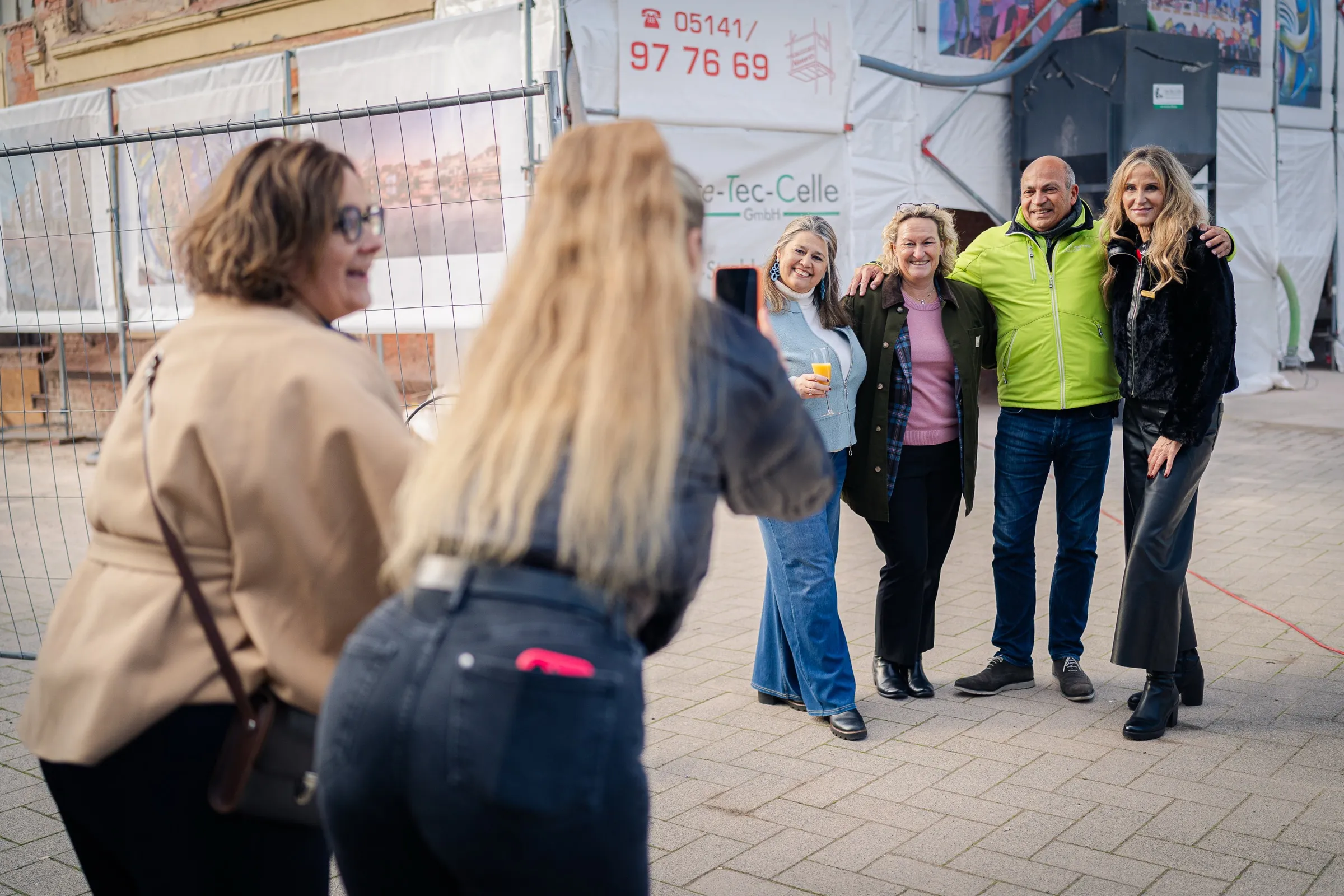
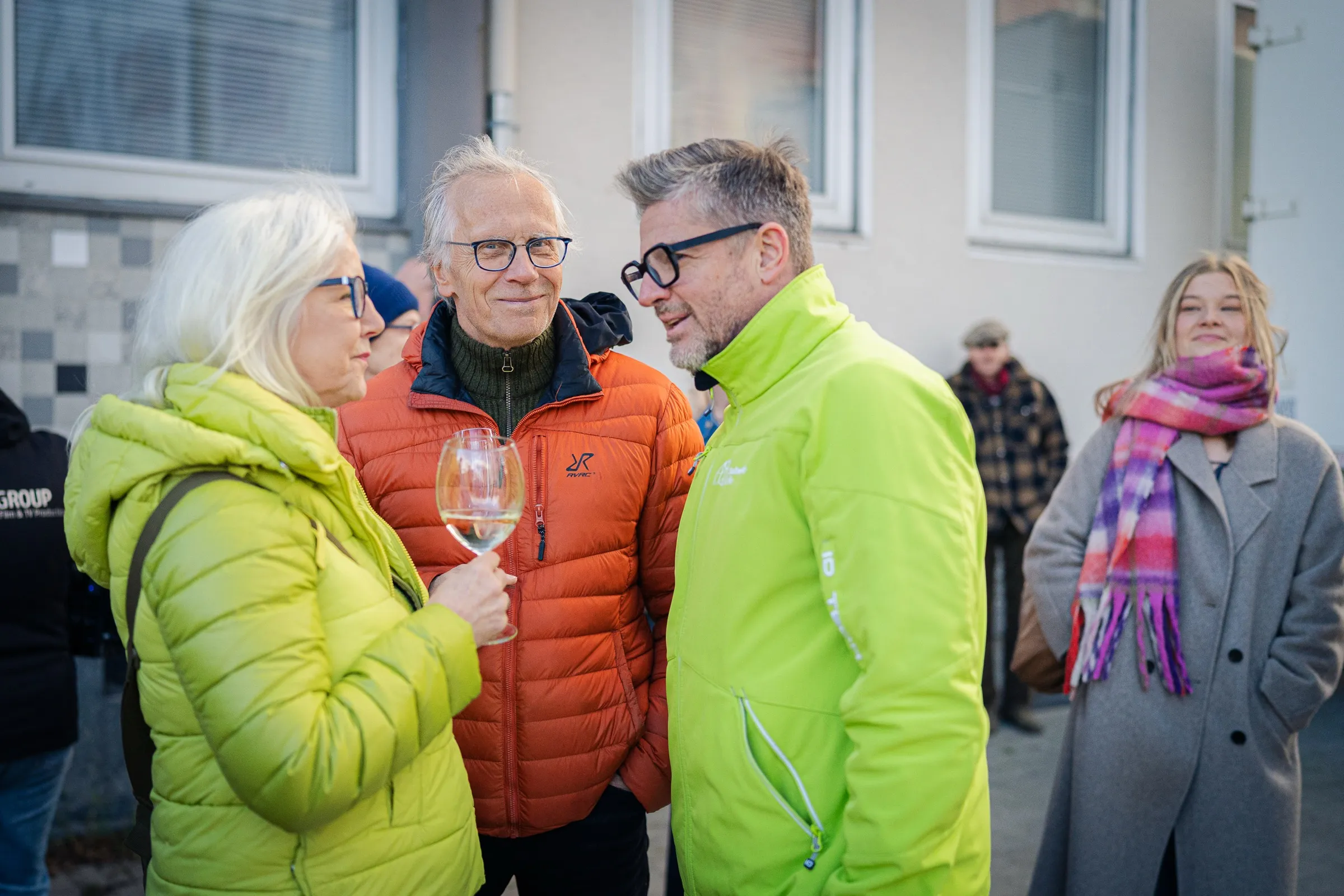
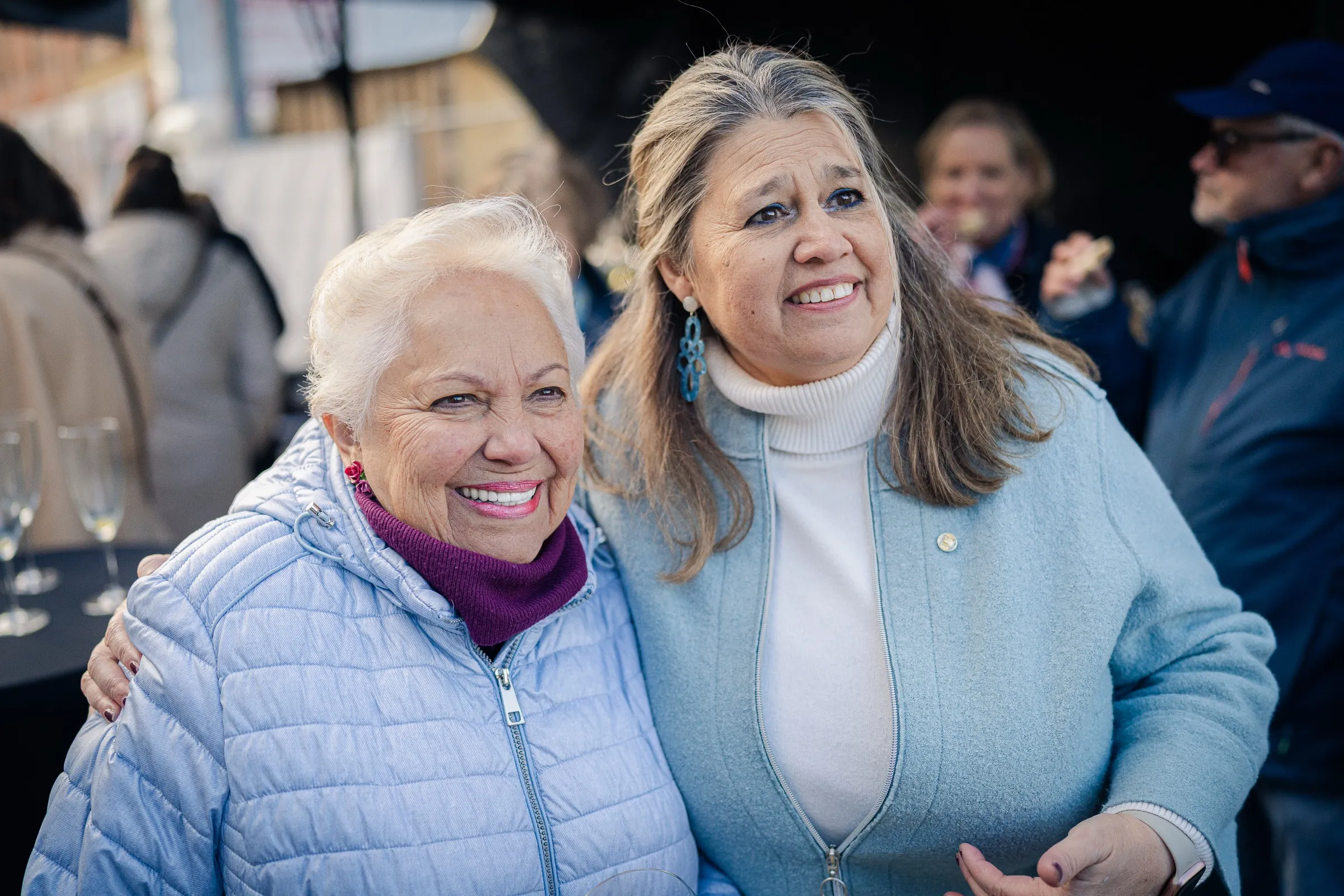
Among the guests were artists whose works now hang on the scaffolding, people from the city of Celle, from the Stadtwerke and from the Soroptimist International Club, and people who happened to be passing and stopped. Zandra spoke of one big family. What matters to us is that something like this is not just there for a select circle, but for everyone, right in public space. There is no admission charge, and no opening hours either.
The exhibition stays for as long as the construction work lasts, at the Rathsmühle on Mühlenstraße in Celle. All the works and the names behind them are on Denk.Mal's project page.