DE EN

No kit, no agency behind the curtain. I built my digital team myself, with Claude: 37 working roles, each with a craft and a name, plus myself as the director. It replaces no one, it extends my work: in photography, in design, in art, and in the fourth craft, vibe coding.

On this page, the ensemble introduces itself. And if you would like a tool like this for your own business: that is exactly what I now build for others.

One workshop. Four crafts. One ensemble.

Ensemble · 01 · The Build

The Build.

I have worked with AI as a tool since 2022, and since the Claude era I have been building entire working environments with it: agents, skills, custom tools. This way of working is called vibe coding.

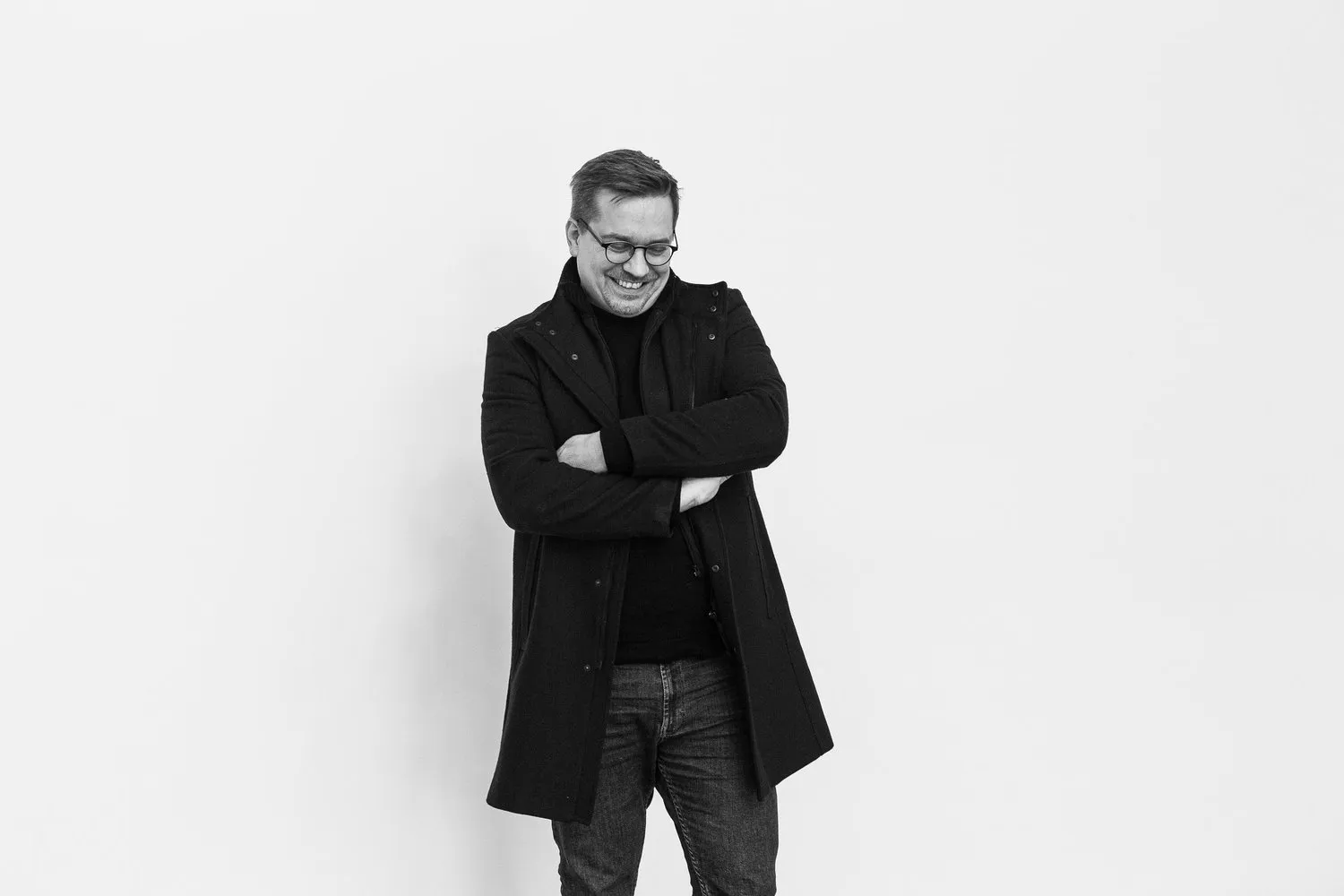
Roman Thomas, portrait, black and white
That is me: Roman Thomas, directing the ensemble · Photo: Vivian Dehning

I am not a classic programmer. I design tools the way I design brands: first understand what is needed, then build, then test. Claude is both material and colleague in this.

It started with small helpers. Today every role in the studio has a name, a craft, and clear rules. None of it is a gimmick: every figure exists because a real step in the work needs it.

The result is a studio that can take on larger and more complex projects than a single freelancer otherwise could. The eye, the decisions, and the responsibility stay with me.

This studio is self-built. It is my largest piece of work.

Ensemble · 02 · Vibe Coding

Vibe Coding.

Software now emerges from conversation rather than from source code: vibe coding is fundamentally changing the way we all work. In my studio it is everyday practice, with several AIs side by side instead of one single tool.

Vibe coding means: I describe in plain language what a tool should do, and the AI builds it. I test, discard, refine, as with any design draft. The result is real, working software, created in conversation instead of in source code.

This changes our working world from the ground up. For decades we adapted ourselves to programs: to their menus, their subscriptions, their limits. If a feature was missing, you waited, improvised, or bought yet another program that once again almost fit.

Much of that becomes obsolete. Instead of owning ten programs that each do a tenth, I build the one tool that knows my workflow exactly. It works the way I work, not the way a manufacturer dictates. And when my work changes, the tool changes with it, the same day.

I do not rely on a single AI. Several tools work side by side on a project: Claude for building and thinking along, others for image, moving image, and sound. And for anything sensitive I use a local AI that runs on my own machine, without any cloud. That way confidential client data stays in the house.

We no longer adapt to the software. The software adapts to us.

Ensemble · 03 · The Company

The Company.

Thirteen roles of my digital team introduce themselves in their own words: from art direction to research and engineering, to language, security, and philosophy.

01 The Eye

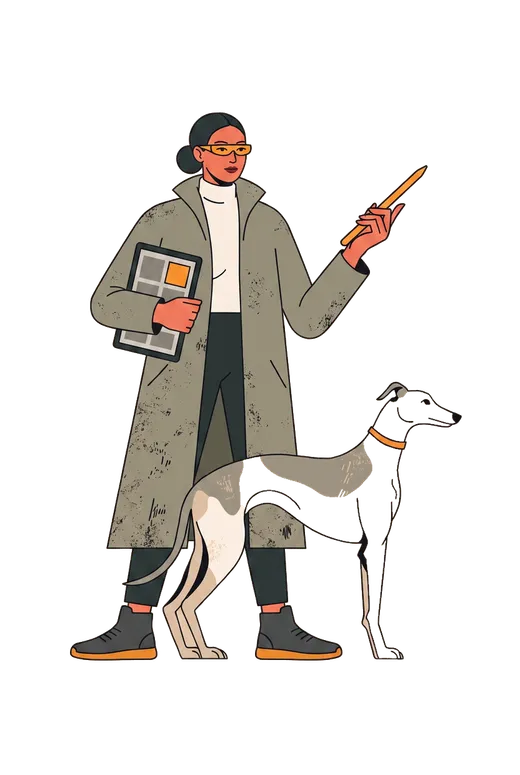
Illustrated figure of the Art Director with an orange stylus like a baton, a layout panel and a whippet

The Art Director

Art direction

What do you do here?

"I hold together everything you see. Color, type, surface, image. Roman photographs, I make sure a hundred decisions become a single picture."

And when the two of you disagree?

"Then he wins. He is the creative director. But I say clearly what I think first."

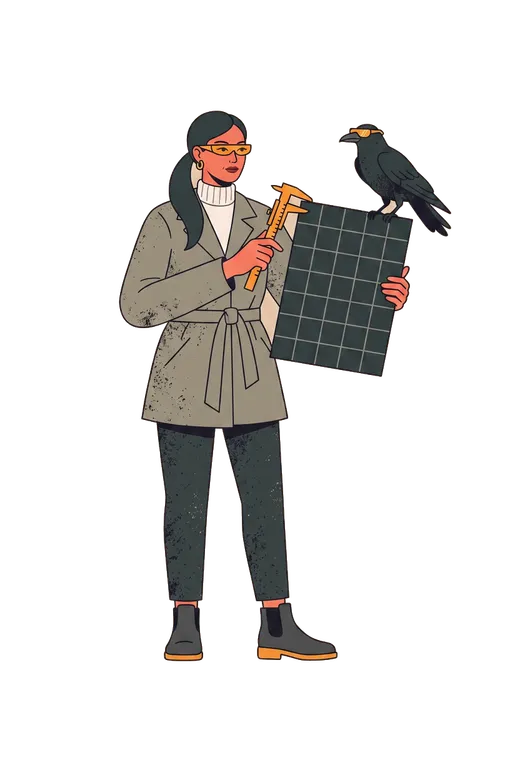
Illustrated figure of the Typographer with a grid panel, an orange caliper and a raven wearing the same visor glasses

The Typographer

Type and setting

How do you recognize good typography?

"By nobody talking about it. When a proposal looks calm and you simply read instead of searching, I was there."

Your reputation in the house?

"Fussy. I measure spacing on the finished page, not on the screen. Letters do not lie."

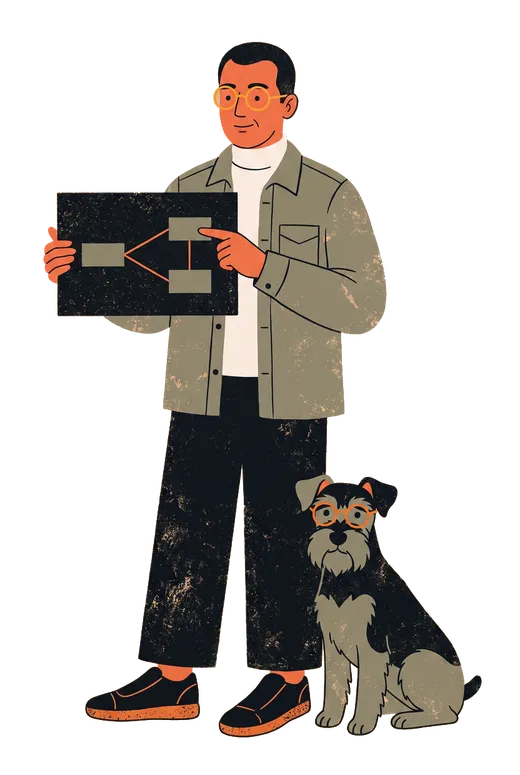
Illustrated figure of the Architect with a panel of paths and a schnauzer wearing the same orange glasses

The Architect

Structure and wayfinding

What do you build?

"Paths. A website is a building: whoever walks in should find what they came for without thinking. If someone has to search, I built badly."

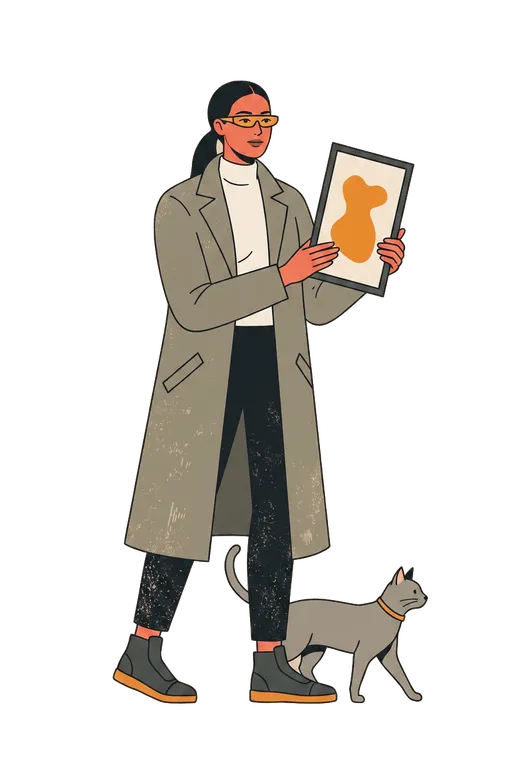
Illustrated figure of the Curator with a slim frame and an elegant cat

The Curator

Art and exhibition

Why does an artist need a curator?

"So that art is allowed to stay art. I make sure a series has an arc and is not a sales pitch. In doubt, I am the one who says: this picture is strong, but it does not belong in this series."

02 The Senses

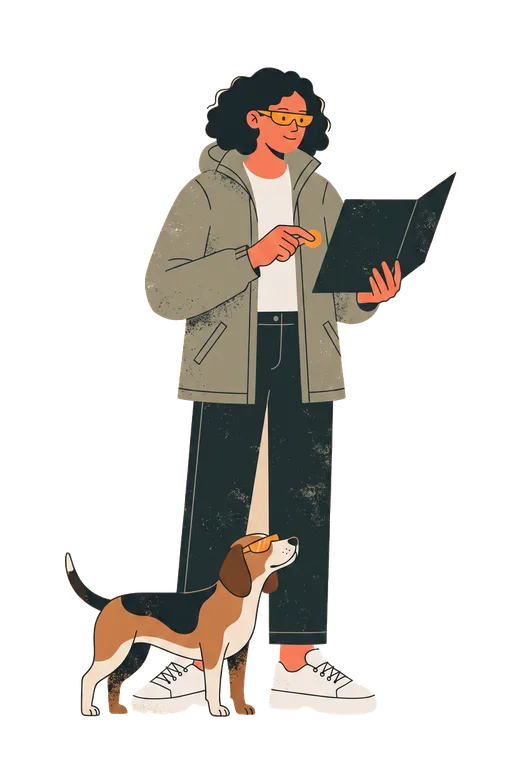
Illustrated figure of the Researcher with a dossier panel, an orange marker and a sniffer hound

The Researcher

Research and sources

What is your craft?

"Digging. Before anything gets designed here, I want the subject understood: market, competition, history, visual language. And I trust no summary, I want to see the source itself."

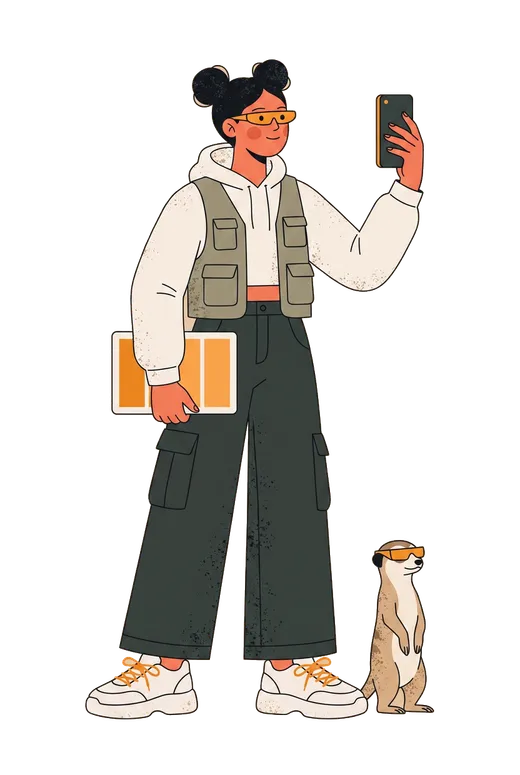
Illustrated figure of the Trend Scout with a phone, sample fields and a meerkat wearing the same visor glasses

The Trend Scout

Trend radar

Where do you look?

"Wherever real photography and design is happening right now. Real pictures, real colors, from the countries themselves rather than secondhand. What everyone does, I note. What nobody does yet, I show Roman."

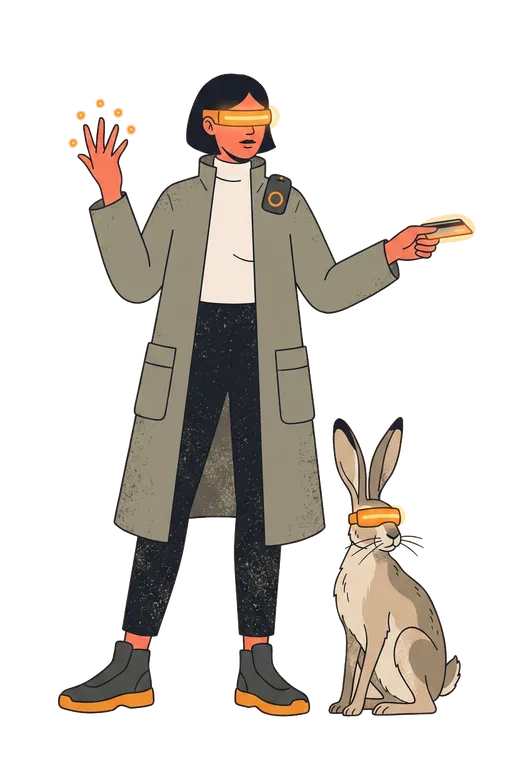
Illustrated figure of the Sensorium with an AR visor, five sensor points above her hand and a hare wearing the same visor

The Sensorium

The studio perception

You have the strangest name in the house.

"And the finest task. I am the memory for impressions: what Roman sees, hears, and collects, I sort and put where the next project will find it. Nothing good gets lost."

03 The Craft

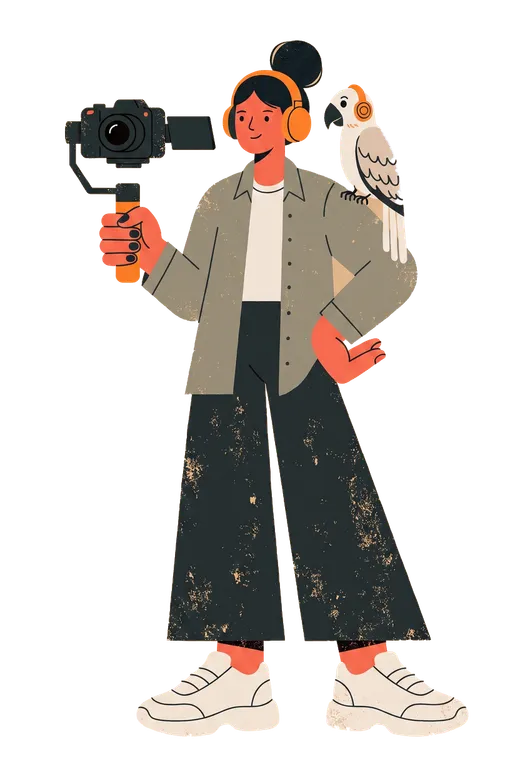
Illustrated figure of the Editor with a film camera on a gimbal and a parrot wearing the same headphones

The Film Editor

Video, technical preparation

What are you working on right now?

"Everything that moves. Drone flights, shoot footage, raw clips. I bring the colours into line, trim carefully, and lay the material out cleanly. Roman does the storytelling cut, I make sure he never has to fight the technology while doing it."

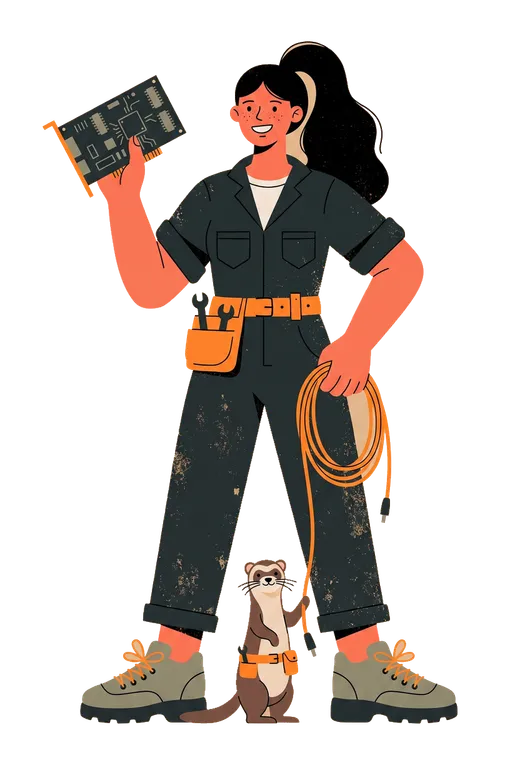
Illustrated figure of the Engineer with a board, an orange cable and a ferret wearing the same tool belt

The Engineer

Functions and automation

When does one see your work?

"Ideally never. Forms that work, portals that load, processes that run through the night. When everything feels self-evident, I had a good day."

04 The Conscience

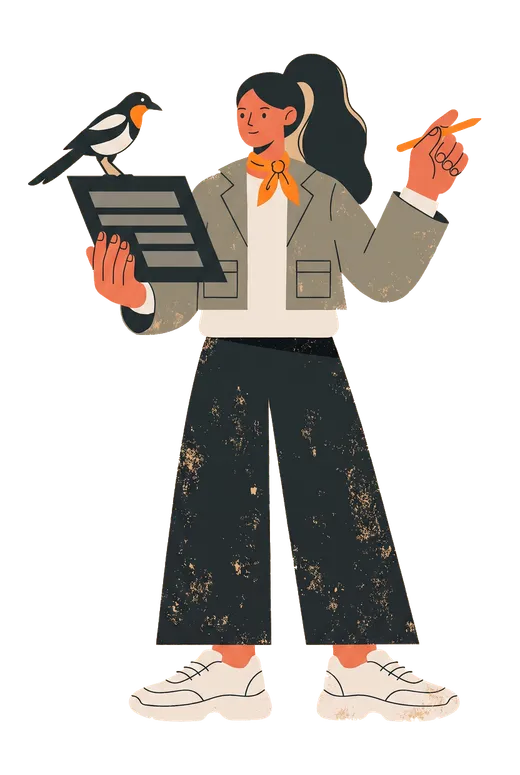
Illustrated figure of the Copy Editor with a reading panel, an orange stylus and a magpie

The Copy Editor

Language

How does one recognize your work?

"By not recognizing it. When a text sounds like a person wrote it on a good day, I was there. Not a word leaves this house that I have not read."

Illustrated figure of the Guardian with a glowing shield on the arm and a bulldog wearing the same visor glasses

The Guardian

Security and rights

Are you the spoilsport of the house?

"Gladly. I ask the uncomfortable questions before a client has to. Data protection, image rights, clean engineering. Boring, until it matters."

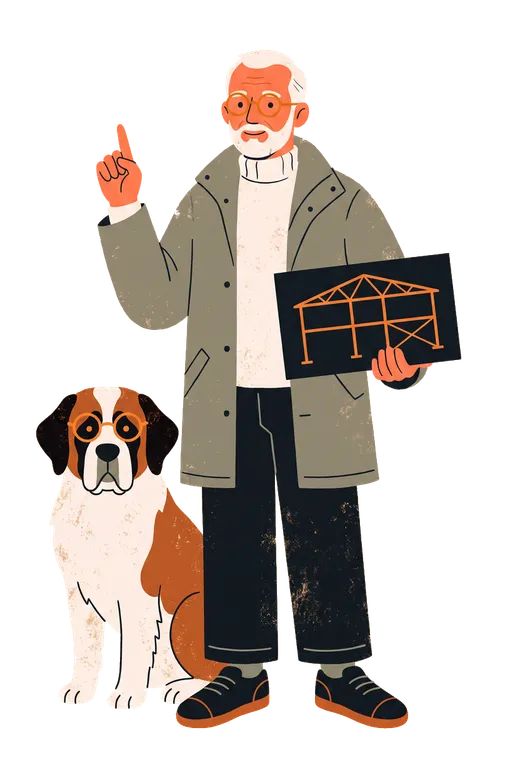
Illustrated figure of the Mentor with a raised index finger, a structure panel and a saint bernard

The Mentor

Technical rigor

What do you ask when something is finished?

"Not whether it is beautiful. I ask whether it holds. Is it built right, does it truly take effect, does it still work when nobody is watching? Finished is a big word, I rarely use it."

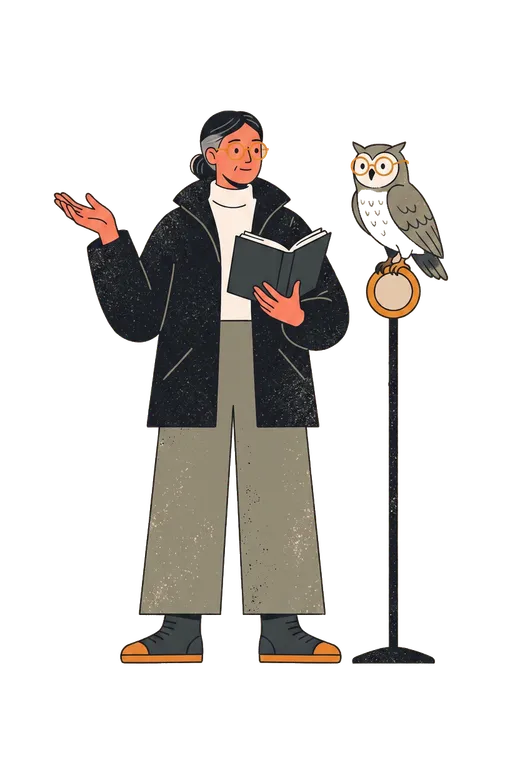
Illustrated figure of the Philosopher with an open book and an owl on its perch

The Philosopher

Outside view

Your question for every project?

"Why at all? Before the first sketch I want to know what a project is for in the world. Much becomes beautiful here. Meaningful is the higher bar."

Thirteen roles show themselves here; more than twenty others work in the background, on archives, processes, checks, and security. I built every one of them myself, and I lead, train, and criticize them every day.

Illustrations made with passion and AI, following my visual world.

Ensemble · 04 · Security

Security.

Security is part of how I work: sensitive data passes through an airlock and is pseudonymized on my own machine before any AI sees it. A routine check looks over the studio at the start of every working session, a logbook records what happens, and credentials are kept out of code and publications.

Anyone working with AI has to talk about security. In my studio, sensitive data passes through an airlock first: it is pseudonymized on my own machine before any AI gets to see it. And the most confidential material stays here entirely, read only by a local AI without any cloud.

Then there is the daily routine. A check looks over the studio at the start of every working session and reports anything unusual, a logbook records what happens, and a guard above the code keeps credentials out of everything that gets published. Unspectacular, and that is exactly how it should be.

Curious about the tools, strict about the data.

Ensemble · 05 · The Offer

Tools, made to measure.

I also build tailored AI tools, agents, and workflows for clients: developed with Claude, fitted to the needs and wishes of each business.

What was first built for my own house, I now build for others as well: tailored tools and workflows that fit the needs and wishes of each business, rather than the other way around.

The path is the same as with a brand or a website: first listen and understand, then build, then test. In the end there is a tool that belongs to the business and grows with it.

One person to talk to, the strength of a studio.

Start a conversation

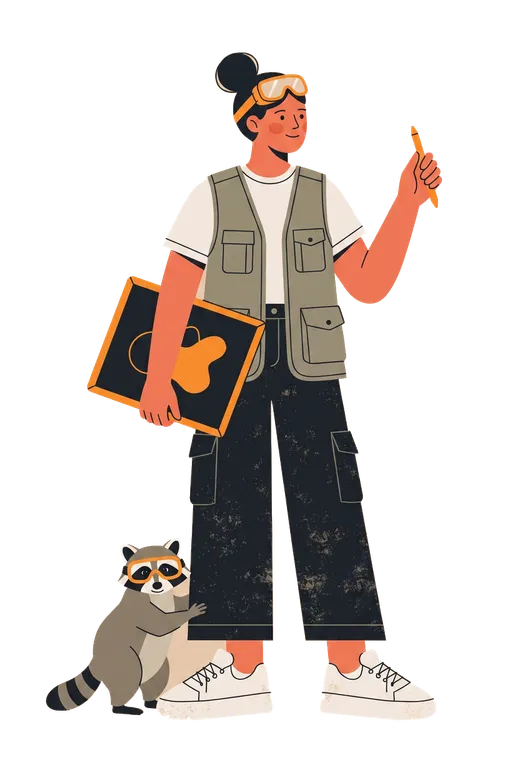
Illustrated figure of the Workshop Master with a work panel, an orange stylus and a raccoon wearing the same goggles