
Note · 4 July 2026
[ku] 19/26 Art
How real forest images become an invented nature.
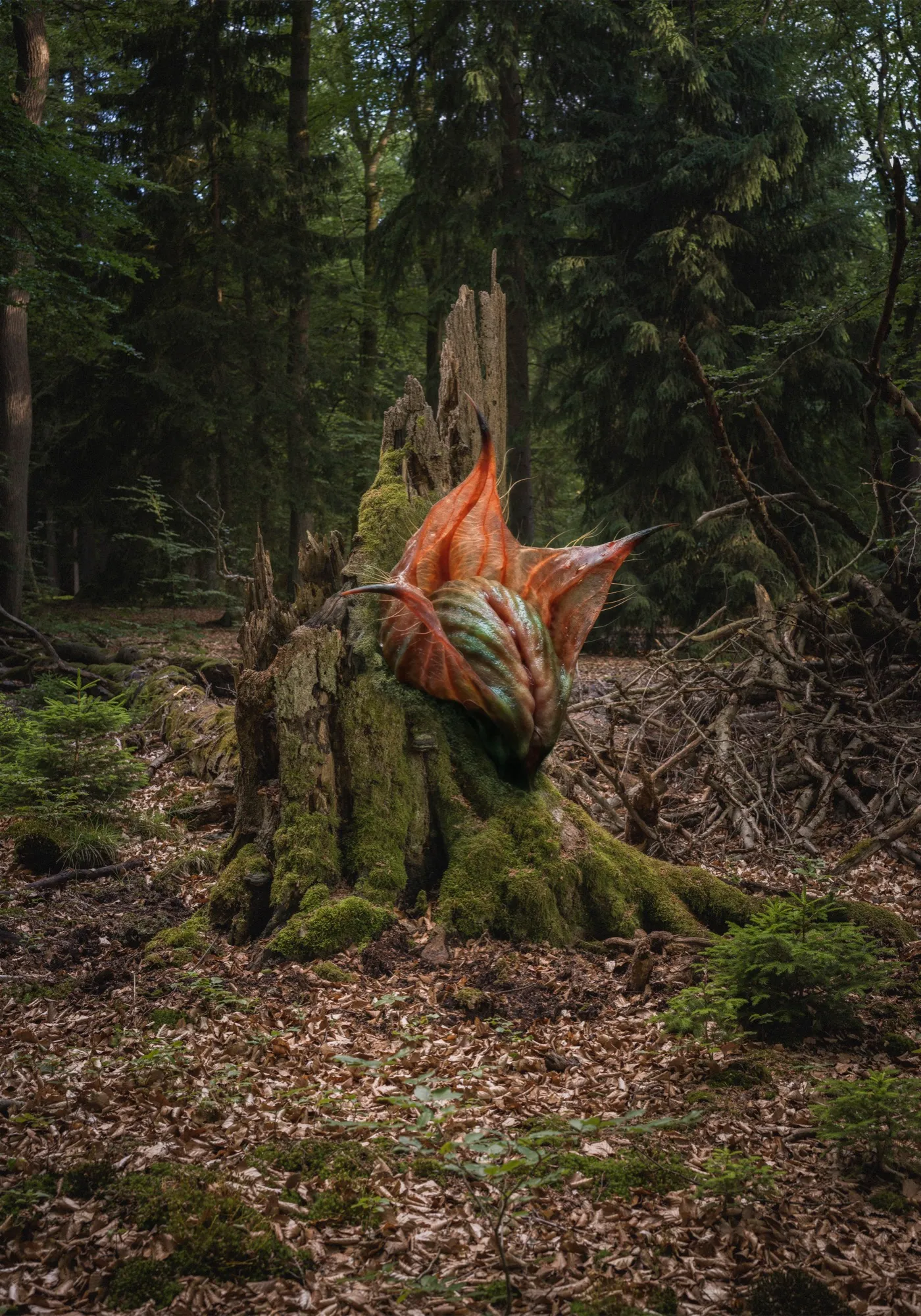
From the series EDEN · Roman Thomas
EDEN does not begin at the computer but in the Lüßwald near Unterlüß. How a second nature grows out of real photographs, and why this is not playing around with AI but an inquiry.
The Moment the Eye Becomes Uncertain
There is that moment in the forest when, for an instant, you are not sure. A root, a shadow, a crack in the bark, and for a heartbeat you see a face, a shape, a being. Usually there is nothing there. But the eye has already decided. That very moment is the beginning of EDEN.
For years I have been occupied with the question of how reality comes into being through seeing. In Hidden Places I sought urban spaces that appear deserted, almost like inner spaces. In Heimat I let the camera wander during the exposure. Now a new force has arrived, one that shifts everything images mean. I did not want to comment on it, I wanted to bring it into an image.
EDEN Begins in the Forest, Not at the Computer
I walk into the Lüß near Unterlüß, to the old trunks, the fallen wood, the moss, the decay, and the new life that grows out of it. I photograph in medium format, slowly, in the available light. These photographs are the ground. Without the real place, EDEN would be an arbitrary forest out of nowhere. With it, it is a particular one, and that makes the difference.
Then I found something larger than expected. Almost a hundred years before me, Albert König drew this very forest, over fourteen years, returning again and again to the same trees. He searched the bark for gnarled growths and human forms and said a tree is only worth drawing once it becomes an experience. That is almost my own sentence. I do not carry a fantasy into nature from outside. I continue a line that is a hundred years old in this forest. Only with a new tool.
Document Becomes Speculation
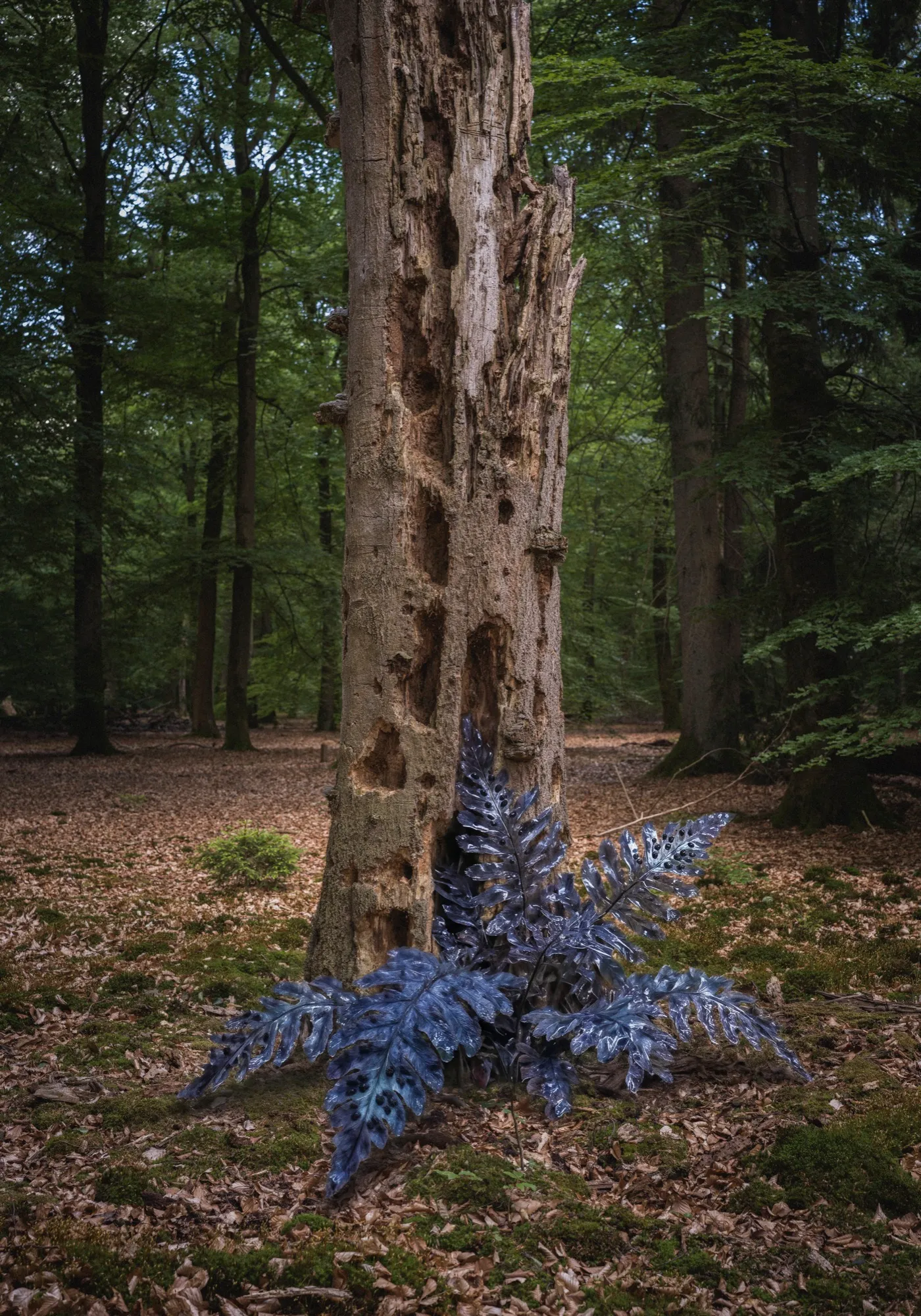
Into my real photographs I let a second nature grow with AI. An invented flora of moss, fungus, root, and deep-sea form, beings of an order that does not exist as such. Some grow out of the dead wood, others float. Alongside them, a herbarium takes shape, study sheets that look like the records of a naturalist. Except that the plants are invented. Looking at them, you never quite know whether you are facing a photograph, a study, or a construction.
What interests me here is not the spectacle but the fracture. The forest is real, the being is not, and both are in the same image. That seam is the statement. It asks what nature still means when artificial images begin to inscribe themselves into our perception.

Why This Is Not an AI Effect
I do not rely on what the machine delivers on its own. I work in layers, intervene, discard, start over, for as long as it takes until the image I had in mind is there. I know the greatest danger well. If I paint the beings out in full, EDEN tips into the decorative and becomes a beautiful surface without a position. So what I noted down long ago applies here. What remains unseen can weigh more than what is shown. When in doubt, less.
I also say openly that AI is involved. Not in fine print, not hidden. What hangs here are not photographs in the classical sense but transformations. This openness is part of the work, not as an apology but as part of the stance.
What Remains Open
EDEN is not finished, and it is not meant to be. The series is still growing, some beings are almost believable, others still too loud. I leave that open deliberately. A garden that mistook itself for a primeval forest does not explain itself to the end. It remains a beginning with a fracture.
How the real photographs became over a hundred beings and the finished images is something I show in a separate piece on the making of the series.
EDEN is on view starting this weekend in the exhibition QUO VADIS ARS. Is AI the End of Art? at the Albert-König-Museum Unterlüß, from July 5 to October 11, 2026.