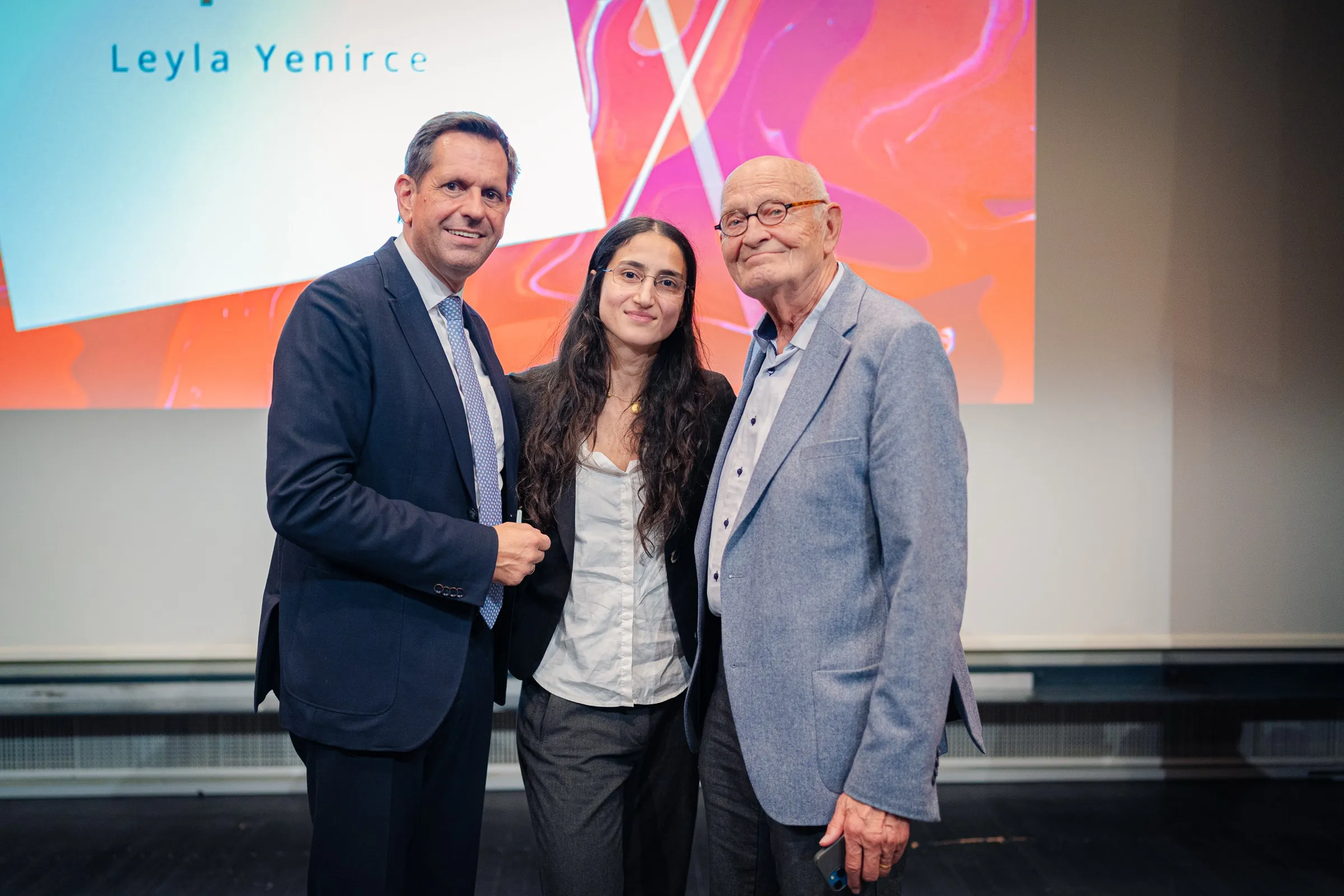
A Leap at the Sprengel Museum
At the end of the last story in this bed there was a promise: once the prize has been presented, I will tell you about it. I had promised to tell this story. I had not said I would take so many pictures along the way. So on Tuesday evening, October 6, I stood in the Sprengel Museum Hanover, as a jury member for the BBK Lower Saxony and with a camera round my neck, which at first felt like two roles and quite soon turned out to be one.
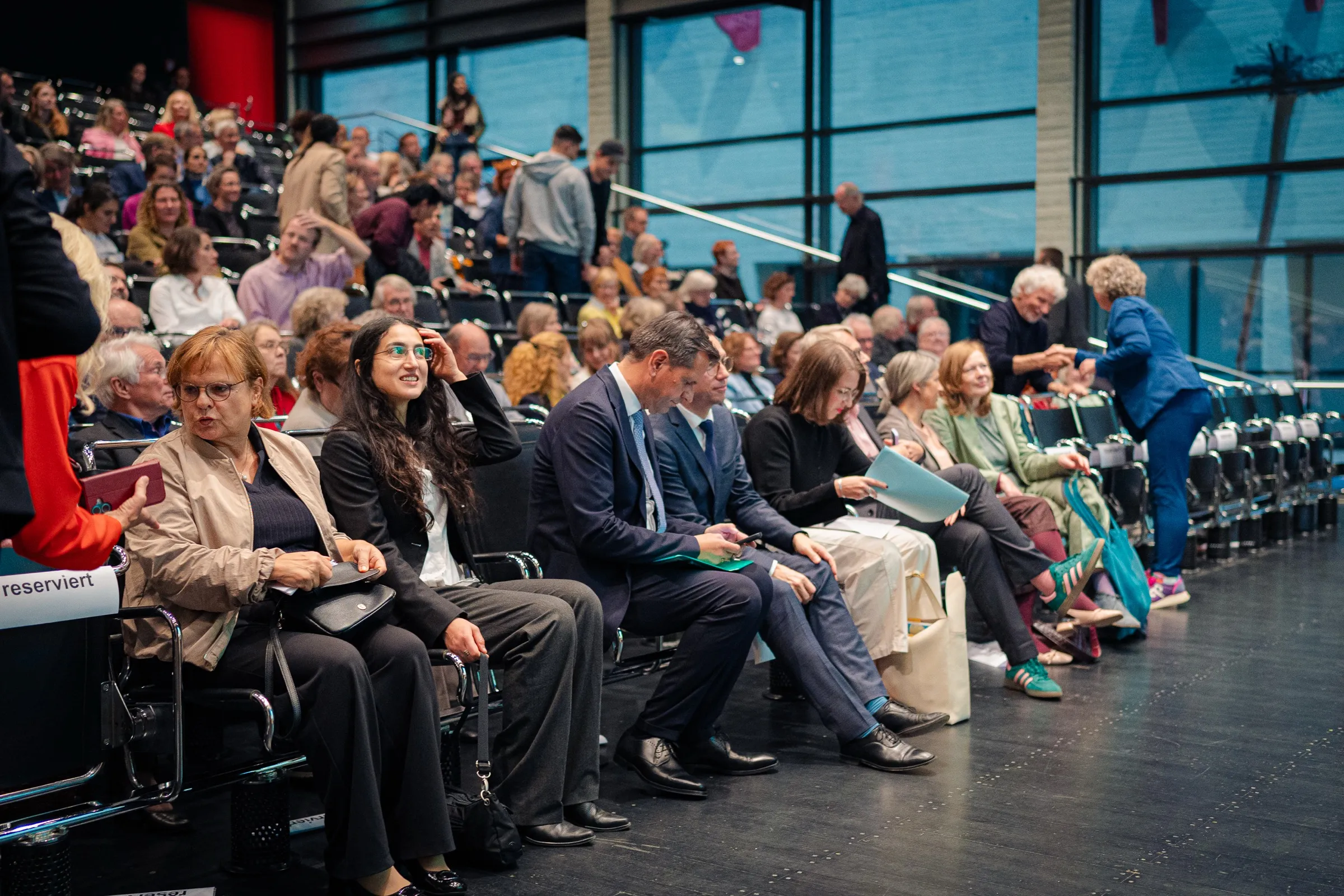
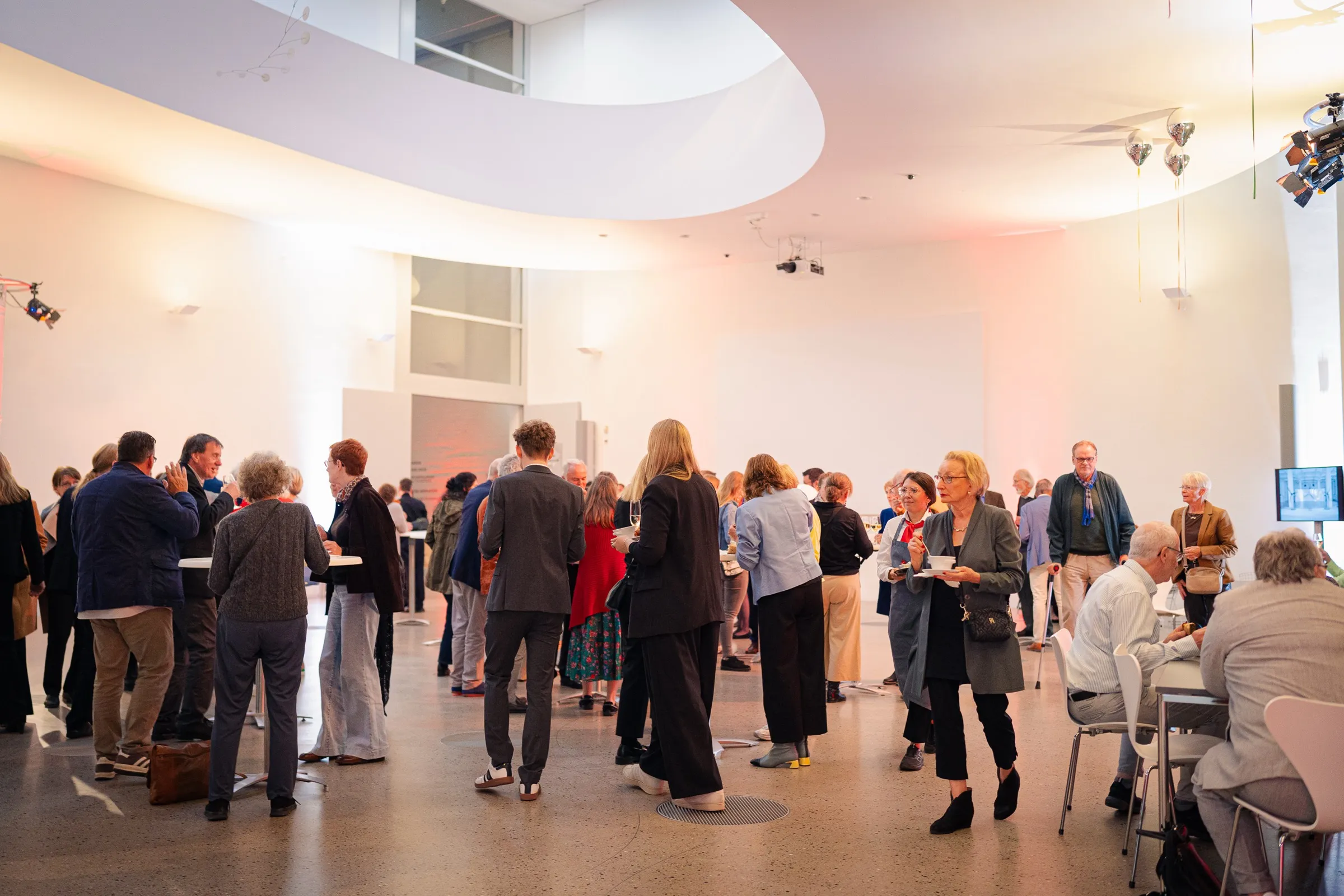
Around 200 guests had been invited. A queue formed at the entrance, and whoever got inside stopped first in the high hall, because that is where people meet before they sit down.
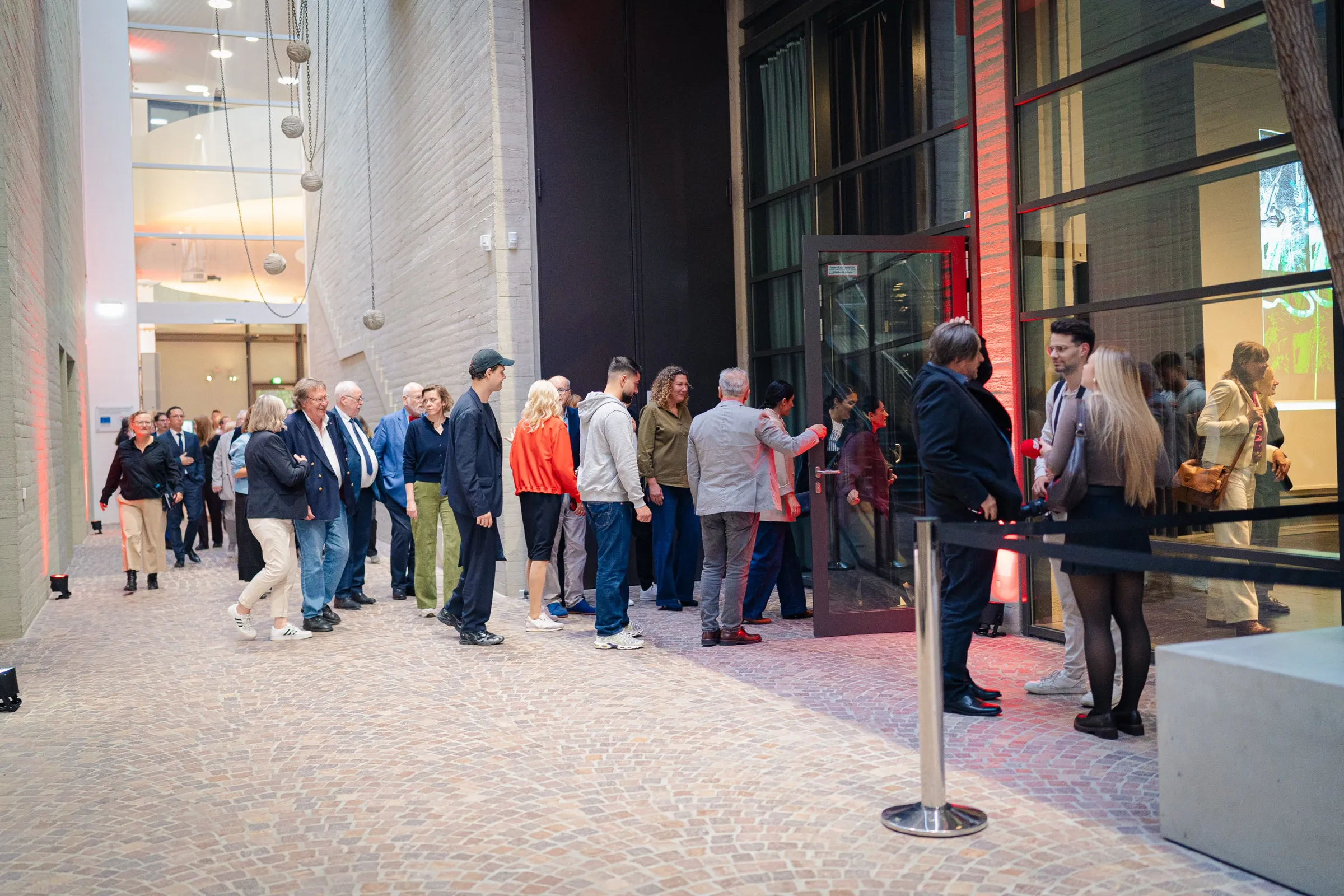
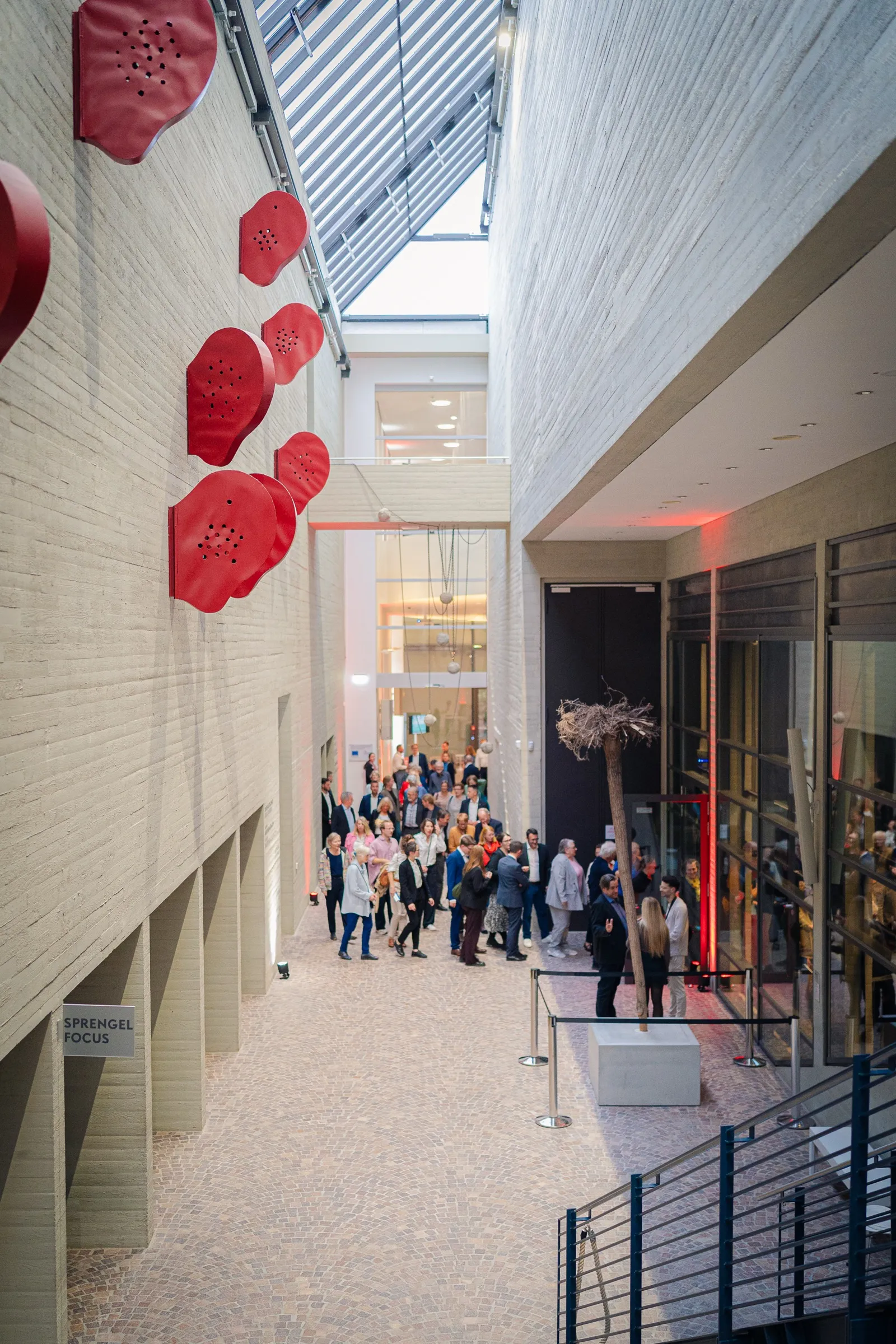
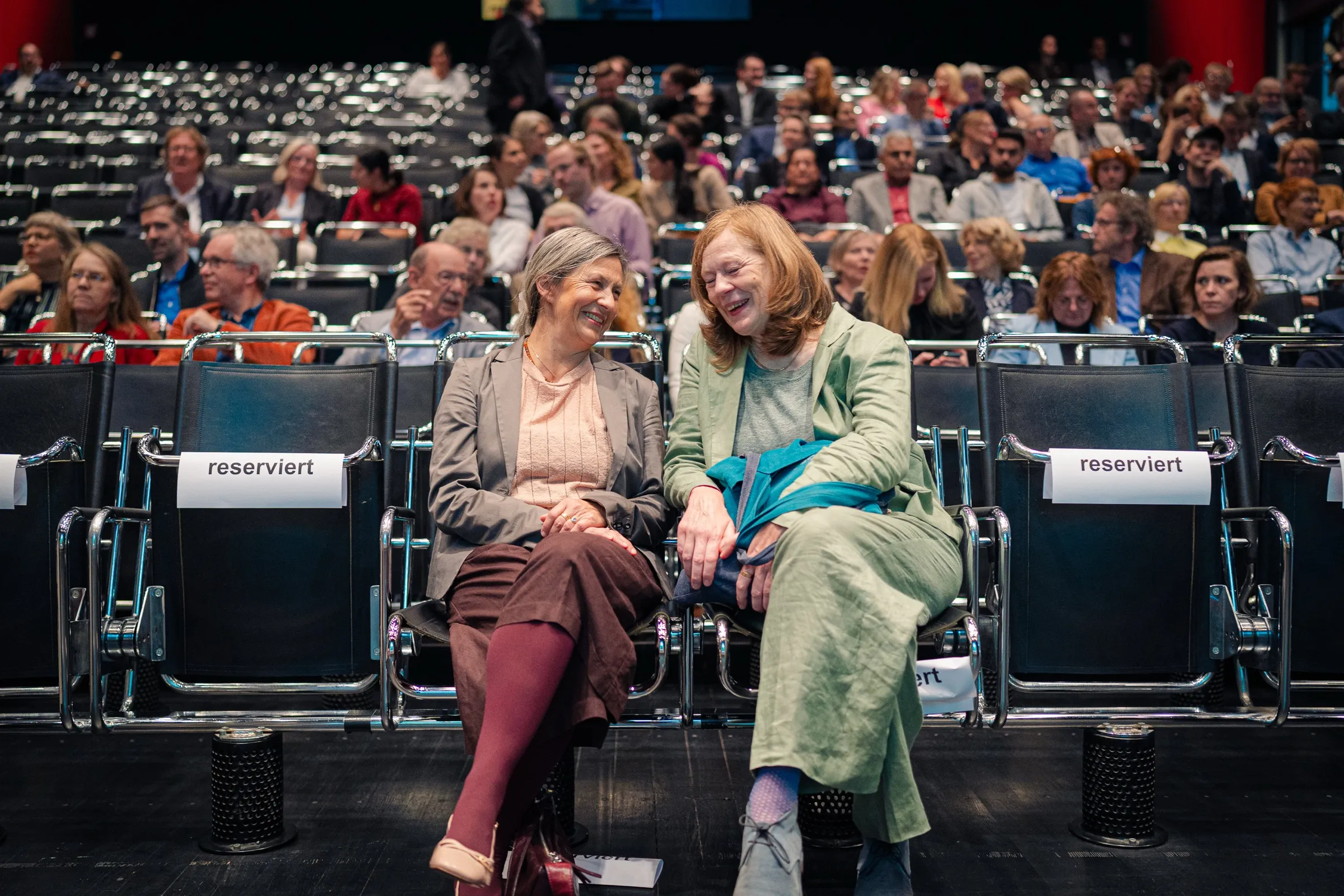
In the hall a video still was already running on the big screen, a woman in mid leap over a barren landscape. On the screen she was already leaping before anyone had said a word. The rows filled from the back to the front, which seems to be a reliable law of nature at events, and at the front the reserved seats waited for those who would soon have to go on stage.
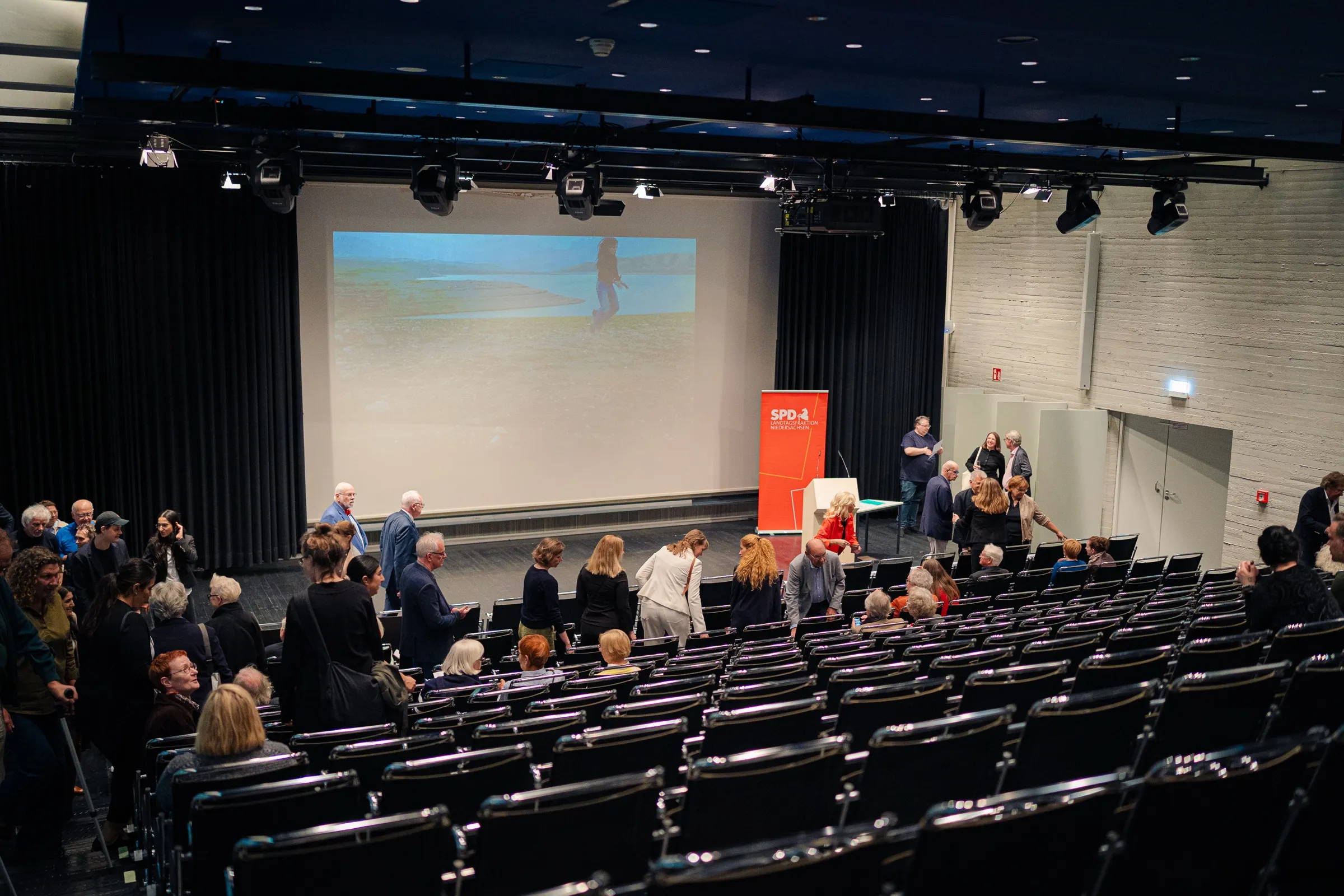
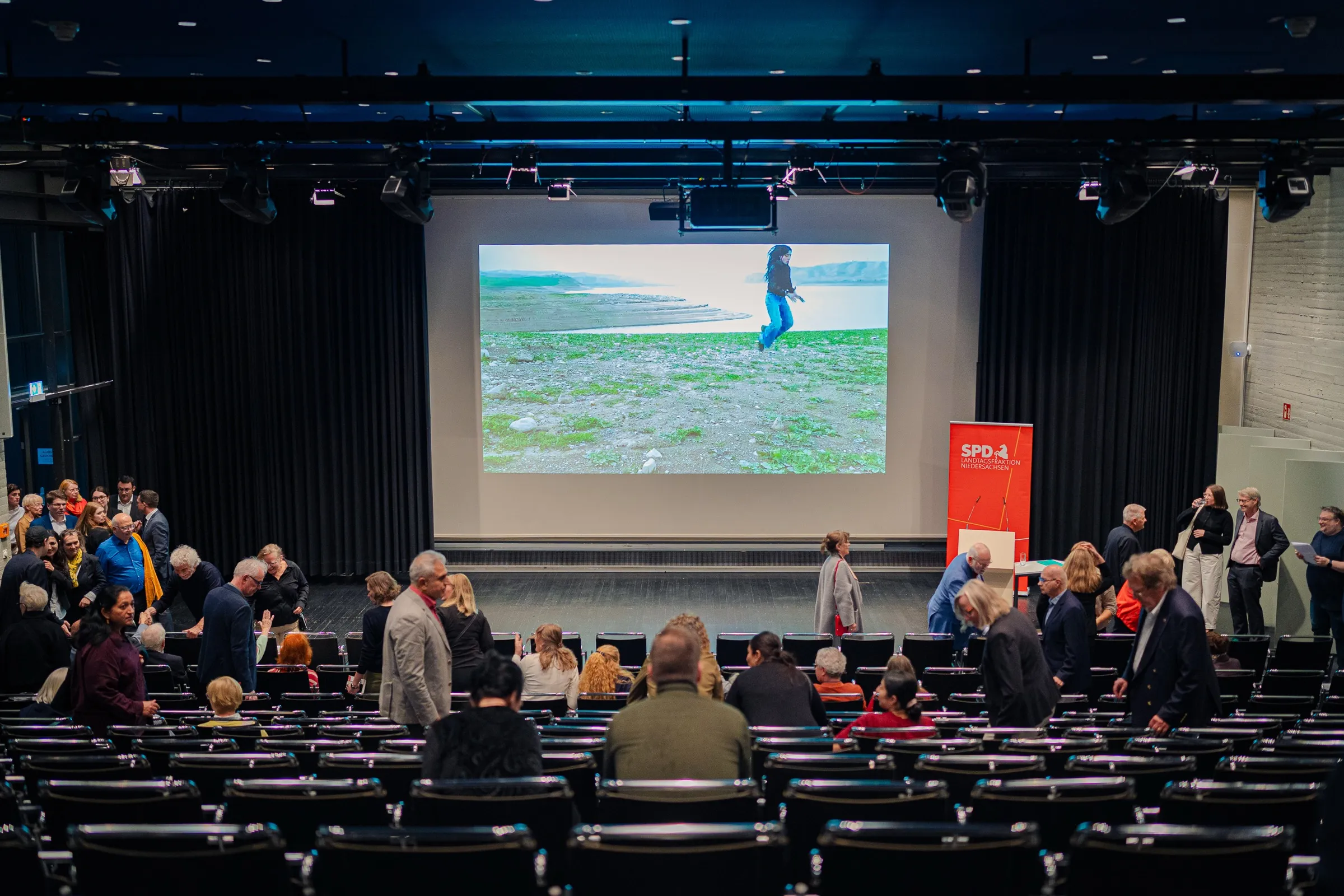
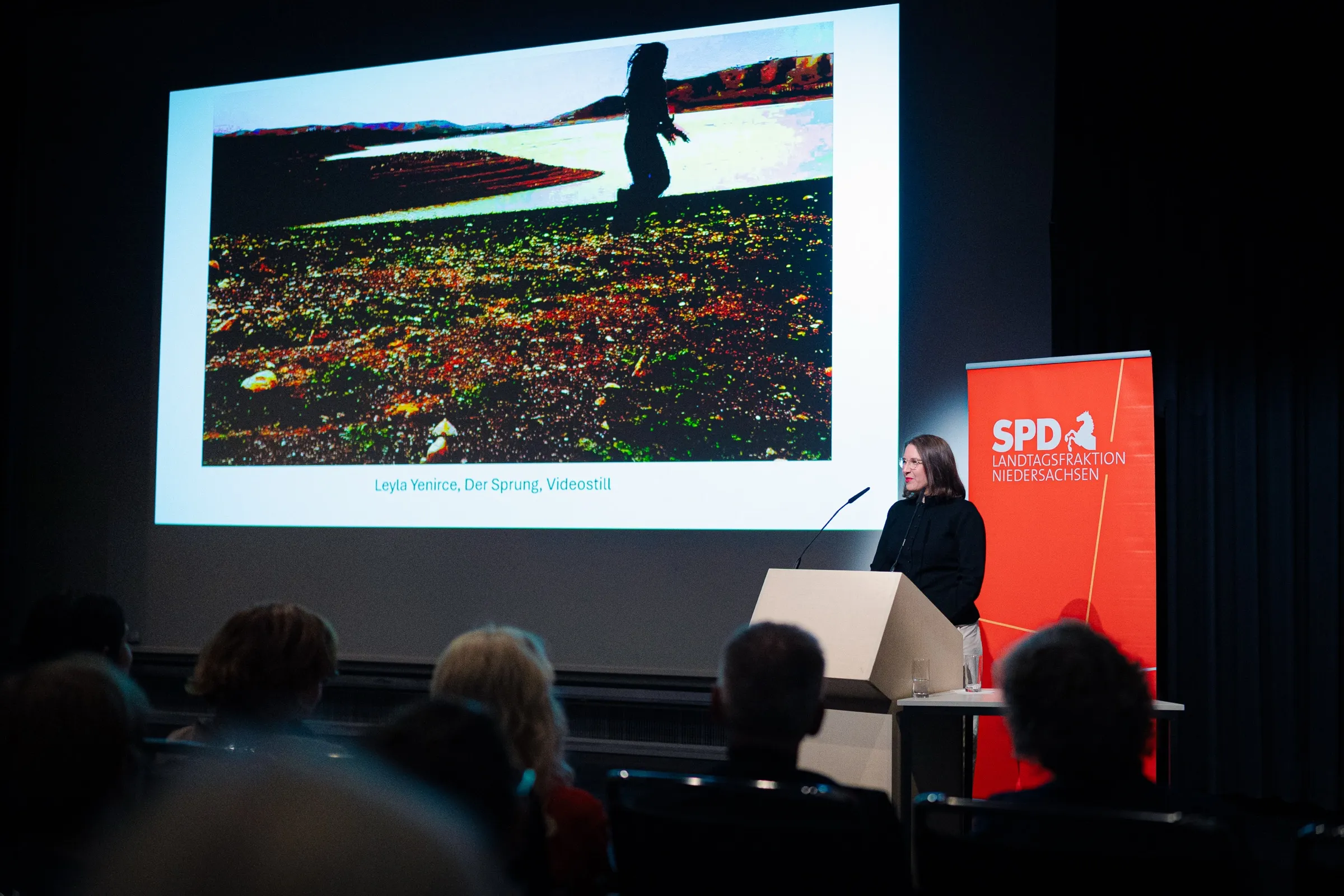
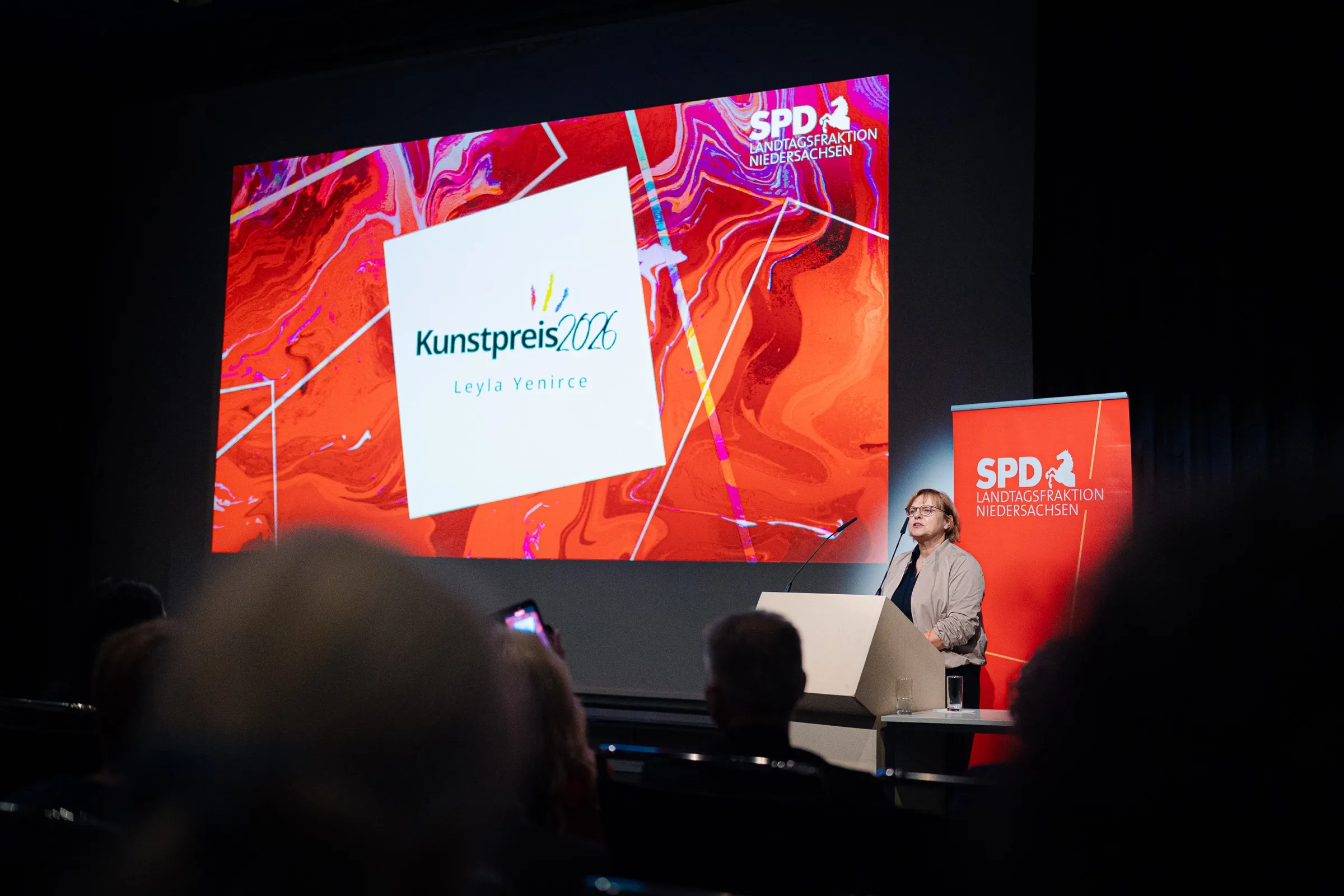
The laudation was given by Dr. Anna Heinze, director of the Landesmuseum Kunst & Kultur Oldenburg, with whom I sat on the jury. She put the video “Der Sprung” at the centre. Leyla Yenirce shot it in the area of her birthplace in the Kurdish part of Turkey, where the Ilısu dam on the Tigris has flooded whole stretches of land. Not mourning what is lost, Anna Heinze said in essence, but a short, powerful moment against gravity.
For a museum exhibition the artist had the single frames of this leap printed on dozens of mugs, lined up on long shelves so that the movement runs like a flipbook. A mass product from a photo service that suddenly has something to say in a museum. A flipbook made of mugs: as a photographer, I was won over at once.
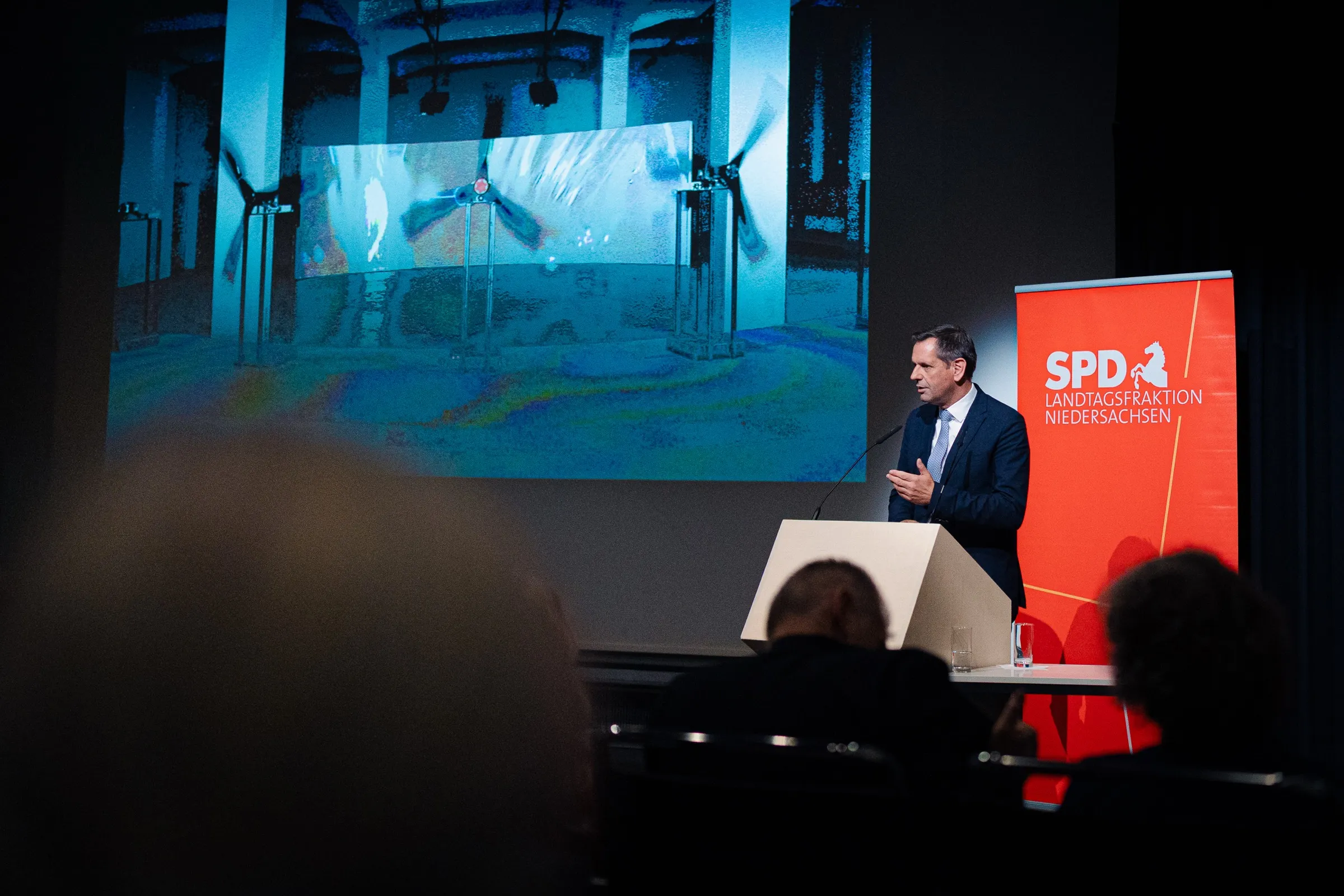
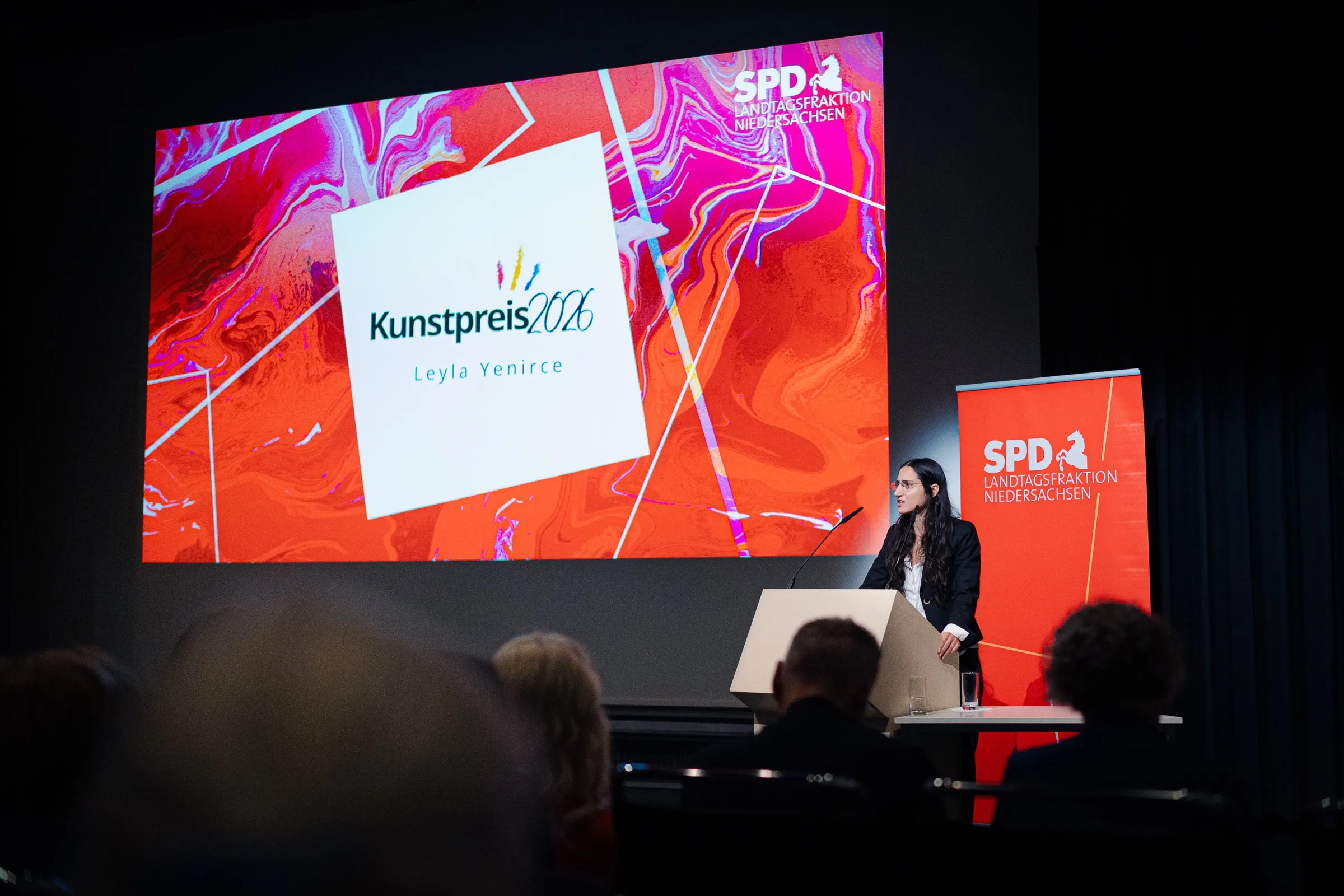
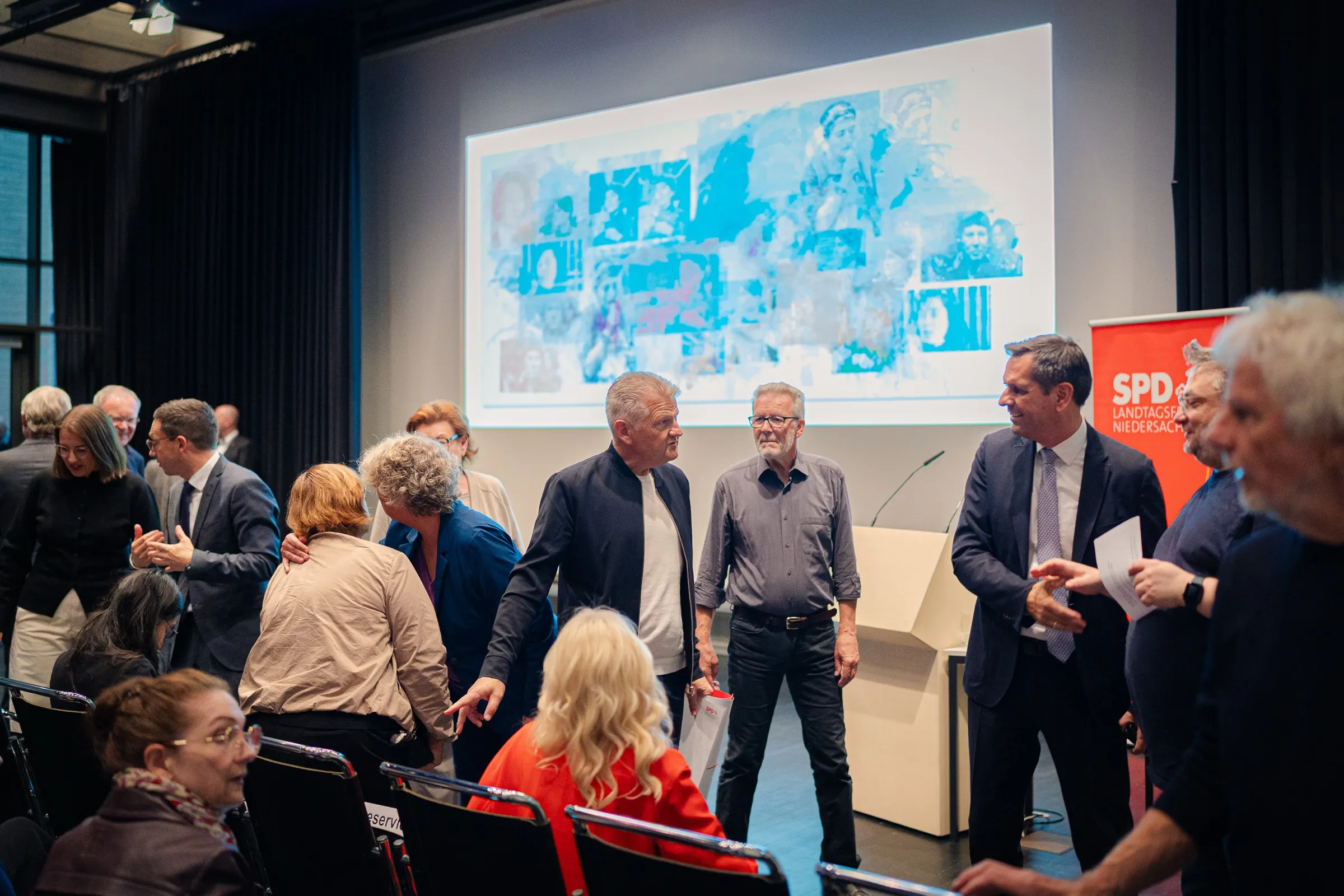
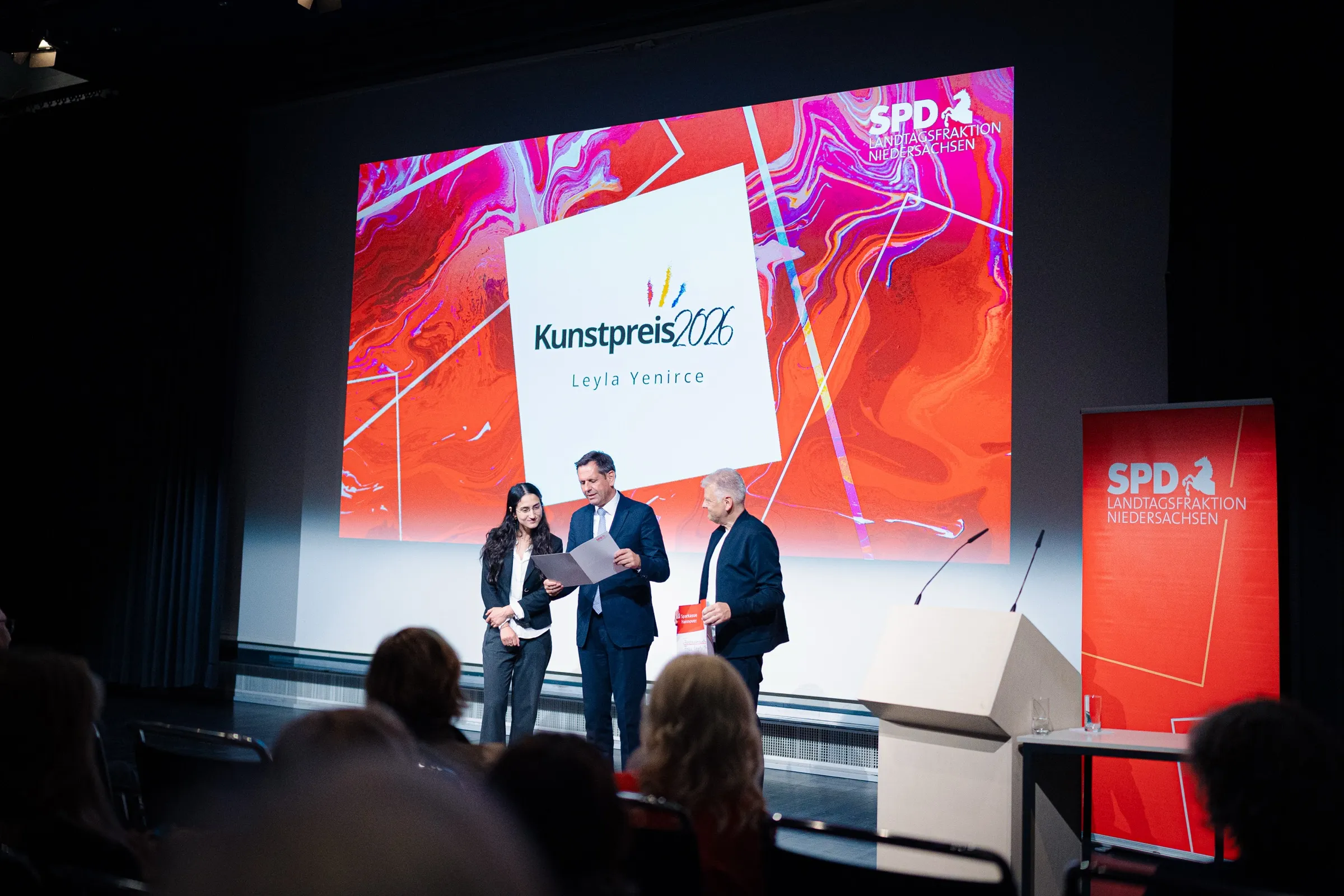
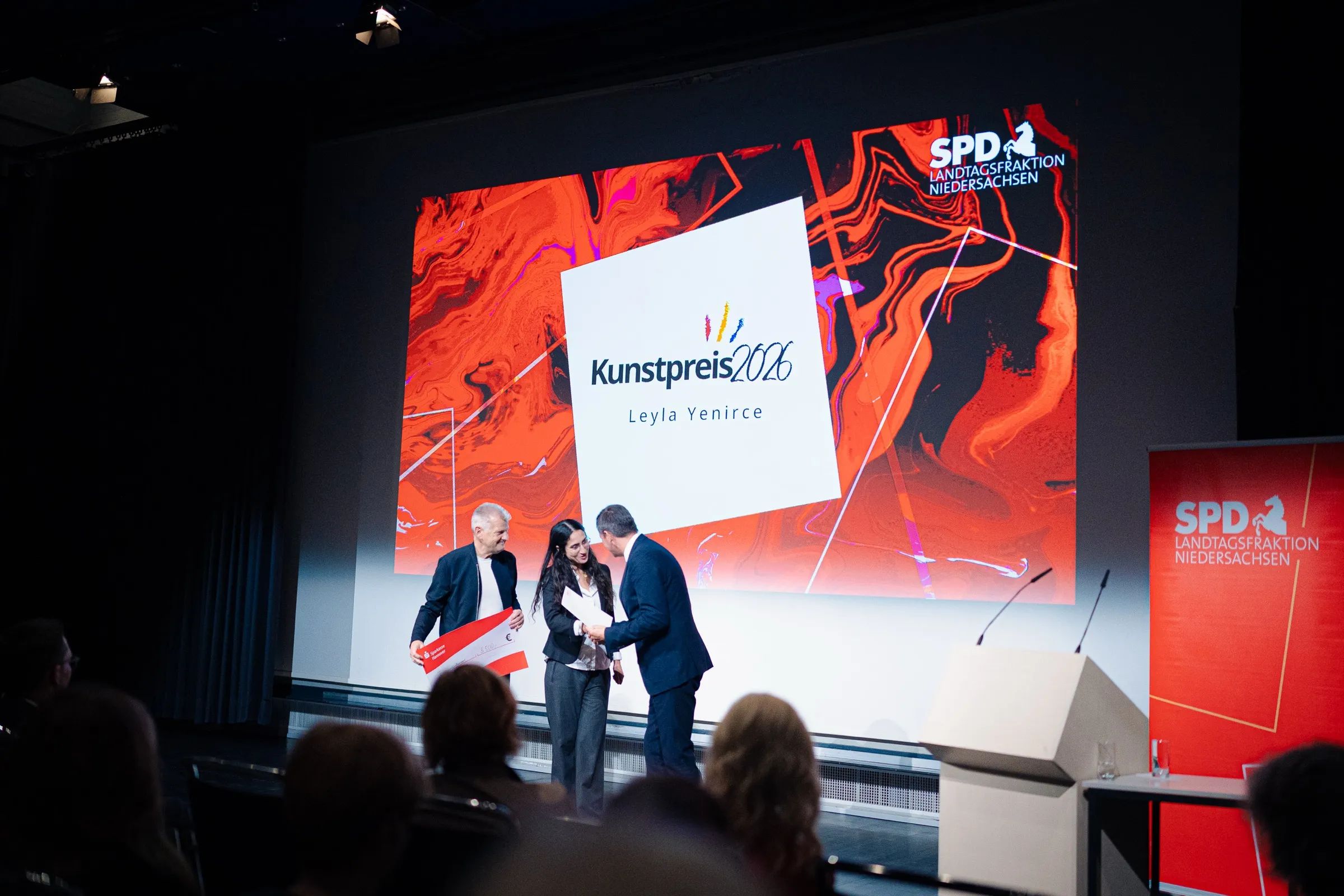
The prize was presented by Minister-President Olaf Lies and Stefan Politze, chair of the SPD parliamentary group. Then Leyla Yenirce herself stood at the lectern, and her clever thoughts, she said, had just flown away a little. Instead an image came to mind: Walter Benjamin's reading of Paul Klee's “Angelus Novus”, the angel driven into the future by the storm of the past.
With your arms raised, she said, you also look as if you were cheering. The past pushes her forward, but she leaps as it does. In July we had talked about this work at the jury table, about folders, reproductions and CVs. Now the artist stood in front of us and in two sentences turned a heavy image into a joyful one. A jury statement cannot do that.
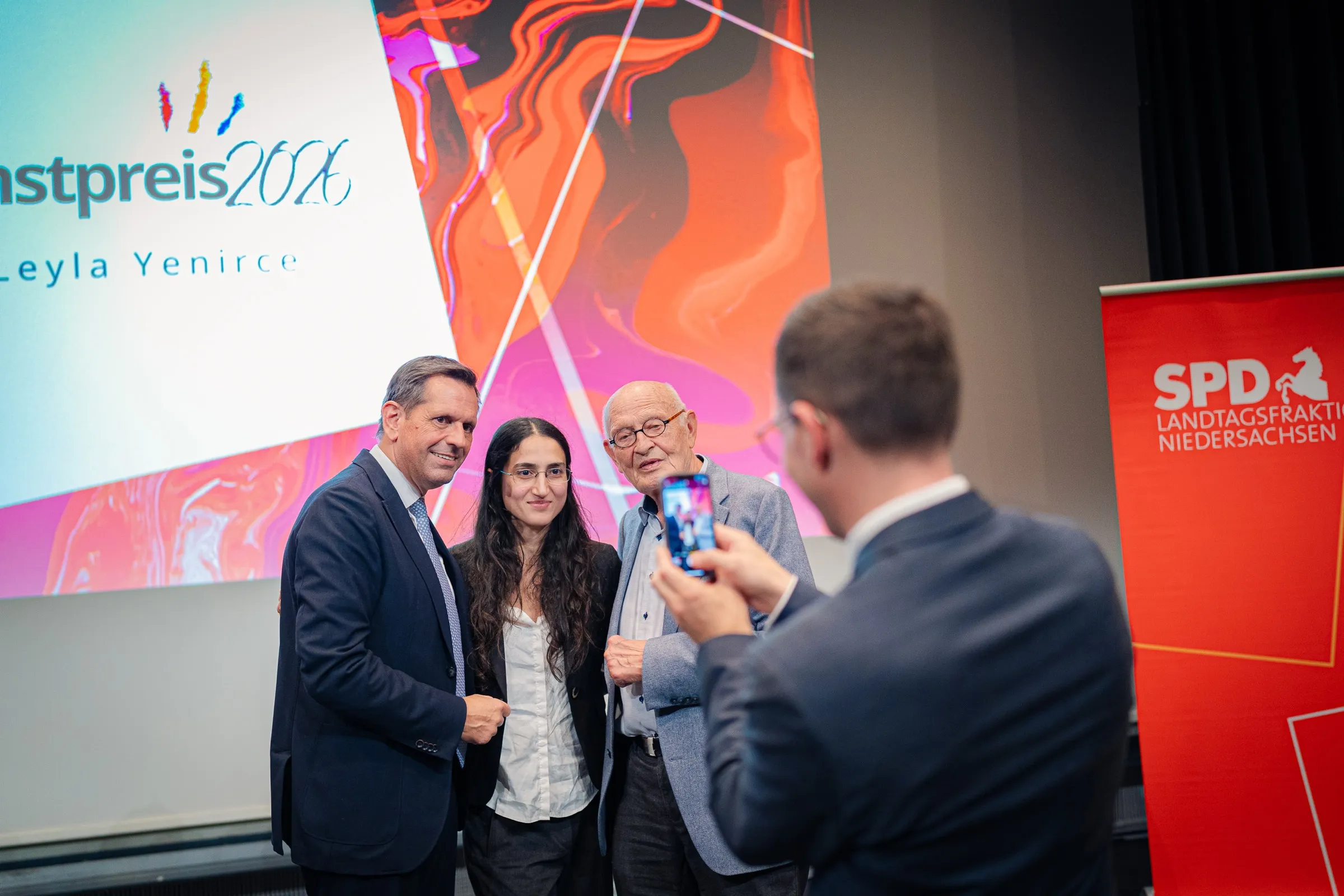
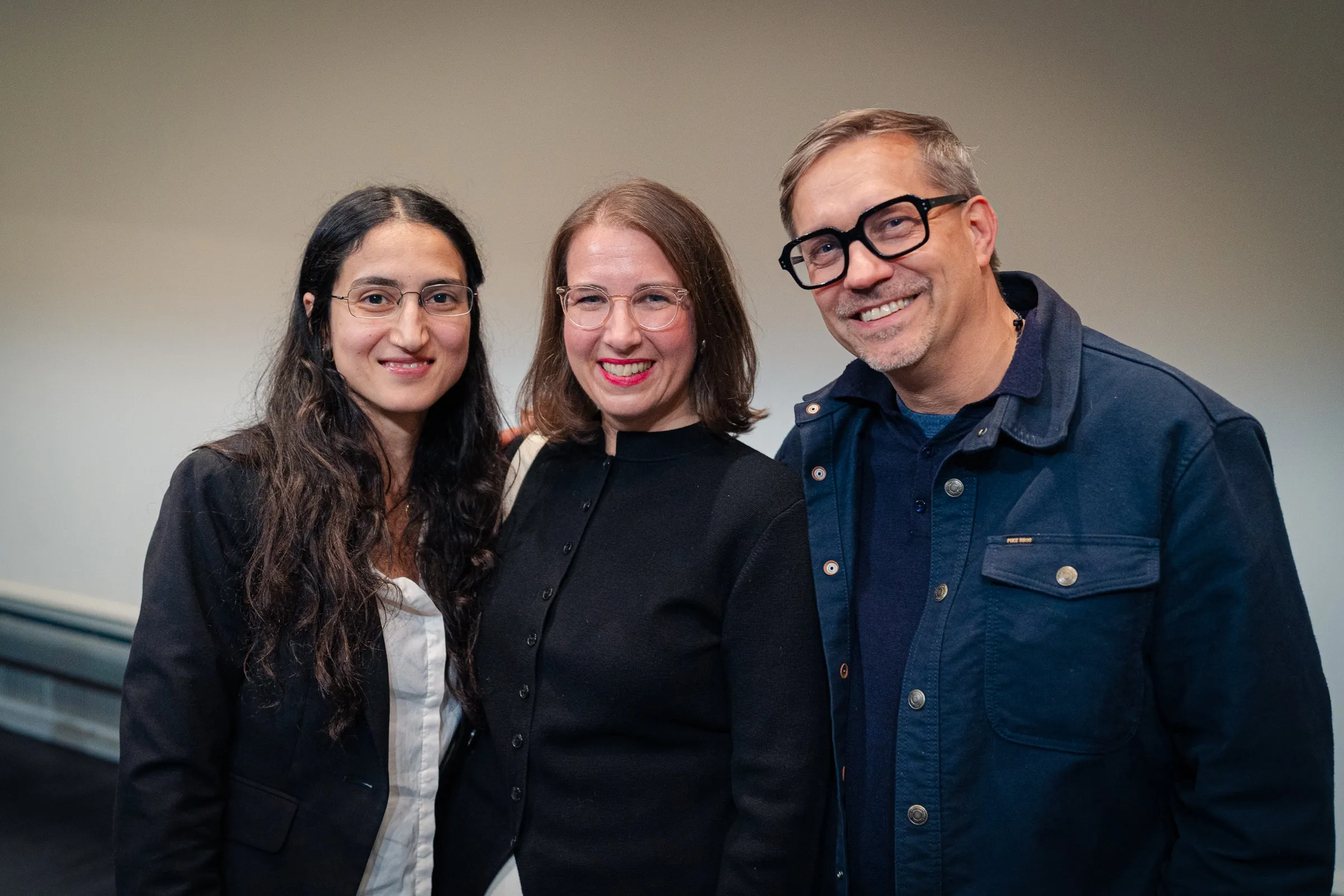
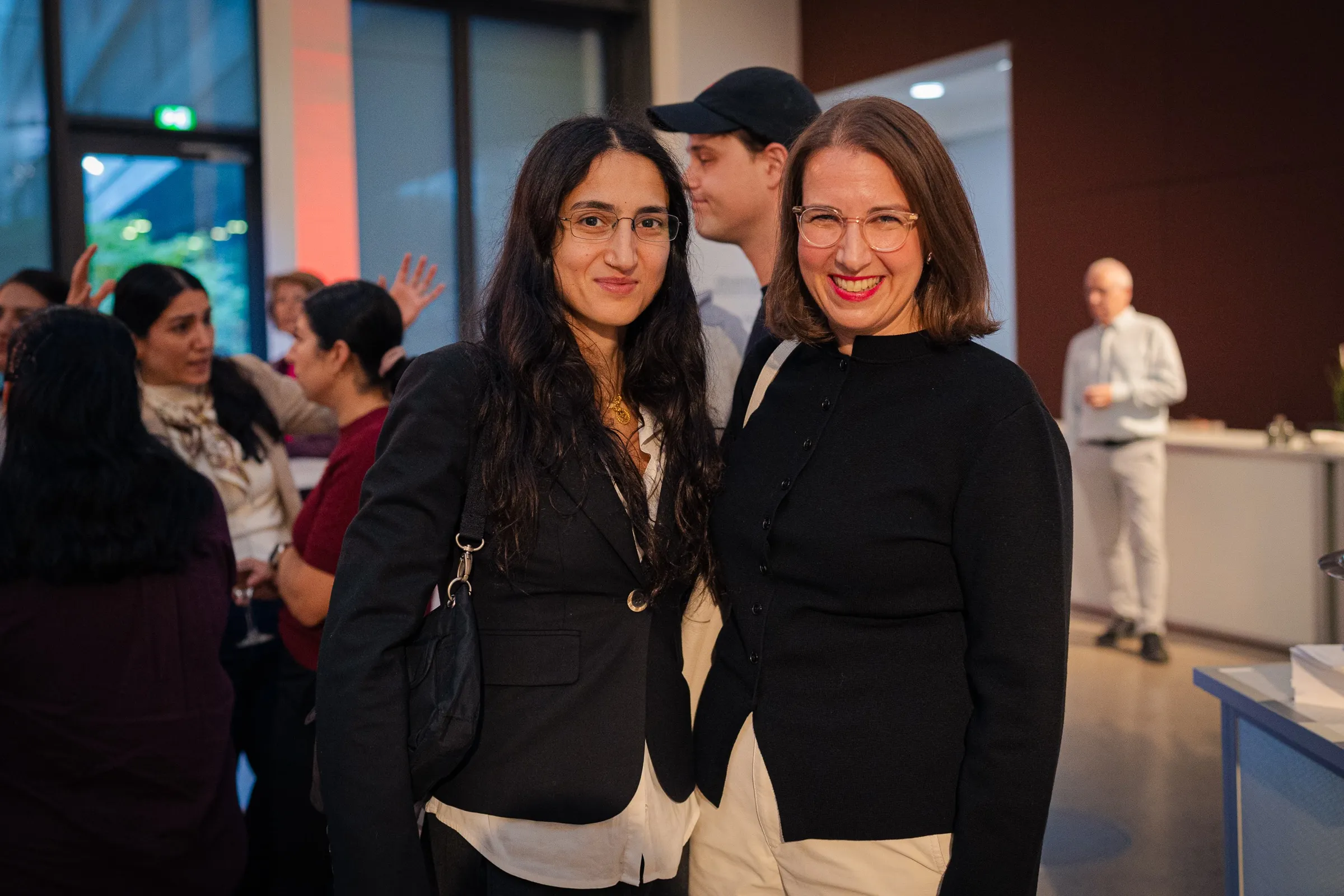
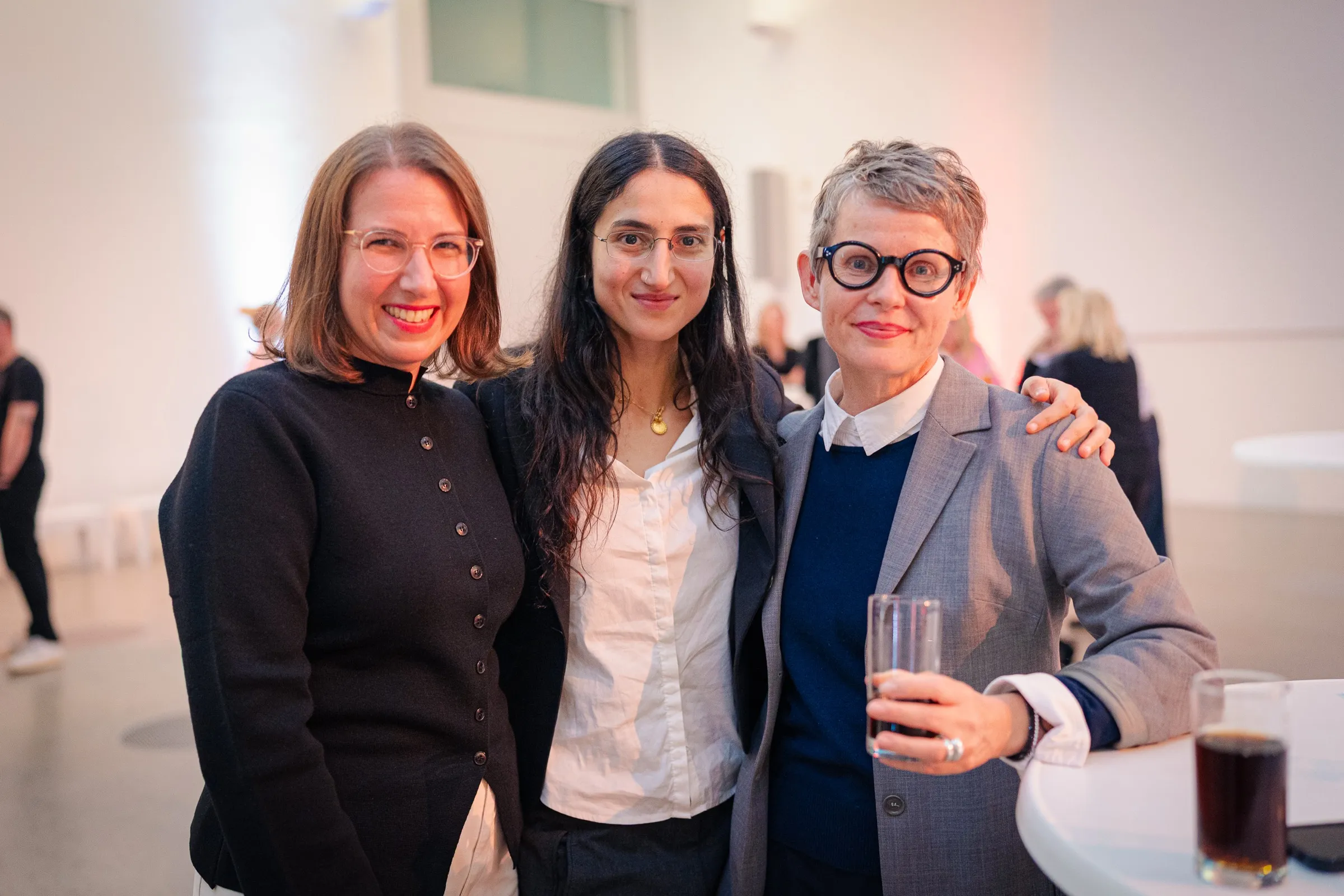
After the official part, the part you actually came for usually begins. In the hall people stayed at the stage for a long time, Leyla's family had travelled from Oldenburg, colleagues from the jury found each other again, and at some point somebody took the camera off me so that I would be in a picture too. In one I actually am, between Leyla and Anna Heinze.
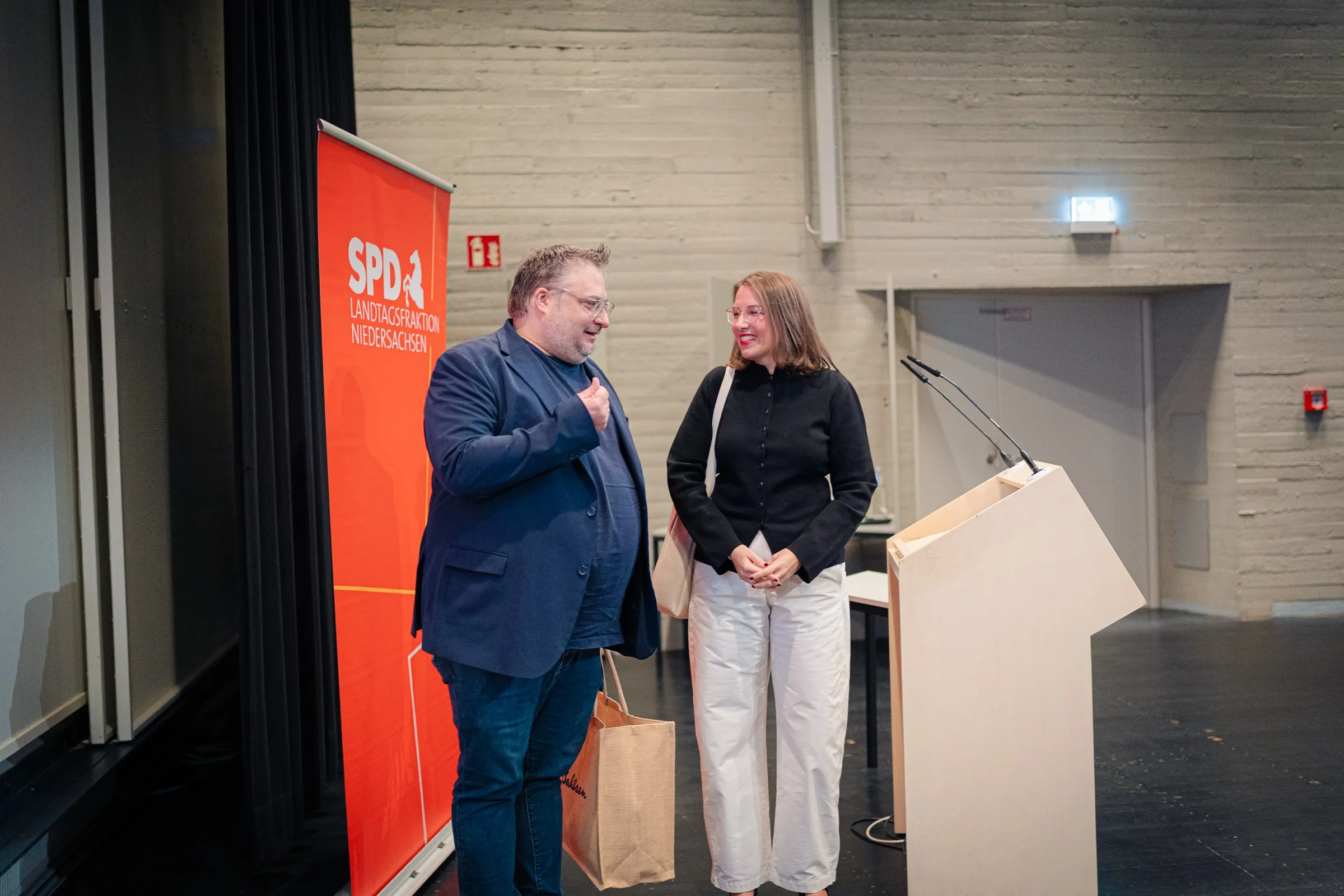
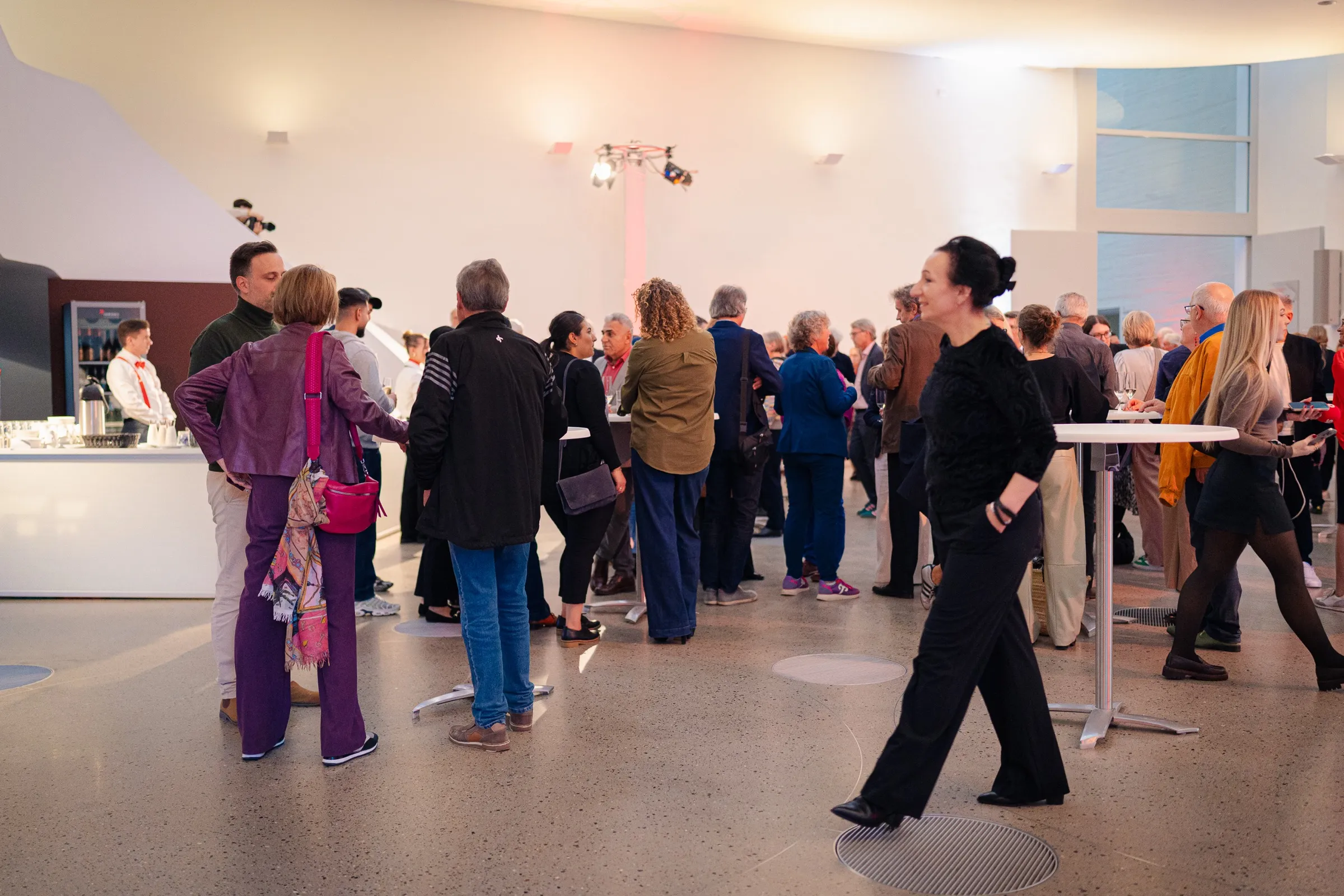
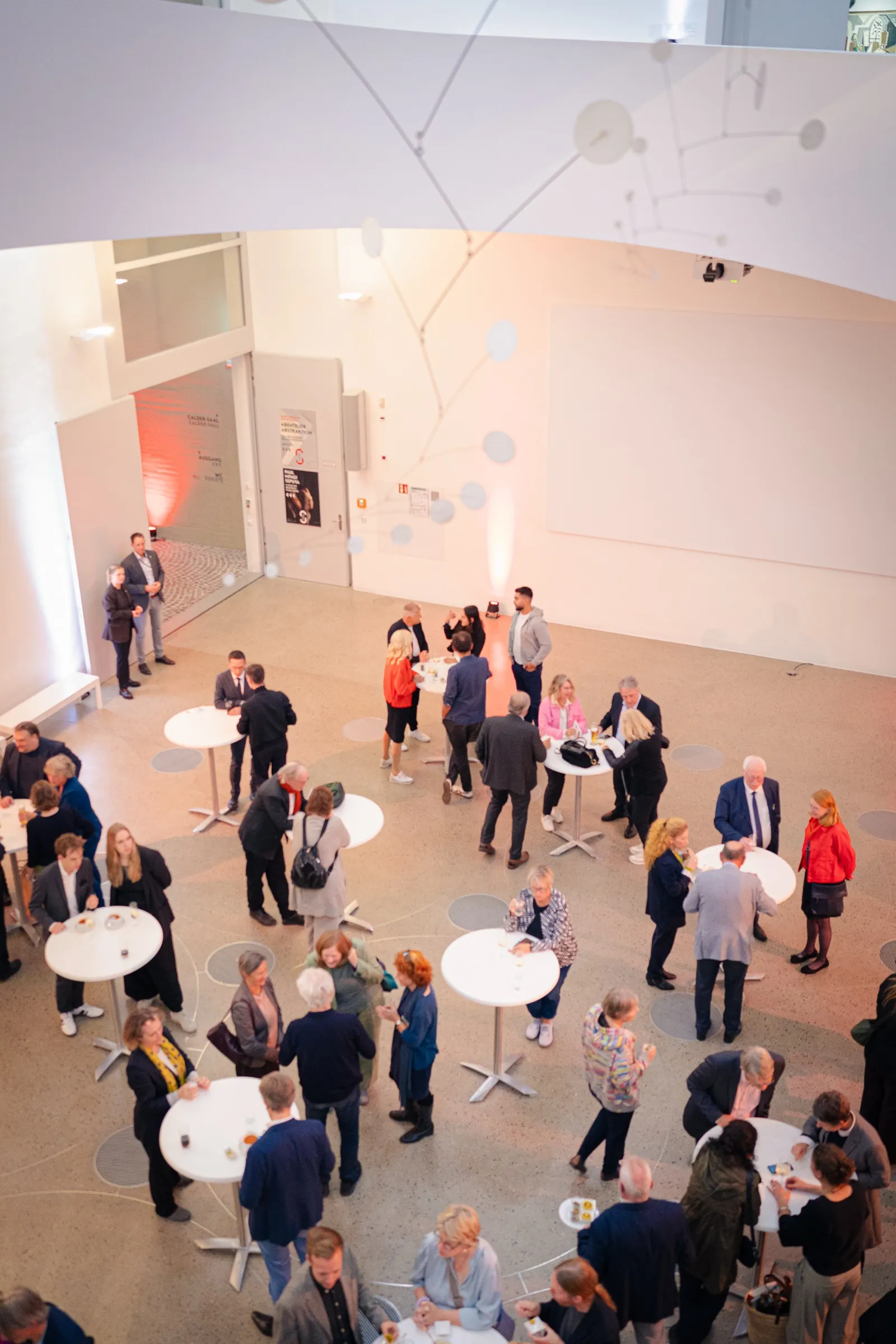
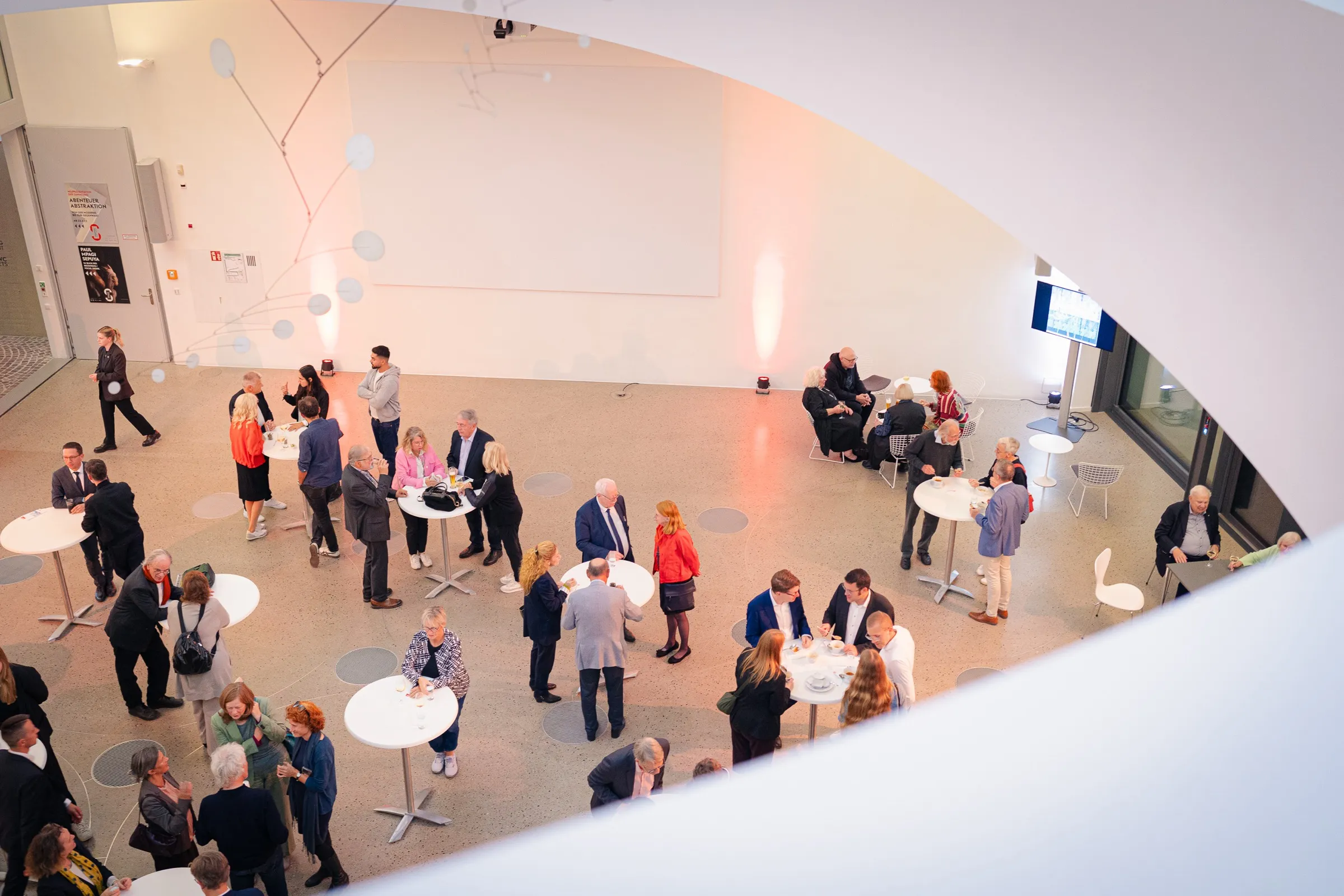
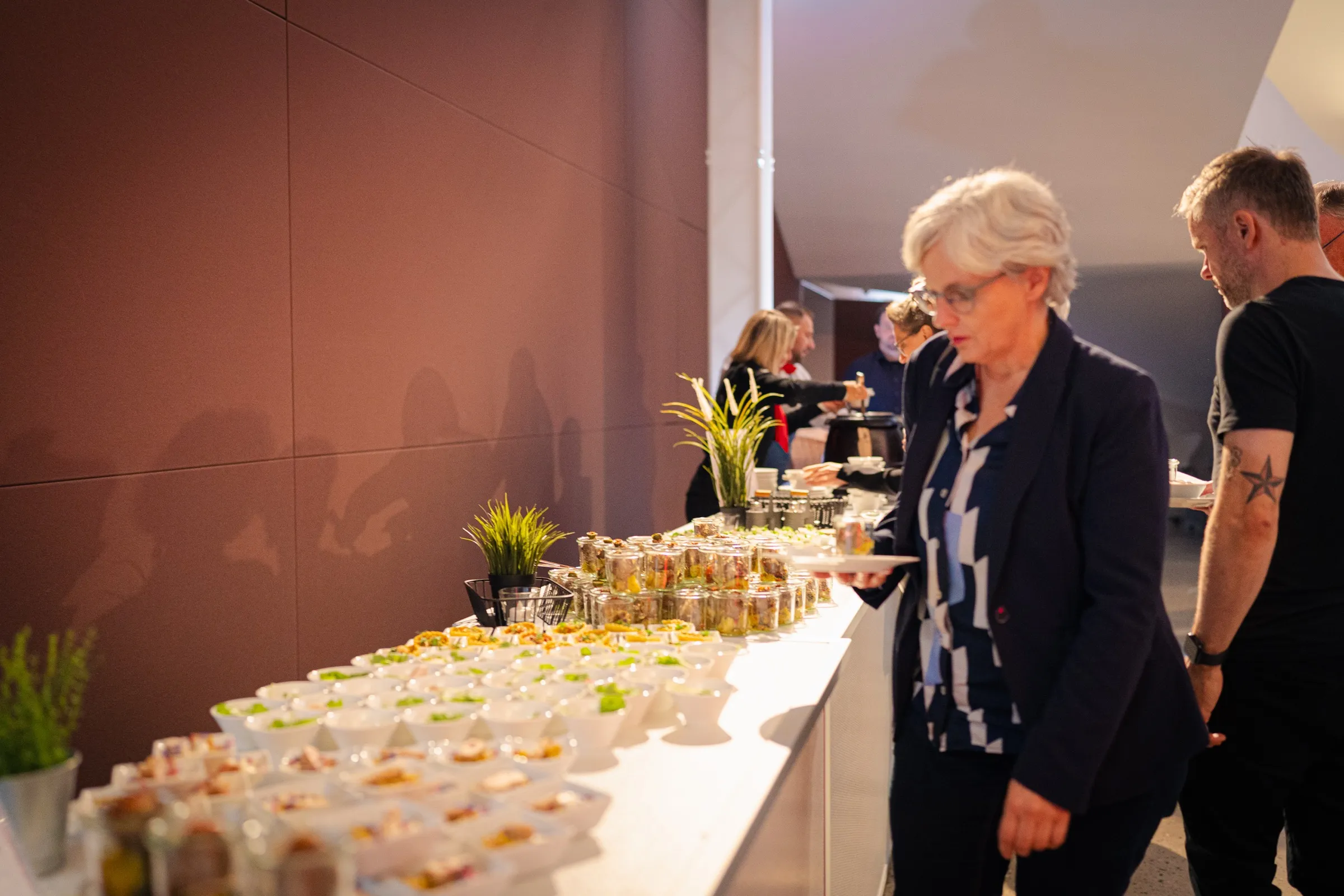
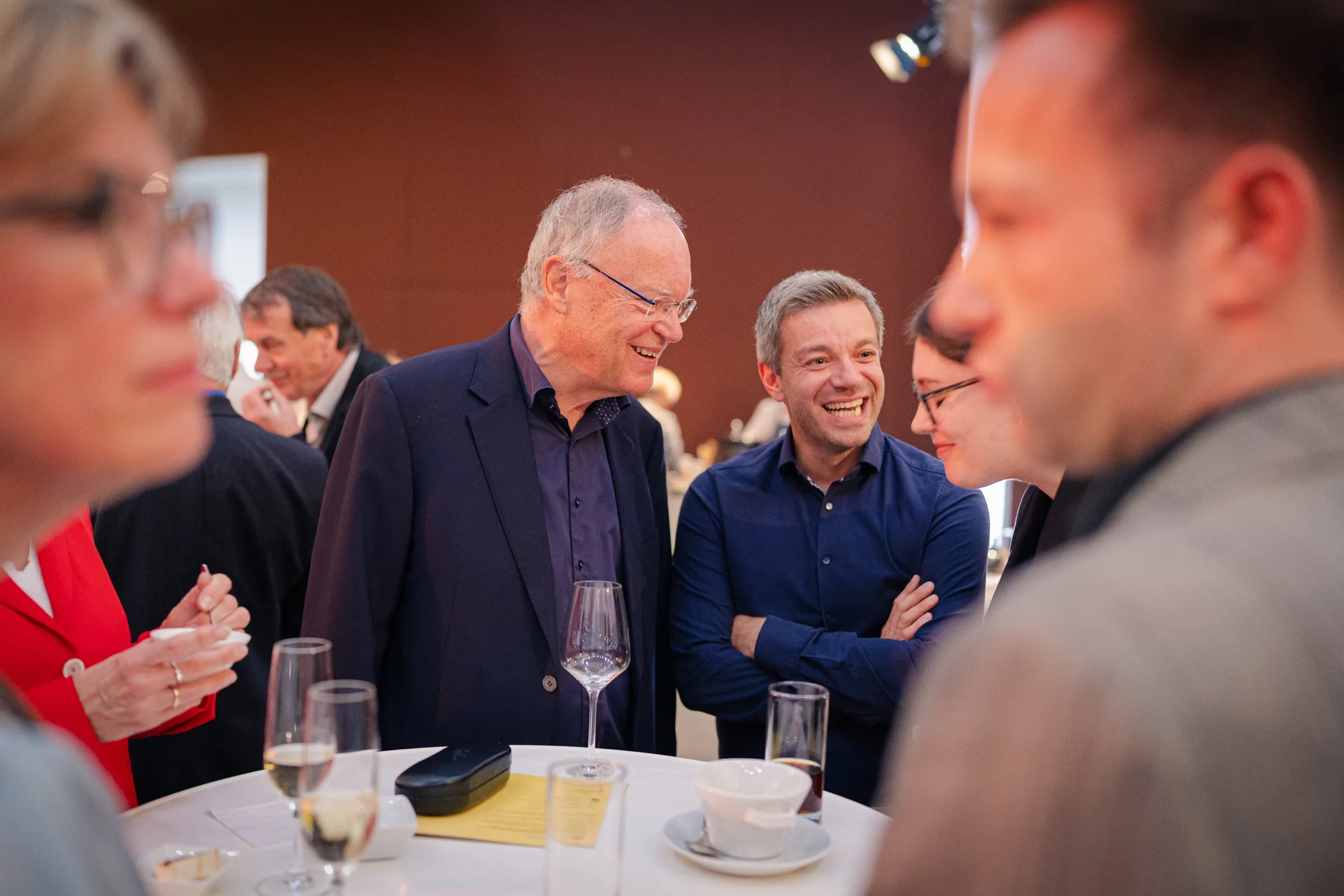
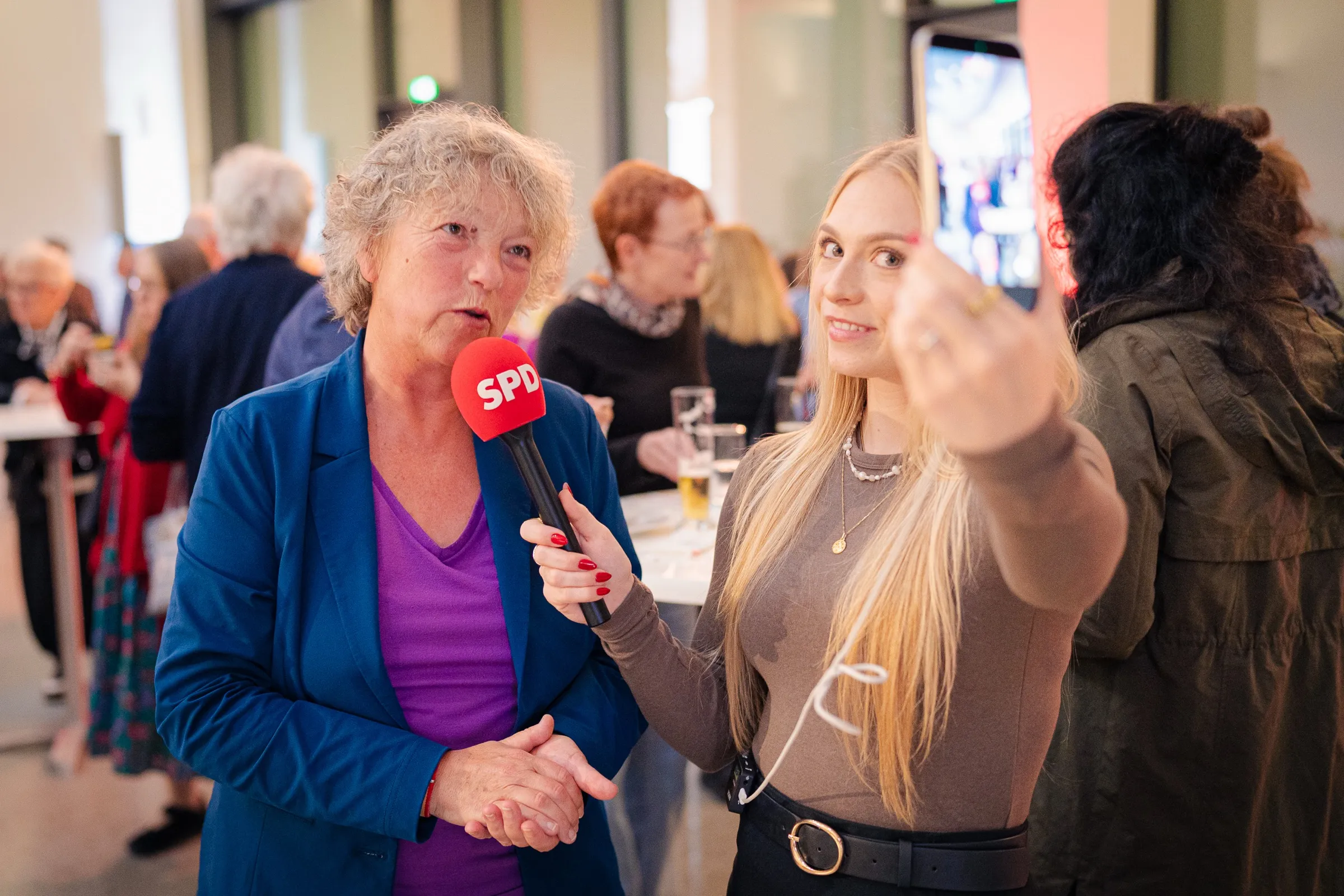
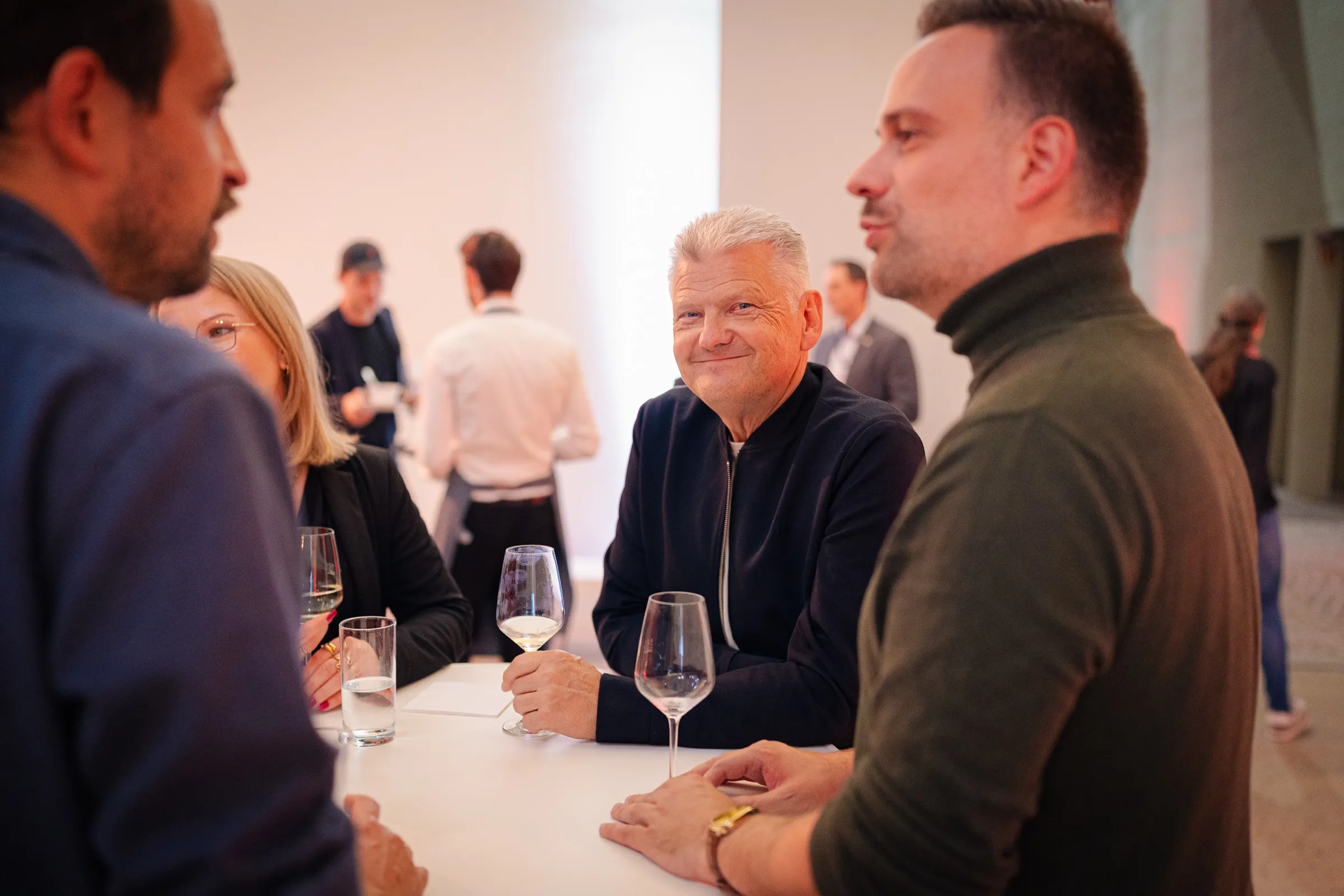
In the foyer there was wine, small glasses of food and many standing tables. From the staircase, a reception like this looks like a very calm bustle; from below it is considerably louder. Hanna Naber, President of the Lower Saxony state parliament, gave an interview into an SPD microphone, Stephan Weil, the former Minister-President, laughed at one of the tables, and Stefan Politze took time for the conversations that matter more on an evening like this than any speech.
To be honest, at first I felt a little out of place that evening. I am still a newcomer in this circle, and I did not know many of the guests. All the more glad I was that Rüdiger Stanko was there. I know him through the BBK, he introduced me to the artists' database, and last year he received this art prize himself. Rüdiger is an old hand of Hanover's cultural scene and could tell me a story of its own about almost everyone in the foyer. With Rüdiger beside me, I soon had something like an index of names in my head, with footnotes, and with it a pretty good overview of who was there.
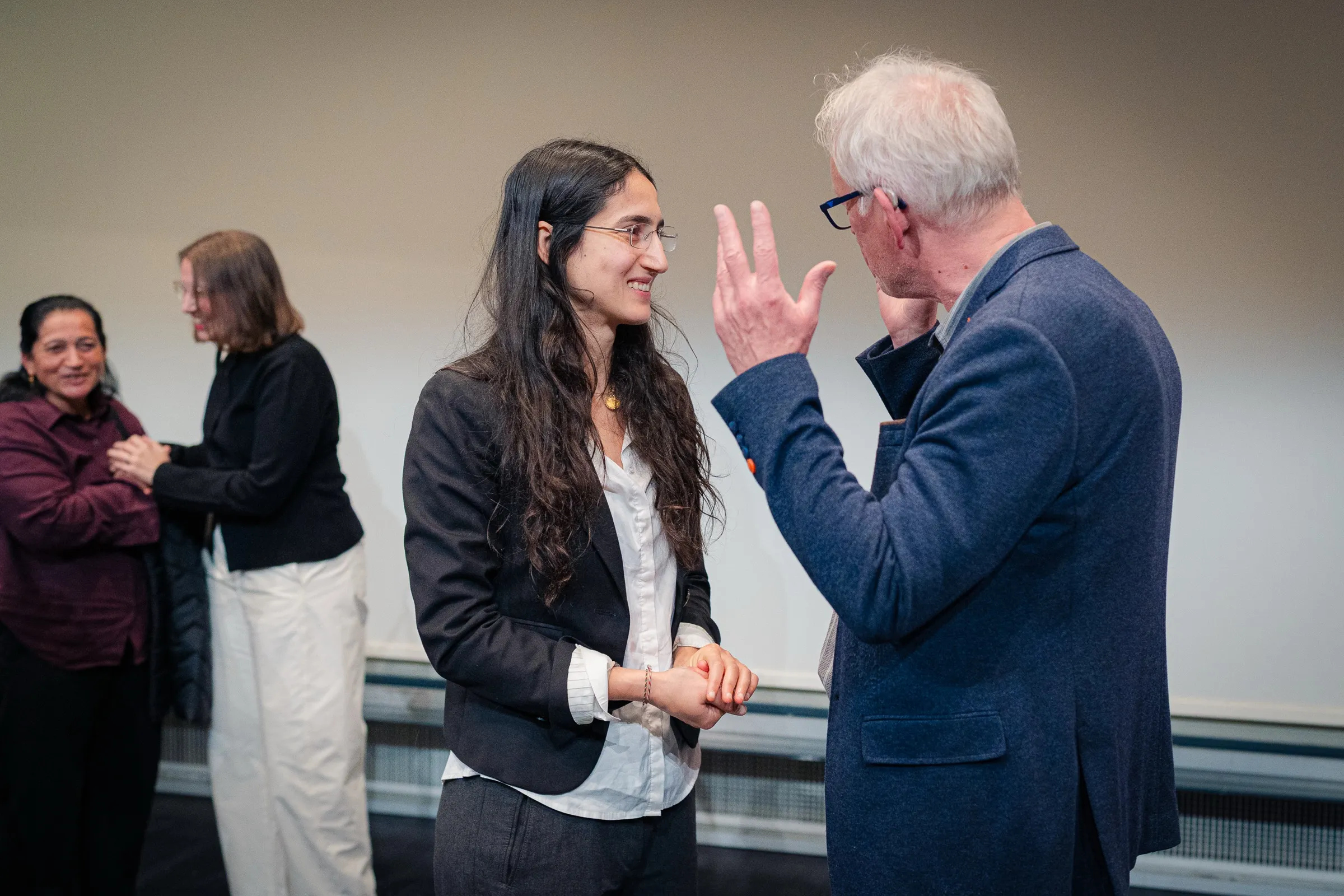
The Berlin gallery Capitain Petzel, which represents Leyla Yenirce, was there too, with its managing director Dr. Nina Koidl-Weidemann. I had the chance to talk with Leyla and with her, and some lovely anecdotes came together, about politics and art in general and about the Berlin scene in particular. I found Leyla and her family very appreciative, very courteous and simply warm-hearted. I am genuinely delighted that this prize went to her.
Together with Dagmar Schmidt, chair of the BBK Lower Saxony, I also got talking with Dr. Sarah Kuschel, head of the fine arts programme at the Bundesakademie für Kulturelle Bildung in Wolfenbüttel. She showed us what possibilities a collaboration might hold. A really lovely exchange, and exactly the kind of conversation a reception is worth going to for.
Leyla Yenirce was born in Qubîn in the Kurdish part of Turkey in 1992 and came to Oldenburg at the age of three, where she grew up. She studied cultural anthropology and completed her master's degree with Jutta Koether at the Hamburg University of Fine Arts in 2022. Today she lives in Berlin and works with painting, video, installation, performance and music. Until August the Landesmuseum Kunst & Kultur Oldenburg showed her solo exhibition “Werdegang”. The jury statement says that with her engagement with representations of resistance and structures of power she is one of the most important artistic voices of her generation.
This ends the story of this prize for this year. What I take away from the evening above all is an image that is not really a photo at all: the raised arms.